
Trump hit Mamdani with a reality check.
President Donald Trump delivered a clear message this week after New York City Mayor Zohran Mamdani renewed calls for Israeli Prime Minister Benjamin Netanyahu to face arrest if he visits the city.
Trump made it unmistakably clear that such a move will not happen while Netanyahu is on American soil, emphasizing that decisions involving foreign leaders are governed by federal law—not local political rhetoric.
The exchange highlights the growing divide between the Trump administration and progressive leaders over U.S. policy toward Israel, the war in Gaza, and America’s relationship with one of its closest allies.
Trump Rejects Calls To Arrest Netanyahu
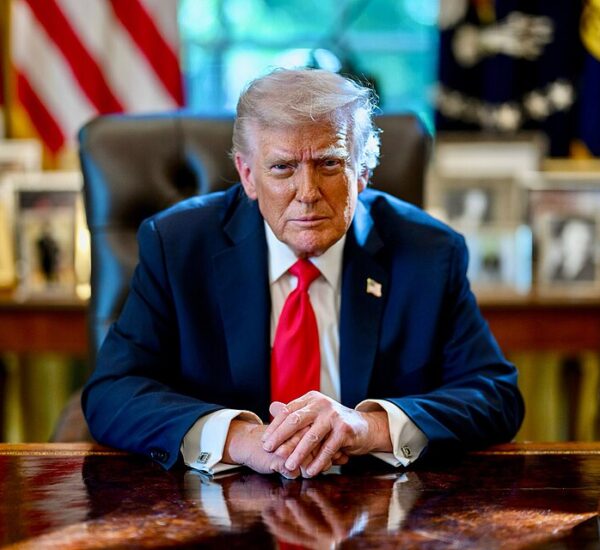
In a post on Truth Social, President Trump strongly defended Netanyahu and dismissed the idea that the Israeli leader could be arrested during a visit to the United States.
“Benjamin Netanyahu will not be arrested, in any way, shape, or form, while in the United States of America,” Trump wrote.
Although Trump did not mention Mamdani by name, his comments came after the New York City mayor reaffirmed his position that Netanyahu should be taken into custody if he attends international events in New York.
Trump praised Netanyahu for his role in confronting Iran’s leadership and argued that the focus should instead be on those responsible for violence inside the Islamic Republic.
Trump wrote that Netanyahu is confronting Iran’s ruling regime, which he accused of killing 52,000 peaceful demonstrators and targeting American service members and others for nearly five decades.
The president added that Iran’s leaders—not America’s allies—are the ones who should face legal consequences.
Trump argued that the people who should face arrest are the Iranian leaders responsible for what he described as years of violence and an unprecedented cycle of death and destruction that, in his view, should have been stopped long ago.
Why Mamdani Wants Netanyahu Arrested
Mamdani has repeatedly argued that Netanyahu should be detained because of an arrest warrant issued by the International Criminal Court (ICC) in 2024 over the conflict in Gaza.
The mayor has maintained that if Netanyahu traveled to New York City, he believes authorities should act on the warrant.
During a recent appearance on The New York Times podcast The Interview, Mamdani said he believes Netanyahu belongs before the international court in The Hague.
He described the Israeli prime minister as a war criminal and pointed to the ICC’s charges as the basis for his position, while acknowledging that many people share his view because of the ongoing conflict.
The Legal Reality In The United States
Despite Mamdani’s comments, legal experts have long noted that the United States does not recognize the International Criminal Court’s jurisdiction over American citizens or Israeli officials.
As a result, there is no legal requirement for U.S. authorities to enforce ICC arrest warrants against foreign leaders visiting the country.
Mamdani has also acknowledged that, as mayor, he would be required to follow U.S. law rather than establish his own foreign policy.
Trump’s latest statement reinforced that position, signaling that his administration would not permit any effort to detain Netanyahu while he is visiting the United States.
United Nations Meeting Could Renew Debate
The issue could return to the spotlight in September when world leaders gather in New York City for the annual United Nations General Assembly.
The event traditionally brings presidents, prime ministers, and diplomats from around the globe to Manhattan, making it a likely opportunity for Netanyahu to return to New York.
If he attends, it would mark his first visit to the city since Mamdani became mayor, setting the stage for renewed political attention surrounding their sharply different views on Israel.
Netanyahu And Mamdani Have Publicly Clashed
The disagreement between the two leaders is nothing new.
Netanyahu has openly criticized Mamdani over his repeated condemnations of Israel and his support for efforts targeting the Israeli government.
Meanwhile, Mamdani has continued to defend his criticism of Israel’s military campaign in Gaza and has insisted that international legal institutions should hold world leaders accountable.
The escalating war of words reflects a broader national debate over America’s alliance with Israel and the role U.S. leaders should play in Middle East policy.
Netanyahu’s U.S. Visit Was Delayed
Netanyahu had been expected to travel to the United States in mid-July, but the trip was postponed.
According to his office, scheduling complications surrounding the delayed funeral of Sen. Lindsey Graham contributed to the change in plans.
Reports also indicated that a meeting with President Trump had not yet been finalized, adding to the delay.
The Bottom Line
Trump’s latest remarks leave little doubt about where his administration stands.
While Mamdani has continued calling for action against Netanyahu based on the International Criminal Court’s warrant, Trump has made it clear that the Israeli prime minister will be welcomed in the United States without fear of arrest.
As the United Nations General Assembly approaches, the disagreement is likely to remain a major political flashpoint, highlighting the sharp divide between Trump’s America First foreign policy and progressive leaders who have taken a far more critical stance toward Israel.
This dispute is expected to remain in the national spotlight as world leaders prepare to gather in New York, with U.S. support for Israel once again emerging as one of the defining issues in American politics.

Mamdani is a train wreck. Last week there were reports that NYC is struggling to pay it’s bills. The lack of revenue due to this idiot’s juvenile rhetoric is starting to take hold. Today there are reports of rolling black outs due to AOC’s green plan. I haven’t heard anyone talking about yet – if NYC is struggling to pay bills how long will it be before they cannot pay the retirement checks to retired NYC employees – NYPD, FDNY, Sanitation worker, bus drivers etc? They have lost a ton of revenue from the “Money” leaving NYC. There is no legitimate law that can make them stay in NYC or penalize them for moving. Further with all of the people leaving there should be a lot of vacant homes, apts and condos. Those vacant and available homes are saturating the Real Estate Market and driving property values down. That is bad news for home/property owners but for the city as well as lower property values also mean lower property tax assessments and revenues. NYC voted for Socialism – now they are finding exactly what it will cost them.
“As of the most recent available data, the New York City Employees’ Retirement System (NYCERS) — which covers most NYC government agencies, including the subway system — had 160,759 retirees in 2024.”
I know a lot of retired people from NYC I don’t know anyone who receives less than $5000/mo. Most common is about $7000/mo. At $5000/mo for 160,759 comes to $803,795,000 per month to pay out. At $7000 that jumps up to $1,125,313,000 per month. That’s $9,645,540,000 or $13,503,756,000 per year respectively. With all of the wealthy people leaving this money will come from raising taxes on those who stay which will drive many more people out of that city.