Trump does it again!
President Donald Trump has announced a new security agreement involving the United States, Denmark and Greenland that could significantly strengthen America’s military position in the Arctic while restricting opportunities for China, Russia and other U.S. adversaries to gain a strategic foothold on the island.
The agreement is expected to allow a larger and more permanent American military presence in Greenland while limiting military bases and certain sensitive investments by countries outside the NATO alliance. Denmark and Greenland, however, have stressed that the agreement does not transfer sovereignty over the island to Washington.
For the United States, the agreement could have major national security implications.
Greenland occupies one of the most strategically important locations in the Arctic, sitting between North America and Europe and along routes considered critical for missile warning, military surveillance and the defense of the United States.
Trump Announces Major Greenland Security Agreement
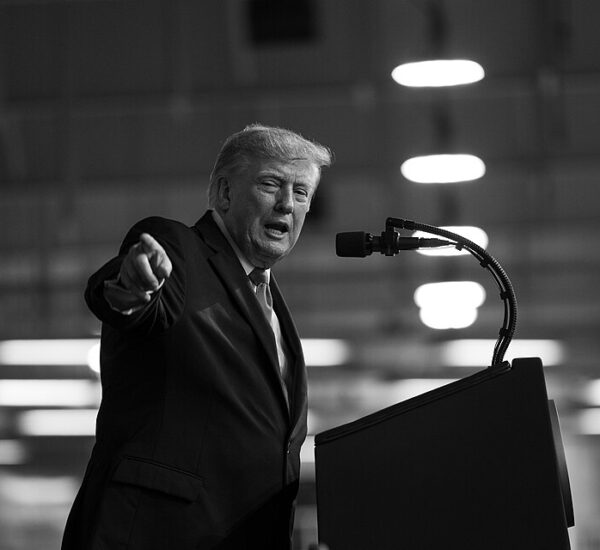
Trump announced the agreement Friday, saying the United States had reached a deal with Denmark and Greenland that would permanently address American security concerns involving the Arctic island.
The president described the agreement as giving Washington lasting authority to take necessary steps to defend both Greenland and the United States.
Trump also said the arrangement would come at no cost to American taxpayers.
Reuters reported that the agreement is intended to permit a significant expansion of the U.S. military presence while preventing adversarial countries from establishing bases or making certain sensitive investments in Greenland.
The precise details of the agreement have not all been publicly released, making some of Trump’s broader descriptions of American authority difficult to independently assess at this stage.
China And Russia Face New Barriers In Greenland
One of the most significant parts of the developing agreement involves restrictions on foreign involvement in Greenland.
According to reporting on the deal, countries viewed as strategic adversaries would be prevented from establishing military bases on the island, while sensitive investments would also face restrictions.
That could directly limit opportunities for China and Russia as competition for influence in the Arctic continues to grow.
Retired U.S. Marine Col. Grant Newsham, a senior fellow at the Center for Security Policy, argued that the agreement represents a major strategic gain for the United States.
Speaking on “Fox & Friends Weekend,” Newsham compared the significance of the agreement to America’s acquisition of Alaska in 1867.
“This is a big deal. This is right up there with Secretary of State Seward getting Alaska,” Newsham said.
He emphasized that the United States is not purchasing Greenland, but argued that the agreement places strategically important territory more firmly within America’s defensive framework.
Newsham also said the arrangement would make it considerably more difficult for Russia and China to gain military or economic influence there.
His comments represent his analysis of the agreement rather than an official determination by the governments involved.
Why Greenland Matters To American Security
Greenland’s importance goes far beyond its enormous geographic size.
Its location makes the island valuable for monitoring activity across the Arctic and North Atlantic.
The United States already operates Pituffik Space Base in northwest Greenland, a key installation involved in missile warning, missile defense and space surveillance.
The new agreement could allow Washington to expand its military presence beyond existing operations while strengthening America’s ability to respond to potential threats approaching North America through Arctic routes.
Greenland has become even more important as the Arctic attracts growing military, economic and geopolitical attention.
Russia maintains extensive Arctic capabilities, while China has sought greater economic and strategic involvement in the region.
That competition has increased Washington’s interest in ensuring that strategically important infrastructure and territory remain unavailable to potential adversaries.
Denmark And Greenland Draw A Clear Line On Sovereignty
Despite Trump’s description of the agreement as giving the United States permanent security control, officials in Denmark and Greenland have emphasized an important distinction.
Greenland is not becoming American territory.
Denmark and Greenland said Saturday that the agreement would not surrender sovereignty to the United States.
Greenland remains a self-governing territory within the Kingdom of Denmark, and its leaders have continued to emphasize Greenlanders’ right to determine their own political future.
That distinction is central to understanding the agreement.
Washington could receive significantly expanded security and military rights without acquiring ownership of Greenland itself.
Associated Press reporting similarly described the arrangement as expanding America’s military presence while leaving Greenland under Danish sovereignty.
Expanded U.S. Military Presence Could Follow
The agreement could lead to a noticeably larger American military footprint in Greenland.
Trump administration officials have indicated that Washington intends to begin developing an expanded military presence in strategically appropriate areas of the island.
Secretary of State Marco Rubio has also praised the arrangement, arguing that it permanently addresses American security concerns in the Arctic and prevents adversaries from establishing positions that could threaten North America.
Reuters reported that the agreement is described as permanent and could remain applicable even if Greenland’s political relationship with Denmark changes in the future.
Exactly how many troops, installations or additional facilities might eventually be established has not yet been made public.
Those details could determine how significant the agreement becomes in practical military terms.
Security Expert Sees Broader Trump Strategy
Newsham said he views the Greenland agreement as part of a larger Trump administration strategy focused on preventing rival powers from gaining influence near the United States.
He pointed to developments elsewhere in the Western Hemisphere while arguing that Washington is attempting to strengthen its defensive position closer to home.
Regarding China and Russia, Newsham predicted both governments would object to the Greenland agreement but said their ability to reverse it would be limited.
“They’ll complain. They won’t like it, but there’s not much they can do about it,” he said.
Newsham characterized the agreement as a significant improvement in America’s strategic position.
Whether that assessment proves correct will depend partly on how extensively Washington uses the new military authorities and how rival powers respond.
Agreement Still Faces Formal Steps
The announcement does not mean every part of the agreement is already in force.
The arrangement is expected to go through formal signing and parliamentary procedures involving Denmark and Greenland before implementation.
Officials are expected to provide additional details as that process moves forward.
That means some of the most important questions remain unanswered.
Among them are the eventual size of America’s expanded military presence, the precise rules governing foreign investment and exactly how authority will be divided between Washington, Copenhagen and Greenland’s government.
A Major Shift In Arctic Security
Whatever the final details, the agreement represents an important development in America’s approach to Arctic defense.
The United States could gain expanded long-term military access to one of the most strategically important locations in the Northern Hemisphere while China, Russia and other non-NATO powers face tougher barriers to establishing military or sensitive economic positions there.
At the same time, Denmark and Greenland insist that sovereignty remains with them rather than transferring to the United States.
That produces a potentially significant strategic arrangement: stronger American security rights without American ownership of Greenland.
For Americans watching the growing competition with China and Russia, Greenland is likely to become an increasingly important part of the national security conversation.
The key question now is how aggressively the United States uses the expanded access — and what effect that ultimately has on the balance of power in the Arctic.