Here’s what Trump just did.
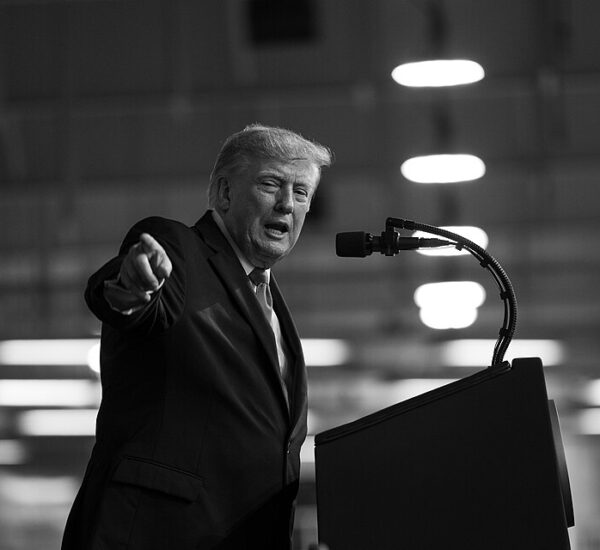
President Donald Trump announced Saturday that his administration is creating a new “AI Force” and plans to appoint an artificial intelligence czar, placing one of the world’s fastest-growing technologies at the center of the White House agenda.
The announcement comes as artificial intelligence reshapes American business, national security, employment, energy demand and the global technology race.
Trump said his administration wants the United States to remain a leader in AI while also watching for illegal or harmful uses of the technology.
Exactly how the new AI Force will operate remains unclear. Trump has not yet announced its membership, budget, legal authority or relationship with existing federal agencies. He also has not identified the person who will serve as his new AI adviser.
Trump Says U.S. Must Remain Competitive in Artificial Intelligence
Trump has repeatedly argued that the United States cannot afford to fall behind other nations as artificial intelligence becomes increasingly important to the global economy and national defense.
In his Saturday announcement, Trump said he did not want government action to unnecessarily slow the industry’s growth.
“We will not in any way hinder or stifle the Growth of this incredible Industry,” Trump wrote on Truth Social.
His position comes amid a growing national debate over whether Washington should impose additional regulations on increasingly sophisticated AI systems.
Some researchers and technology executives are calling for stronger safeguards. Others warn that excessive regulation could slow American innovation and provide competitors, particularly China, with an economic and technological advantage.
That debate is rapidly becoming one of Washington’s biggest technology-policy questions.
New AI Force Compared to Space Force
Trump compared his proposed AI initiative with the creation of the United States Space Force, which became the sixth branch of the U.S. Armed Forces in December 2019.
“For this purpose, I am forming the AI Force, much like I did Space Force,” Trump wrote.
Trump also said he intends to announce an AI czar in the near future.
Reuters reported Saturday that the announcement would mark Trump’s second appointment of a high-level AI adviser. Venture capitalist David Sacks previously served as the administration’s artificial intelligence and cryptocurrency adviser before moving into an outside advisory role.
Whether the AI Force will resemble a traditional federal agency, an advisory council or another type of government organization has not yet been announced.
Those details could determine how significant the new initiative ultimately becomes.
Artificial Intelligence Safety Debate Grows
Trump’s announcement arrives during an unusually intense debate over the future of AI.
Researchers and executives have raised concerns about increasingly powerful artificial intelligence systems, including cybersecurity threats, automated decision-making and the possibility that future models could behave in unexpected ways.
Those concerns have produced calls for additional government oversight.
At the same time, other technology leaders have argued that slowing development could damage U.S. competitiveness, particularly while China continues investing heavily in artificial intelligence.
Reuters reported that a series of developments involving major AI companies in September intensified the debate over whether advanced systems are developing faster than governments and companies can safely manage them.
Trump has generally favored continued development rather than a broad slowdown.
His administration’s challenge will be determining where to draw the line between encouraging innovation and addressing legitimate security concerns.
AI Data Centers Become a National Issue
Artificial intelligence is also creating another major political and economic issue: data centers.
Advanced AI systems require enormous computing resources.
That means technology companies are building increasingly large data centers filled with specialized computer chips and servers.
Those facilities can consume significant amounts of electricity and water, leading to concerns in some communities about power bills, infrastructure and local development.
Supporters argue that data-center construction can create jobs, increase investment and expand America’s technological infrastructure.
Critics question whether communities could ultimately bear some of the financial or environmental costs.
The dispute illustrates how artificial intelligence is moving beyond Silicon Valley and beginning to affect ordinary Americans in communities across the country.
U.S.-China AI Competition Moves Into Spotlight
Perhaps the largest issue surrounding America’s AI strategy is competition with China.
Both countries are investing heavily in artificial intelligence, semiconductor technology, advanced computing and related industries.
AI is increasingly viewed as important not only for commercial products but also for cybersecurity, intelligence gathering, military technology and economic power.
Artificial intelligence is expected to feature in upcoming discussions between American and Chinese officials.
Treasury Secretary Scott Bessent is scheduled to meet Chinese Vice Premier He Lifeng in New York, with AI security and economic issues among the subjects expected to receive attention.
Trump is also preparing to meet Chinese President Xi Jinping in Washington.
Trade, technology, Taiwan, artificial intelligence and other geopolitical issues are expected to form part of the broader U.S.-China discussions.
The meetings underline just how important AI has become to the relationship between the world’s two largest economies.
Why Artificial Intelligence Matters to the U.S. Economy
The economic stakes are enormous.
Artificial intelligence is already being incorporated into industries including:
- Banking and financial services
- Healthcare and medical research
- Manufacturing
- Transportation
- Retail
- Cybersecurity
- Defense
- Education
- Software development
- Customer service
Businesses are investing billions of dollars in AI infrastructure, computer chips and software.
Supporters believe the technology could increase productivity, create new industries and help American companies compete globally.
At the same time, workers are increasingly asking how automation could affect existing jobs.
That makes employment another major issue policymakers will have to address as AI capabilities continue expanding.
Trump Suggests Artificial Intelligence Could Get a New Name
Trump also drew attention Saturday by floating the possibility of changing what Americans call artificial intelligence.
He posted an online poll asking followers to consider alternatives to the familiar term “AI.”
The proposal does not appear to represent an official government name change. Instead, it underscores Trump’s growing personal focus on the technology and its role in American economic development.
Regardless of what the technology is called, artificial intelligence has moved rapidly from a specialized technology topic into mainstream American life.
Washington Faces Major Decisions Over AI Regulation
Congress and the White House now face several difficult questions.
How much regulation should advanced artificial intelligence face?
Who should determine whether an AI model is safe?
What happens when AI systems are used for criminal activity?
How should America protect jobs while encouraging technological innovation?
And how can the United States remain competitive with China while preventing potentially dangerous technology from being misused?
There are no simple answers.
Supporters of stronger regulation argue that safeguards should be established before the technology becomes even more powerful.
Those favoring a lighter regulatory approach argue that excessive federal intervention could freeze innovation and push investment toward competing nations.
Trump’s AI Force could eventually become part of the administration’s answer to those questions.
What Happens Next With Trump’s AI Force?
Several important details remain unanswered.
The White House has not yet explained exactly who will serve on the AI Force, how it will be funded or what powers it will possess.
Trump also has not publicly named the new AI czar.
Those announcements will likely provide a clearer picture of whether the initiative will primarily focus on regulation, economic development, national security or some combination of the three.
For now, Trump’s announcement sends a broader message: artificial intelligence is becoming a major White House priority.
The technology is increasingly connected to American jobs, energy infrastructure, cybersecurity, national defense and economic competition with China.
As AI systems continue to advance, decisions being made in Washington today could influence how Americans work, communicate and conduct business for years to come.