President Donald Trump has unveiled an extraordinary proposal that could put thousands of dollars directly into the hands of American adults.
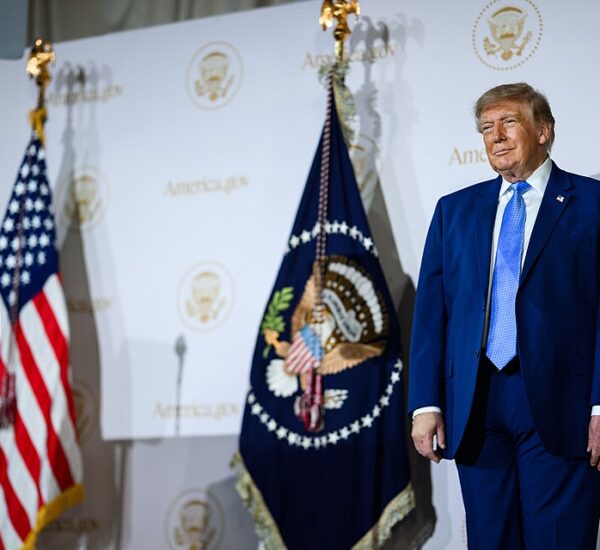
During a major Republican gathering in Dallas, Trump pledged to pursue a $5,000 “dividend” for adult U.S. citizens if Republicans retain control of both the House and Senate in the 2026 midterm elections.
For a qualifying married couple, that could potentially mean $10,000.
But before Americans start making plans for the money, there are several major hurdles standing between Trump’s announcement and actual payments.
Congress would have to approve the proposal, lawmakers would have to determine how it would be funded, and the final eligibility requirements have yet to be established.
With the federal government already facing massive deficits and a national debt above $40 trillion, Trump’s proposal could also ignite a major debate over taxes, tariffs, government spending and America’s financial future.
Trump Promises a $5,000 Dividend
Trump announced the proposal while making his case for continued Republican control of Congress.
Trump pledged to provide a $5,000 dividend to every adult U.S. citizen if Republicans retain control of both the House and Senate in the midterm elections.
Trump compared the concept to the dividends successful corporations sometimes distribute to shareholders.
Under his argument, Americans would effectively receive a share of the financial benefits he says are being generated by his economic and trade policies.
For households dealing with higher costs for groceries, utilities, insurance, housing and other necessities, $5,000 would be a substantial amount of money.
For couples in which both adults qualified, the potential payment could reach $10,000 if the eventual legislation followed Trump’s stated per-adult framework.
But there is an important distinction: Congress has not approved these payments, and no $5,000 checks are currently scheduled to be distributed.
How Much Would Trump’s $5,000 Payments Cost?
The price tag could be enormous.
If approximately 240 million adults each received $5,000, the gross cost would be roughly $1.2 trillion.
That figure could decline considerably if Congress imposed income limits or other eligibility restrictions.
Still, even a smaller program would arrive at a time when federal finances are already under significant pressure.
The Congressional Budget Office reported a federal budget deficit of approximately $1.8 trillion for fiscal year 2025.
That raises a question likely to matter to taxpayers and fiscal conservatives alike:
Where would Washington find the money?
The administration has not yet released a comprehensive funding plan explaining exactly how a $5,000 dividend would be financed.
Could Tariff Revenue Pay for the Checks?
One possible answer offered by the administration is tariff revenue.
Vice President JD Vance pointed to the money Washington is collecting from tariffs when defending Trump’s proposal.
Vance said the administration is bringing in substantial revenue as Trump pushes back against foreign businesses and governments that he argues have benefited at the expense of American workers.
Customs duties have generated substantial federal revenue.
But even hundreds of billions of dollars in tariff collections would be considerably less than the estimated $1.2 trillion required to provide $5,000 to roughly 240 million adults.
There is another complication.
Gross tariff collections do not necessarily equal money permanently available for federal spending. Some tariff revenue has been subject to refunds following court decisions.
Consequently, the ultimate financing mechanism could become one of the biggest issues Congress would have to address.
JD Vance Suggests Wealthy Americans Could Be Excluded
There is also a possibility that not every adult American would qualify.
After Trump unveiled the proposal, Vance indicated that higher-income Americans might not be eligible for the payments.
Vance described the president’s proposal as essentially a financial dividend intended to benefit American workers.
An income cap could dramatically change the numbers.
Restricting payments to working- and middle-income Americans could reduce the total cost compared with providing $5,000 to virtually every adult citizen.
But the administration has not announced a specific income threshold.
That leaves important questions unanswered.
Would Social Security recipients qualify?
Would retirees with little taxable income receive the full payment?
Would eligibility be determined using adjusted gross income?
Would married couples receive $10,000 if both spouses qualified?
Would the payments themselves be taxable?
Those details would have to be resolved before Americans could know exactly who would receive money.
What Would the $5,000 Mean for Retirees?
Older Americans could have a particularly strong interest in the proposal.
Millions of retirees depend heavily on Social Security, pensions, retirement accounts and personal savings while facing expenses ranging from food and housing to insurance and medical care.
A one-time $5,000 payment could therefore represent a meaningful amount for many households.
However, Trump’s initial announcement does not provide enough information to determine exactly how retirees would be treated.
Until detailed legislation is introduced, retirees should not assume they will receive a payment.
The same caution applies to every other American: this remains a proposal, not an approved federal benefit.
The National Debt Could Become the Biggest Obstacle
The proposal also creates an unusual debate within Republican politics.
Many conservative voters have spent years demanding that Washington reduce federal spending, annual deficits and the national debt.
A payment program costing hundreds of billions—or potentially more than $1 trillion—would therefore invite scrutiny over whether it could be financed without additional borrowing.
Supporters of Trump’s approach could argue that tariff revenue and stronger economic growth should allow Americans to benefit directly from government revenue.
Fiscal critics could counter that available revenue should instead be used to reduce deficits or the national debt.
That disagreement could become central to any congressional debate over the proposal.
Can Trump Send the $5,000 Checks Without Congress?
No.
A presidential announcement by itself does not authorize the Treasury Department to distribute more than $1 trillion.
Congress controls federal appropriations under the Constitution.
Lawmakers would therefore have to pass legislation establishing the program and authorizing the necessary spending before the payments could be distributed.
That legislation would likely have to answer several major questions:
- Who qualifies for the $5,000?
- Are there income limits?
- Do retirees qualify?
- Are the payments taxable?
- Where does the funding come from?
- Would tariff revenue be sufficient?
- Would additional federal borrowing be required?
- When would payments actually be distributed?
Until Congress addresses those issues and legislation becomes law, Americans should view the $5,000 dividend as a proposed policy rather than guaranteed money.
Trump Makes the Midterm Stakes Clear
Trump explicitly connected his proposal to the November elections.
“If the Republicans win, you win with us,” Trump said. “Now all we have to do is win.”
The president’s message is straightforward: maintaining Republican control of Congress would give his administration a better opportunity to pursue the dividend and the rest of its legislative agenda.
Control of Congress matters because presidents cannot enact most major domestic spending programs on their own.
If Republicans retain both chambers, they would determine the House and Senate leadership and have greater control over which legislation reaches Trump’s desk.
If Democrats capture either chamber, the political path for Trump’s proposal would change substantially.
This Isn’t Trump’s First Dividend Proposal
Trump has previously floated other ideas for returning government revenue or savings directly to Americans.
Those have included a proposed $2,000 tariff dividend and discussions about returning a portion of government savings to taxpayers.
Those earlier ideas did not ultimately result in nationwide payments.
The history provides another reason to distinguish between proposing a payment and actually receiving one.
There are numerous steps between the two.
What Americans Should Watch Next
The next development to watch is whether the administration and congressional Republicans transform Trump’s announcement into detailed legislation.
A bill would provide answers that the initial announcement does not.
The most important details would include income eligibility, treatment of retirees, payment amounts, funding sources, tax consequences and a potential distribution date.
Those specifics would also make it possible to calculate the proposal’s actual effect on the federal budget.
Until then, any estimate remains dependent on assumptions about who would qualify.
Bottom Line
Trump’s proposed $5,000 dividend is one of the largest direct-payment ideas he has put before American voters.
If enacted under the broad terms Trump described, a qualifying married couple could potentially receive $10,000.
But three facts are essential.
The payments have not been approved. Congress would have to authorize the money. And the administration has not yet released complete eligibility or funding details.
Trump is betting that his proposal will help convince voters that keeping Republicans in control of Congress could produce direct financial benefits for American households.
Whether that promise ever turns into money in Americans’ bank accounts will depend on what happens after the midterms—and whether Congress is willing and able to turn Trump’s proposal into federal law.