This was unexpected.
Fox News host Laura Ingraham confronted President Donald Trump with a question many Americans may be asking after his stunning $5,000 “Trump Dividend” announcement.
If the federal government has enough money to send Americans $5,000, why not send the checks now?
Trump faced that question after announcing that adult U.S. citizens could receive a $5,000 payment if Republicans retain control of both the House and Senate in the 2026 midterm elections.
The proposal immediately generated attention in Washington and beyond, especially among seniors, retirees and families struggling with higher everyday expenses.
But Ingraham zeroed in on one of the biggest unanswered questions surrounding Trump’s plan.
Laura Ingraham Presses Trump Over $5,000 Checks
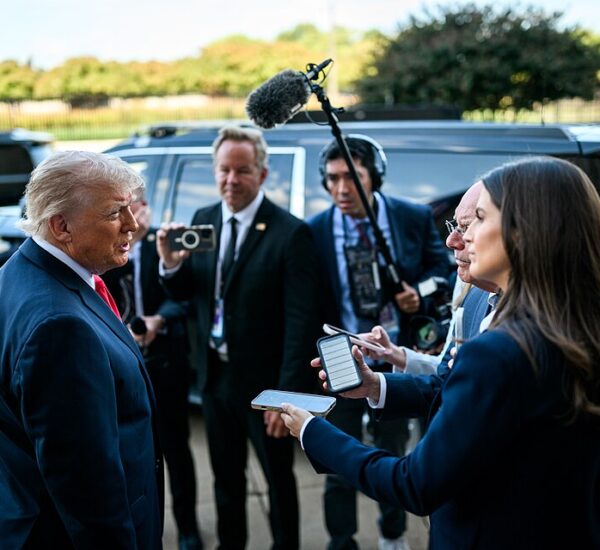
During a preview of Trump’s interview on Fox News, Ingraham asked the president why Americans should have to wait for the proposed payments.
“Why not just give the money now? If you have the money, why not give it now?” Ingraham asked.
Trump responded by contrasting his economic agenda with that of Democrats and pointing to tariffs as a major component of his plans.
The president argued that his policies are producing economic growth and generating substantial revenue for the United States.
Trump specifically highlighted tariffs, which have become a central part of his economic agenda.
But Ingraham’s question raised a larger issue that could follow the president’s proposal throughout the midterm campaign: Does Washington actually have enough money available to finance $5,000 payments to American adults?
Trump’s $5,000 Dividend Could Cost $1.2 Trillion
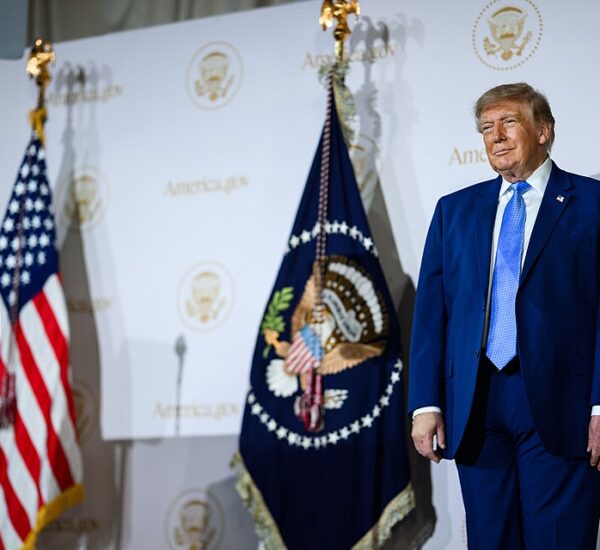
Trump unveiled his proposal Wednesday night at the Republican Party’s midterm convention in Dallas.
Under the plan Trump described, adult U.S. citizens would receive a $5,000 “dividend” if Republicans maintain control of Congress following the November elections.
With approximately 240 million adult U.S. citizens, providing each person with $5,000 would carry a price tag of roughly $1.2 trillion.
That’s an enormous amount of money even by Washington standards.
And there is another major hurdle: The president cannot simply mail out more than $1 trillion in federal payments on his own.
Congress would have to approve the spending before Americans could receive the money.
That means Trump’s proposal would ultimately depend not only on the outcome of the midterm elections but also on lawmakers agreeing on the details of the program.
Could Tariffs Pay for Trump’s $5,000 Checks?
Tariffs are emerging as one of the biggest questions surrounding Trump’s proposal.
The president has repeatedly argued that his tariff policies can generate enormous revenue for the United States while encouraging companies to manufacture more products domestically.
Vice President JD Vance has also pointed to tariff revenue when discussing how the proposed dividend could be financed.
However, current tariff collections are substantially smaller than the estimated cost of sending $5,000 to every adult citizen.
According to Congressional Budget Office figures cited by Reuters, the federal government had collected approximately $167 billion in tariff revenue during the current fiscal year.
By comparison, Trump’s proposed nationwide payments could cost around $1.2 trillion.
Unless additional funding were identified, Congress could therefore face a difficult decision over whether to borrow additional money, reduce other spending or change who qualifies for the payments.
Brian Mast Backs Trump’s $5,000 Proposal
Rep. Brian Mast of Florida enthusiastically backed Trump’s proposal during a Fox News appearance.
Mast said he would like Congress to quickly vote on the idea and force lawmakers to publicly state whether they support putting the money into Americans’ hands.
He also highlighted the potential impact on senior citizens.
For retirees living primarily on Social Security and other fixed income, an additional $5,000 could represent a substantial one-time financial boost.
That argument could make the proposal particularly appealing to older Americans who have watched the cost of groceries, housing, insurance, utilities and other necessities climb in recent years.
Supporters of Trump’s proposal argue that if Washington collects additional money through tariffs, American citizens should directly benefit.
Some Conservatives Are Pushing Back
Trump’s proposal has also triggered criticism from within conservative circles.
Some fiscal conservatives question whether a Republican administration should support another massive federal cash-payment program while the national debt is already above $40 trillion and Washington continues running large annual deficits.
National Review writer Charles C.W. Cooke sharply criticized the proposal, questioning whether the federal government can legitimately describe the payments as a “dividend” when Washington is spending more money than it collects.
The criticism highlights an unusual disagreement on the political right.
On one side are Republicans who believe returning money directly to taxpayers and citizens could provide meaningful financial relief.
On the other are conservatives who have spent decades arguing that Washington must reduce spending, borrowing and the national debt.
Trump’s proposal puts those two priorities on a collision course.
Could $5,000 Payments Increase Inflation?
There is another issue Americans cannot ignore: inflation.
Putting more than $1 trillion into consumers’ hands could produce an enormous surge in spending.
That could help retailers, restaurants, automobile dealers, home-improvement businesses and other parts of the economy.
But economists also warn that suddenly injecting that much money into an economy could increase consumer demand and potentially put additional upward pressure on prices.
The COVID-era stimulus payments demonstrated how direct government payments can quickly increase household spending.
For seniors and retirees, inflation is especially important because rising prices can erode the purchasing power of Social Security benefits and retirement savings.
A $5,000 payment would undoubtedly provide immediate assistance to many households.
The longer-term economic consequences would depend on how the program is funded, how many Americans qualify and what happens to inflation afterward.
Would Every American Receive $5,000?
Another major question remains unanswered.
Trump initially described the proposal as a $5,000 payment for adult U.S. citizens.
But the final eligibility rules have not been established because Congress has not passed legislation creating the program.
Lawmakers would have to determine important details such as income limits, tax treatment, eligibility requirements and payment dates.
Higher-income Americans could potentially be excluded if Congress chooses to impose income restrictions.
Previous federal stimulus payments used income thresholds that reduced or eliminated payments for higher earners.
Until legislation is actually written and approved, Americans should view the $5,000 payment as a proposal rather than guaranteed money.
Ingraham’s Question Gets to the Heart of Trump’s Promise
That brings the debate back to Laura Ingraham’s deceptively simple question.
If Washington has the money, why wait?
Trump’s answer makes clear that he sees Republican control of Congress as critical to carrying out the proposal.
But several enormous questions still need answers.
Where would the full $1.2 trillion come from? Would every adult citizen qualify? Would Congress approve the spending? Could additional federal borrowing increase the national debt? And could sending that much money into the economy push prices higher?
Those questions are likely to become increasingly important as Americans hear more about Trump’s proposed $5,000 dividend.
For seniors living on Social Security, working families facing higher expenses and taxpayers concerned about Washington’s debt, the debate involves much more than the prospect of receiving a check.
It raises a fundamental question about what the federal government should do with the money it collects — and whether Americans should receive some of it directly.
For now, there is no approved $5,000 federal payment.
Trump has made the promise. Congress would still have to turn that promise into law.