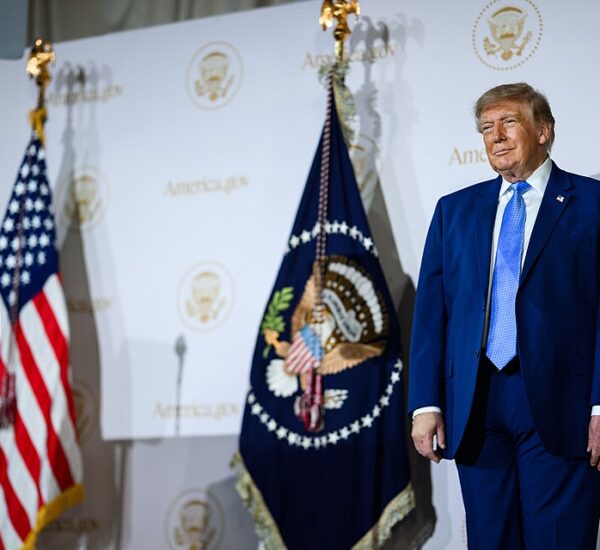
Rep. John Garamendi (D-Calif.) plans to introduce an amendment to the National Defense Authorization Act that would prohibit at least $150 million in Pentagon funds from being used to help construct President Trump’s planned White House ballroom. The proposal comes as questions continue over whether military funding could be used for the project and follows renewed debate over the NDAA in the House.
BACKGROUND
Garamendi, a senior member of the House Armed Services Committee, argued that defense funding should remain focused on military priorities such as service members, readiness, shipbuilding, and critical munitions rather than White House construction. Trump said in October that the military would be involved in building the ballroom to ensure the project met its standards. The planned White House reconstruction is expected to cost about $600 million and include a ballroom for up to 1,000 guests, a drone port, and a military facility underneath. While the White House has argued the project is necessary for security reasons and Trump has said it would not be funded by taxpayers, the president also requested $1 billion from Congress last month for ballroom-related security upgrades. Separately, House leaders canceled votes for the remainder of the week and began the July 4 recess early after disagreements over the NDAA, including a failed procedural vote opposed by 14 Republicans and Democrats.
Republican’s Advice To Trump After Bad Ruling
Rep. Chip Roy (R-Texas) is calling on Congress to take legislative action after the Supreme Court of the United States upheld the birthright citizenship provision of the Fourteenth Amendment, arguing that lawmakers should address what he views as shortcomings in current immigration law.
During an appearance Tuesday on Newsmax’s “Rob Schmitt Tonight,” Roy said the court’s decision could have significant implications for immigration policy and national security. He urged Congress to respond swiftly rather than pursuing a constitutional amendment.
“The United States Supreme Court issued an opinion today that is massively damaging to the national security and to the fabric of our country,” Roy said. “It is incumbent upon the United States Congress to respond.”
Roy Calls for Legislative Action
Roy argued that Congress has the authority to clarify how the Citizenship Clause should be interpreted through legislation.
“We need to respond forcefully and quickly,” he said. “We should not accept the premise that you must amend the Constitution to fix this.”
The Texas congressman also suggested lawmakers consider temporarily tightening immigration policies while Congress debates changes to federal law. Among his proposals, Roy said Congress should consider restricting new entries into the United States, including by pregnant foreign nationals, until lawmakers determine how to proceed.
“There should be ramifications to this,” Roy said, adding that Congress should use its constitutional powers to address the issue.
Debate Over the Fourteenth Amendment
A central focus of Roy’s remarks was the phrase “subject to the jurisdiction thereof” in the Fourteenth Amendment. He argued that the clause has been interpreted more broadly than the amendment’s original ratifiers intended.
According to Roy, Congress should pass legislation clarifying the meaning of that language rather than accepting the court’s interpretation as the final word.
Roy argued that Congress should make it unmistakably clear that the phrase “subject to the jurisdiction thereof” should be interpreted according to the original intent of those who ratified the Fourteenth Amendment, adding that he believes the current interpretation departs from that understanding.
Roy also criticized what opponents of birthright citizenship often describe as “birth tourism,” arguing that some foreign nationals travel to the United States to give birth so their children automatically receive U.S. citizenship. He specifically referenced concerns involving travelers from China while arguing that Congress should revisit existing immigration policies.
Criticism of Chief Justice Roberts
Roy directed some of his strongest criticism toward Chief Justice John Roberts, accusing him of allowing political considerations to influence major court decisions.
Roy referenced Roberts’ vote in the Affordable Care Act case, arguing that the chief justice has previously sought to shield the court from political controversy.
He also expressed concern that Democrats could pursue proposals such as expanding the size of the Supreme Court or granting statehood to Washington, D.C. if they regain unified control of the federal government.
Immigration Debate Likely to Continue
Roy concluded by urging Congress to use its legislative and budgetary powers to respond to the court’s decision. Among the options he discussed were withholding certain federal funding related to immigration policy and pausing additional immigration while lawmakers consider possible reforms.
“We need to withhold funding, and we need to pause immigration,” Roy said. “If this is what you’re going to declare the law is, then no one’s coming in.”
The Supreme Court’s ruling is expected to keep the debate over birthright citizenship at the forefront of national politics. Supporters of the current interpretation argue that the Fourteenth Amendment guarantees citizenship to nearly everyone born on U.S. soil, while critics contend that Congress should redefine how the Citizenship Clause is applied through federal legislation.
With immigration expected to remain a major issue in Washington, lawmakers on both sides of the debate are likely to continue pushing competing proposals over the scope of birthright citizenship and the future of U.S. immigration policy.