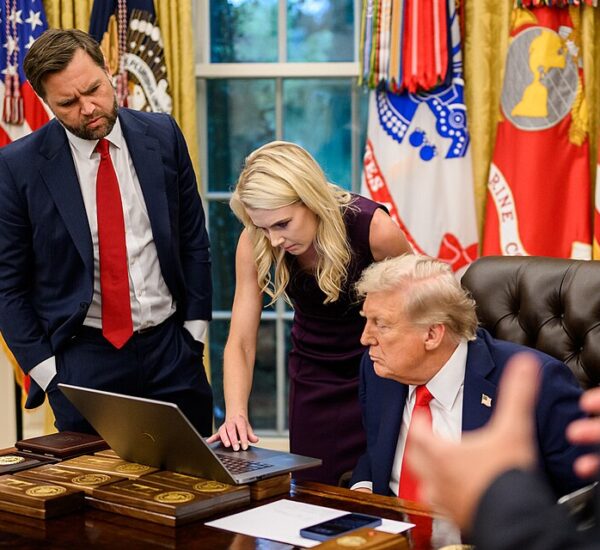
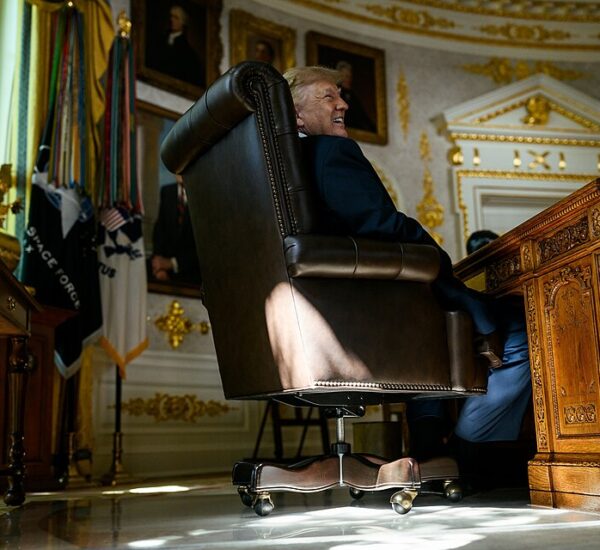
Donald Trump spent Sunday on Truth Social sharing a mix of posts, including a two-week-old interview in which Vice President JD Vance described the president’s health as “off the charts good.” The interview originally aired on June 14, Trump’s 80th birthday, and was reposted along with a transcript highlighting Vance’s remarks about his energy and work schedule. Trump also posted thoughts and prayers regarding Venezuela after a reported earthquake, along with an image featuring his face alongside Mount Rushmore, the Statue of Liberty, George Washington, and an astronaut.
BACKGROUND
In the interview with CBS, Vance told Robert Costa that Trump’s energy and focus are strong, adding that the president’s health at age 80 is “off the charts good” and noting his insomnia and frequent late-night work calls. Vance described Trump as “trying to make every single day count” and said he is “in great health,” referencing routine 2:30 a.m. work discussions with senior officials. Separately, observations have been reported about Trump appearing with visibly bruised hands and swollen ankles during his second term, as well as being seen on camera appearing to fall asleep during meetings, which aides have described as blinking. Additional reported details include the use of concealer on his hands, a neck rash, past comments about “acing” a dementia screening exam, and instances of rambling during interviews and speeches.
Democrat Redistricting Plan Rejected
The Colorado Supreme Court handed Democrats a significant legal defeat Monday after unanimously striking down ballot measures that sought to redraw the state’s congressional districts before the next U.S. Census.
The ruling prevents voters from considering proposals that could have reshaped Colorado’s congressional map for the 2028 and 2030 election cycles, marking another major development in the nationwide battle over redistricting and election rules.
The Democrat-aligned organization Coloradans for a Level Playing Field had proposed ballot initiatives that would have allowed lawmakers to revisit congressional district boundaries in the middle of the decade while simultaneously adopting new congressional maps for future elections.
However, Colorado’s highest court concluded that the proposals violated the state constitution because they combined multiple legal questions into a single ballot measure.
Court Says Measures Violated Colorado Constitution
In its unanimous decision, the Colorado Supreme Court ruled the initiatives failed to satisfy the state’s constitutional “single subject” requirement for citizen-led ballot proposals.
Chief Justice Monica Marquez wrote that the proposals attempted to accomplish two separate objectives rather than one constitutional purpose.
According to the court, authorizing mid-decade congressional redistricting and approving entirely new congressional maps are separate legal issues that must be considered independently.
The justices rejected arguments that both provisions were so closely connected they should be treated as a single subject.
Earlier Versions Also Failed Constitutional Test
The legal dispute centered on several versions of the proposal submitted by Coloradans for a Level Playing Field.
The group’s original initiatives sought not only to approve new congressional maps but also to bypass Colorado’s independent redistricting commission—a voter-approved body responsible for drawing congressional districts after each census.
After receiving objections, supporters divided parts of the proposal into separate initiatives. Even so, the Supreme Court found the revised versions still violated the constitution.
Justice Richard Gabriel, writing for the unanimous court, warned that allowing the measures to proceed would create a dangerous loophole in Colorado’s ballot initiative process.
The court concluded that approving interconnected ballot measures designed to accomplish indirectly what could not legally be done directly would undermine the state’s constitutional protections.
Because of that finding, the court ruled the state’s Title Board lacked the authority to approve the initiatives for the ballot.
Proposed Maps Could Have Shifted Control in Congress
According to reports, the proposed congressional maps were expected to favor Democratic candidates and potentially create as many as three additional Democratic seats in the U.S. House of Representatives.
Although supporters argued the changes would produce fairer representation, critics viewed the effort as another example of partisan redistricting designed to improve one party’s electoral advantage outside the normal redistricting schedule.
Congressional districts are traditionally redrawn once every ten years following the national census to reflect population changes.
Redistricting Battles Continue Nationwide
Colorado is far from the only state facing legal battles over congressional maps.
Both Republicans and Democrats have increasingly pursued court challenges, legislative action, and ballot initiatives in an effort to reshape congressional districts before the next census.
Supporters argue changing district lines can better reflect population shifts and voter representation, while opponents often accuse the other side of attempting to gain a political advantage through gerrymandering.
Last year, President Donald Trump encouraged Republican-led states to examine opportunities to redraw congressional districts where legally permitted ahead of future elections.
Democratic organizations have also backed redistricting efforts in several states as both parties prepare for the high-stakes battle for control of Congress.
Colorado Joins Growing List of Court Decisions
The Colorado ruling follows another recent legal setback for Democrats after a Virginia court blocked a separate Democrat-backed redistricting proposal.
Those decisions underscore how increasingly difficult it has become for either party to change congressional maps outside the traditional post-census process.
With lawsuits continuing across multiple states, election law experts expect redistricting to remain one of the biggest political issues leading into the 2028 election cycle.
Why This Matters
The Colorado Supreme Court’s decision preserves the state’s existing congressional map and reinforces constitutional limits on ballot initiatives. The ruling also sends a clear message that efforts to alter election rules must comply with established constitutional requirements.
As Republicans and Democrats continue battling over congressional district boundaries nationwide, legal fights over redistricting are expected to play a major role in determining the balance of power in Washington for years to come.