Canada Angers Trump With New Move
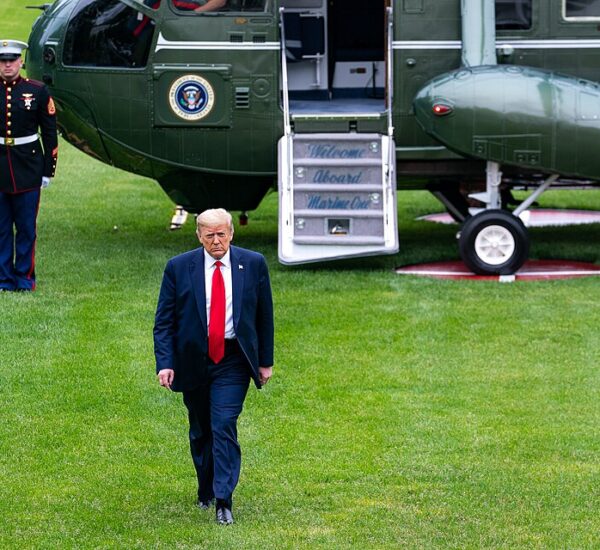
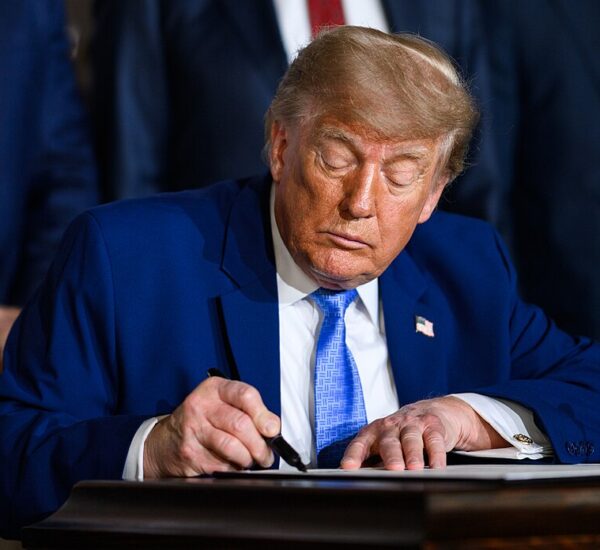
President Donald Trump is warning that a closer partnership between Canada and the European Union could trigger a new round of tariffs, adding another layer of tension to an already strained U.S.-Canada relationship.
Canadian Prime Minister Mark Carney has embraced discussions about dramatically expanding Canada’s relationship with Europe, including trade, defense, energy and technology cooperation.
European Commission President Ursula von der Leyen has floated the possibility of making Canada the European Union’s first “associate member.”
But there is an important distinction: Canada is not seeking full membership in the EU, and “associate membership” is not currently an established category under EU rules.
Carney has instead described the idea as a new kind of strategic alliance designed to deepen Canada’s ties with Europe while preserving Canadian sovereignty.
The proposal comes as Canada searches for additional trading and security partners amid a growing economic dispute with Washington. Reuters reported that Carney is pursuing what he calls a “unique alliance” with Europe rather than formal EU membership.
Trump Threatens Tariffs Over Canada-EU Partnership
Trump reacted sharply to the proposal, warning that Washington could respond economically if he concludes that the new arrangement is intended to undermine American interests.
Speaking to reporters, Trump suggested he could impose heavy tariffs on European products or restrict certain areas of trade.
“If it’s a good intention, that’s fine,” Trump said.
But he added that if the agreement were designed with what he viewed as hostile intentions toward the United States, his administration could respond with significantly higher tariffs.
The Associated Press reported that Trump’s warning came after von der Leyen proposed giving Canada a new “associate member” status, although the concept has not yet been formally defined and would require substantial negotiation inside the European Union.
The issue is therefore far from settled.
Any major new agreement between Canada and the EU would likely require negotiations over exactly what rights, responsibilities and economic benefits Canada would receive.
Carney Says Canada Is Not Joining the European Union
Carney has attempted to draw a clear distinction between deeper cooperation and full EU membership.
His government is seeking closer ties in sectors that could become increasingly important to Canada’s economy and national security, including defense manufacturing, critical minerals, energy, artificial intelligence, infrastructure and research.
Reuters reported that Canada is also exploring closer cooperation involving data centers, energy transportation and other strategic industries.
During his European trip, Carney argued that countries such as Canada should become more resilient and less vulnerable to pressure from larger powers.
Speaking before the European Parliament, he said Canada was pursuing greater resilience rather than seeking the power to dominate other nations.
The European Parliament has also publicly emphasized opportunities for expanded Canada-EU cooperation in defense, trade, energy, education and research.
For Carney, the European initiative is part of a broader effort to diversify Canada’s economic relationships.
But replacing the United States as Canada’s primary trading partner would be extraordinarily difficult.
Roughly 70 percent of Canadian exports currently go to the United States, according to the Associated Press.
That economic reality means the United States will almost certainly remain one of Canada’s most important partners regardless of how much Ottawa expands its European relationships.
Why Canada Is Looking Toward Europe
The timing of the proposal is significant.
Relations between Washington and Ottawa have deteriorated during a series of disputes involving tariffs, trade rules and broader questions about Canada’s economic dependence on the United States.
Canada has increasingly looked toward Europe and other major economies as potential alternatives for investment and trade.
The European Union has its own reasons for strengthening the relationship.
Canada possesses large reserves of energy resources and critical minerals that Europe increasingly views as strategically important.
European governments are also seeking additional defense and technology partners as global competition intensifies.
Von der Leyen’s proposal would therefore potentially benefit both sides.
Canada could gain greater access to European markets and investment, while Europe could strengthen relationships with a major supplier of energy, minerals and other strategic resources.
What Does EU ‘Associate Membership’ Mean?
For now, the answer remains unclear.
The European Union does not currently have a formal “associate member” category.
That means officials would have to create or negotiate a new framework if the proposal moves forward.
The Associated Press reported that any formal agreement would likely require unanimous support from all 27 EU member states.
Some European governments have expressed openness to discussing closer ties with Canada, but questions remain about exactly how the arrangement would work.
Among the possibilities are closer cooperation involving:
- Defense and military procurement
- Energy and critical minerals
- Artificial intelligence and technology
- Trade and investment
- Education and research
- Labor and student mobility
Canada and the European Union already have a major trade agreement known as CETA, which entered provisional application in 2017.
The proposed new partnership would potentially go much further than conventional trade cooperation.
U.S.-Canada Trade Tensions Remain High
The debate is unfolding while Washington and Ottawa are already dealing with a major trade dispute.
Negotiations between the two governments recently broke down, with both sides accusing the other of introducing unacceptable conditions.
The disagreement resulted in additional tariffs on Canadian goods and retaliatory measures from Ottawa.
Those policies have increased uncertainty for businesses operating across the border.
The United States and Canada maintain deeply integrated supply chains involving automobiles, agriculture, energy, manufacturing and consumer products.
Companies frequently move parts and raw materials across the border several times before a finished product reaches consumers.
That means prolonged tariff disputes can create costs on both sides.
Border Communities Feel the Impact
The deterioration in relations is particularly important for states that conduct substantial business with Canada.
Minnesota, Michigan, New York and other northern states have long relied on Canadian consumers, tourism and cross-border commerce.
Sen. Tina Smith of Minnesota has said her state is already seeing economic consequences from reduced trade activity with Canada.
Sen. Gary Peters of Michigan has also pointed to declining Canadian tourism and shopping trips across the border.
Republican Sen. Mike Rounds of South Dakota has argued that Europe’s Canada proposal could partly be intended as a political message to Washington.
At the same time, Rounds has emphasized that maintaining a productive relationship with Canada remains important.
The competing reactions illustrate the larger challenge facing policymakers.
Tariffs can be used as negotiating leverage, but the United States and Canada are so economically intertwined that extended disputes can affect businesses, workers and consumers in both countries.
Canada Seeks More Economic Independence
Carney has increasingly argued that Canada must reduce its dependence on any single major power.
His approach appears to involve building stronger relationships with Europe, Asia and other markets while continuing to maintain substantial economic ties with the United States.
Canada is already pursuing additional trade opportunities elsewhere.
Reuters reported this week that Ottawa is optimistic about concluding trade negotiations with India by the end of 2026, another sign of Canada’s push to diversify its international economic relationships.
Those moves suggest Canada’s European outreach is part of a broader strategy rather than a single diplomatic gesture.
The government appears determined to create more options for Canadian exporters and investors.
Why the U.S.-Canada Relationship Still Matters
Despite the political tensions, the two countries remain linked in ways that would be extremely difficult to unwind.
The United States and Canada share thousands of miles of border, extensive military cooperation and deeply interconnected economies.
They also cooperate through the North American Aerospace Defense Command, commonly known as NORAD.
Millions of jobs and enormous amounts of trade depend on the relationship.
For those reasons, even a substantial Canadian shift toward Europe would not eliminate the importance of Washington-Ottawa cooperation.
Instead, Canada appears to be seeking a more diversified international position in which the United States remains important but is no longer its overwhelmingly dominant economic partner.
What Happens Next?
The Canada-EU proposal remains at an early stage.
European leaders would first have to determine what “associate membership” actually means.
They would then have to negotiate the details with Canada and build political support among EU member governments.
Washington will be watching those talks closely.
Trump has made clear that the U.S. response could depend on whether his administration views the arrangement as ordinary economic cooperation or an attempt to weaken American influence.
Canada, meanwhile, appears unlikely to abandon its diversification strategy.
Carney has repeatedly signaled that he wants Canada to develop stronger relationships beyond the United States, even while maintaining the enormous economic ties between the neighboring countries.
The next several months could therefore help determine whether the current trade confrontation becomes a temporary dispute or leads to a lasting transformation of North American economic relations.
For American consumers, workers and businesses, the stakes extend well beyond diplomatic disagreements.
Canada remains one of America’s largest trading partners, while the European Union is another major destination for U.S. goods and investment.
Any expansion of tariffs involving all three economies could ultimately affect prices, manufacturing, agriculture, energy and cross-border commerce.
That makes the evolving Canada-EU relationship an issue worth watching closely.