Republican In The Lead In Key Race
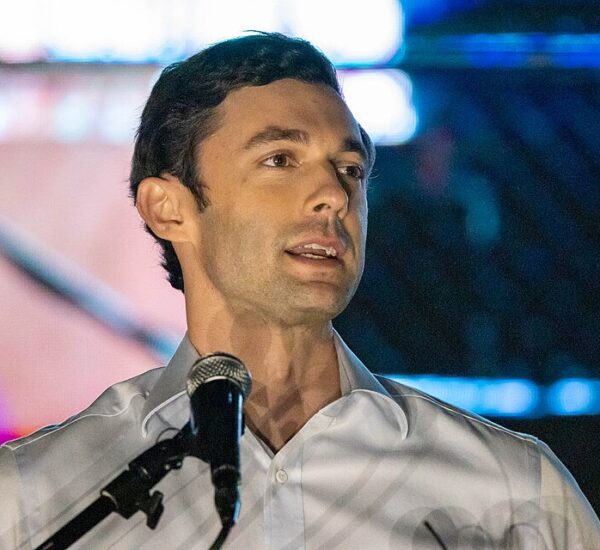
A new poll out of Iowa is delivering encouraging news for Republicans as the 2026 midterm elections approach, with Republican Rep. Ashley Hinson holding a narrow advantage in one of the nation’s closely watched U.S. Senate contests.
According to a new Emerson College Polling/Nexstar Media survey, Hinson leads Democratic candidate Josh Turek by two percentage points, setting up what could become a hard-fought battle for control of a crucial Senate seat.
The survey shows Hinson receiving 47% support compared to Turek’s 45%, while Libertarian candidate Thomas Laehn receives 2%. Another 7% of respondents remain undecided, leaving room for the race to shift before voters head to the polls on November 3.
Although Hinson maintains the lead, her advantage falls within the poll’s margin of error, meaning the contest remains statistically competitive.
Republican Support Remains Strong Among Older Voters
One of the most notable findings involves the differences between younger and older voters.
According to Emerson College Polling Executive Director Spencer Kimball, voters over the age of 50 favor Hinson over Turek by 13 percentage points.
Younger voters, however, tell a different story. Among those under 50, Turek holds a 14-point advantage over the Republican candidate.
These numbers highlight a significant generational divide that could influence the outcome of the election.
For Republicans, maintaining strong support among older voters while appealing to undecided residents could prove essential in securing victory.
Economy Takes Center Stage In Iowa
Economic concerns continue to dominate the political conversation across Iowa, where families, retirees, farmers, and small-business owners are closely watching developments involving household expenses and financial stability.
The Emerson survey found that 42% of Iowa voters identify the economy as their most important issue, making it the leading concern among respondents.
Healthcare ranks second at 18%, followed by threats to democracy at 10% and education at 8%.
The importance of economic issues could shape the closing weeks of the campaign as both candidates attempt to persuade voters that their policies will best address the state’s challenges.
President Donald Trump’s administration and its economic agenda are also expected to remain important topics as Republicans and Democrats compete for support ahead of the midterm elections.
Hinson Faces A Competitive Election
Despite the Republican’s current advantage, the latest survey suggests the race has tightened.
Hinson’s support has declined from 50% in September to 47% in the newest Emerson poll. Meanwhile, Turek’s support has remained unchanged at 45%.
The shift indicates that neither candidate can afford to take the outcome for granted.
Iowa has supported Republicans in recent major elections, including Trump’s presidential victory in 2024. However, Democrats see an opportunity to compete for the open Senate seat being vacated by Republican Sen. Joni Ernst.
The outcome could have national consequences as both parties fight for control of the Senate and the ability to advance their legislative priorities in Washington.
Democrats Lead In Iowa Governor’s Race
The Emerson survey also examined Iowa’s gubernatorial contest, revealing a different picture.
Democratic candidate Rob Sand leads Republican Zach Lahn by 49% to 45%, with another 6% of voters undecided.
The contrast between the Senate and governor’s races suggests Iowa voters are evaluating candidates individually rather than simply supporting one political party across the ballot.
It also underscores the importance of turnout, campaign messaging, and persuading undecided voters in the final weeks before Election Day.
All Eyes On November
With Election Day approaching, Iowa’s Senate race remains an important contest for Republicans seeking to maintain their influence in Washington.
Hinson’s narrow polling lead offers the GOP a positive development, particularly given her advantage among older voters. However, the small margin and the number of undecided voters mean the outcome remains uncertain.
The Emerson survey questioned 650 likely voters and carries a margin of error of approximately 3.8 percentage points.
As the November 3 election draws closer, both parties will be watching Iowa carefully to see whether Republicans can hold the seat or Democrats can deliver an unexpected victory.
For now, Hinson holds the advantage in the latest Emerson poll, but the race is far from decided.