Judges Call Out Trump’s DOJ
A federal appeals court hearing on Friday revealed growing legal questions surrounding President Donald Trump’s proposed White House ballroom project, as two judges sharply challenged arguments made by administration attorneys.
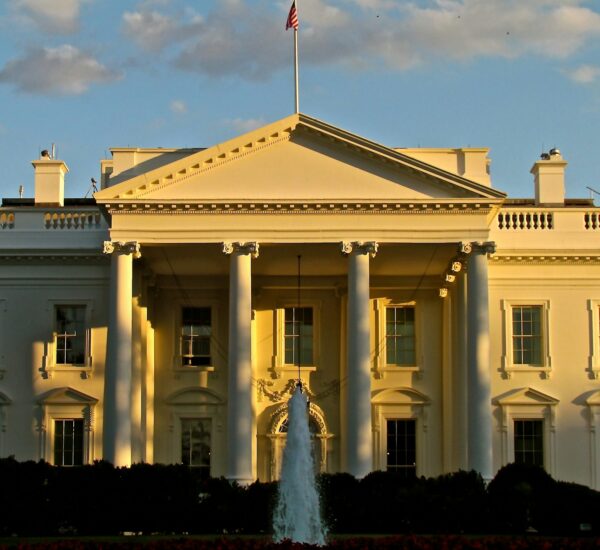
The dispute centers on Trump’s plan to build a massive new ballroom on White House grounds, a project estimated to cost roughly $400 million and add nearly 90,000 square feet of space to the historic property.
During arguments before the U.S. Court of Appeals for the District of Columbia Circuit, two judges appointed by Democratic presidents repeatedly pressed government lawyers over whether Congress ever gave clear approval for the project.
The courtroom exchanges highlighted the growing battle between the Trump administration and historic preservation groups seeking to stop construction.
Judges Raise Tough Questions About Trump’s White House Project
Judge Patricia Millett questioned Justice Department attorney Yaakov Roth about whether the administration moved so quickly that courts may no longer be able to stop the project.
Millett focused on underground construction work that has already been completed and asked when the ballroom became effectively impossible to halt.
“At what point did this become a done deal?” Millett asked during the hearing.
Roth argued that courts should never have blocked the project in the first place.
The questioning intensified when Millett presented a series of hypothetical examples involving historic landmarks and government authority.
The discussion underscored one of the central issues in the case: how much power federal agencies have when carrying out major construction projects tied to national interests.
Preservation Group Says Congress Never Approved Ballroom
The lawsuit was filed by the National Trust for Historic Preservation, which argues that Congress must pass new legislation before a project of this size can move forward on White House property.
According to the group, existing federal laws do not provide clear authorization for such a major expansion.
The Trump administration strongly disagrees.
Government lawyers argue that current laws already allow improvements and alterations to White House facilities and provide broad authority for federal officials to manage government-owned property.
Judge Brad Garcia appeared skeptical of that position.
Garcia questioned whether language authorizing officials to promote and regulate public lands should automatically be interpreted as permission to construct large new buildings.
The exchange signaled that at least some members of the panel may have concerns about the administration’s legal justification.
Trump Administration Points to National Security Needs
Administration officials maintain that the project is about more than creating additional event space.
They argue that critical national security infrastructure is also being built beneath the proposed ballroom.
Earlier this year, a lower court temporarily blocked above-ground construction while allowing work on underground security facilities to continue.
Trump administration attorneys told the appeals court that those security-related improvements should move forward regardless of what happens with the ballroom itself.
Several judges acknowledged that national security concerns could play an important role in the court’s final decision.
Key Question: Who Has the Right to Sue?
Another major issue before the court is whether the preservation group has legal standing to challenge the project.
Federal courts generally require plaintiffs to show a direct and specific injury before they can file a lawsuit.
Judge Neomi Rao questioned whether the group’s claims meet that standard.
The lawsuit relies partly on a member who regularly visits the area surrounding the White House and argues that the project would diminish the site’s historic character.
Rao suggested those allegations may not be specific enough to justify a federal lawsuit.
Attorneys for the preservation group disagreed, arguing that citizens have a legitimate interest in protecting nationally significant historic landmarks.
What’s Next for Trump’s White House Ballroom?
The appeals court did not issue an immediate ruling Friday.
The judges are expected to review the arguments before deciding whether construction can continue or whether additional congressional approval is required.
The outcome could have major implications not only for Trump’s White House ballroom proposal but also for future presidents seeking to modify historic federal properties.
For supporters, the project represents a long-overdue modernization effort that could improve White House operations, event hosting capabilities, and security infrastructure.
For opponents, it raises important questions about historic preservation and executive authority.
As the legal battle continues, the future of one of Trump’s most ambitious White House projects remains uncertain.