Senate Republicans are pushing back on Trump.
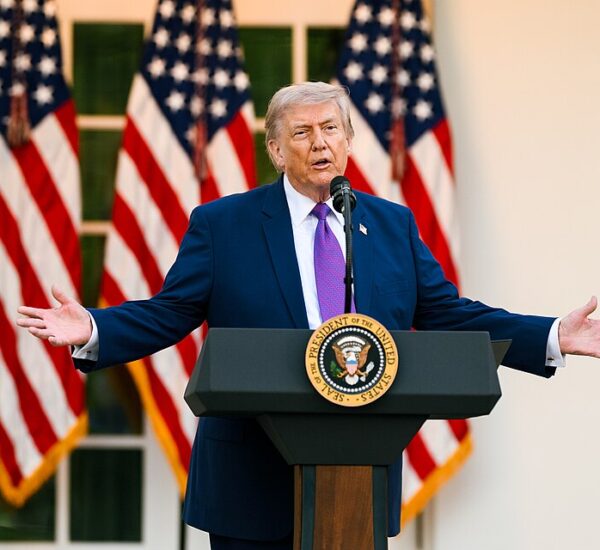
President Donald Trump is pushing Senate Republicans to take bold action in Washington, but Senate Majority Leader John Thune is signaling that one of Trump’s latest demands may not be enough to move the president’s agenda forward.
The disagreement centers on Senate Parliamentarian Elizabeth MacDonough, a longtime Senate official responsible for interpreting chamber rules.
Earlier this week, Trump called on Republicans to remove MacDonough after several rulings blocked key legislative priorities backed by conservatives.
But according to Thune, replacing her would not solve the real problem.
The issue, he says, comes down to simple math.
Speaking on FOX Business, Thune explained that Senate Republicans currently do not have enough votes to pass the Trump-backed SAVE America Act under existing Senate rules.
“For me, it’s a function of math,” Thune said.
Why The Fight Matters
The battle is about much more than one Senate official.
At stake is the SAVE America Act, legislation strongly supported by President Trump and many Republicans that would require proof of U.S. citizenship when registering to vote in federal elections.
Supporters argue the proposal would strengthen election security, protect voter rolls, and increase confidence in American elections.
Critics argue the measure could create additional barriers for some voters.
The debate has become one of the most closely watched election-related issues on Capitol Hill.
Thune Says Senate Rules Are The Real Obstacle
Thune explained that the parliamentarian’s role is to enforce Senate rules, particularly during the budget reconciliation process.
Under those rules, legislation must primarily affect federal spending and revenue in order to qualify for passage with a simple majority vote.
According to Thune, the SAVE America Act would not meet that standard.
As a result, the bill would require 60 votes in the Senate rather than the 51 votes Republicans can use for certain budget-related measures.
In other words, even if a new parliamentarian were appointed tomorrow, the legislation would still face the same vote threshold.
That reality makes the issue less about personnel and more about Senate procedure.
Trump Frustrated With Recent Rulings
President Trump has openly criticized MacDonough in recent days.
In a Truth Social post, Trump argued that Senate Republicans should replace the parliamentarian immediately, claiming recent decisions have repeatedly worked against conservative priorities.
The president pointed to a recent ruling involving Republican legislative efforts and argued that a different parliamentarian could have reached a different conclusion.
Trump also maintained that Republicans have every right to make leadership changes if they believe Senate rules are being interpreted unfairly.
His comments quickly sparked debate among conservatives, lawmakers, and political observers.
Republicans Have Benefited From Some Rulings Too
Thune noted that Senate Republicans have also benefited from decisions made by the parliamentarian.
He pointed to a recent ruling involving a Democrat-backed amendment related to government weaponization claims.
According to Thune, that decision required Democrats to clear a 60-vote threshold rather than pass the amendment with a simple majority.
The ruling helped Republicans protect the broader legislation from changes that could have complicated its path through Congress.
“You win some and you lose some with a parliamentarian,” Thune explained.
Another Trump Priority Faces Resistance
The discussion also touched on another long-running Trump priority: eliminating the Senate filibuster.
For years, Trump has argued that ending the filibuster would allow Republicans to advance legislation more quickly when they hold a majority.
However, Thune made it clear that such a move currently lacks support within the Republican conference.
“We don’t have the votes,” he said.
According to Thune, opposition remains significant among GOP senators, making major procedural changes unlikely in the near future.
What Happens Next?
The disagreement highlights one of the biggest challenges facing Republicans in Washington.
Even when party leaders share the same policy goals, Senate rules and vote counts often determine what can actually become law.
Trump continues to push aggressively for election integrity reforms and other conservative priorities.
But Thune’s comments suggest that procedural realities remain a major obstacle.
For now, the Senate Republican leader is delivering a message many conservatives may not want to hear:
Changing the parliamentarian won’t change the vote count.
And until Republicans can secure more support in the Senate, some of Trump’s biggest legislative priorities may remain stuck on Capitol Hill.