This can’t be happening again can it?
America’s air travel system is facing another major headache, and the latest disruption is raising serious questions about the reliability of the nation’s aviation infrastructure under President Donald Trump’s administration.
United Airlines experienced a widespread computer outage Monday, November 16, disrupting departing flights across the country just days after a major Federal Aviation Administration (FAA) malfunction brought air travel nationwide to a temporary halt.
The back-to-back incidents have frustrated passengers, complicated airline schedules, and renewed concerns about the aging technology Americans depend on when they take to the skies.
With the busy Thanksgiving travel season approaching, the timing could hardly be worse for millions of families preparing to visit loved ones.
And while federal officials insist passenger safety remains their highest priority, the latest problems are putting renewed pressure on Washington to deliver lasting solutions.
United Airlines Hit By Widespread Computer Problems
United Airlines confirmed Monday afternoon that a technology failure was interfering with departing flights throughout its network.
The Chicago-based airline acknowledged the problem and worked to restore normal operations as passengers encountered delays and uncertainty.
The disruption reportedly involved systems used to calculate aircraft weight and balance information, which pilots must receive before departure.
Without accurate information about an aircraft’s weight and distribution, flight crews cannot safely complete important preflight calculations.
As a precaution, affected aircraft remained on the ground until the necessary information could be obtained.
United later announced that the technical problem had been resolved, bringing an end to the immediate outage after approximately an hour and a half.
The airline emphasized that flights already in the air were not affected. United Express regional operations also continued without disruption from the malfunction.
Company representatives said there was no indication the incident was connected to a cybersecurity attack.
However, the interruption added another layer of frustration for travelers already dealing with the consequences of an earlier nationwide aviation emergency.
FAA Ground Stop Creates Nationwide Travel Chaos
The United Airlines outage came just three days after the FAA issued a nationwide ground stop on Friday, November 13, following a serious telecommunications malfunction.
The federal agency said its aging communications network became unstable after an unusual flood of data overwhelmed parts of the system.
According to the FAA, the network was receiving approximately 1,000 connection attempts every four to five seconds.
The technical failure interfered with systems supporting aircraft communications and radar information, prompting aviation officials to temporarily suspend departures nationwide.
The disruption affected 17 of the country’s 22 major air traffic control centers.
Federal investigators identified two possible sources of the problem: a radar facility in Amarillo, Texas, and a radio communications facility in El Dorado, Arkansas.
Contractor L3Harris had been performing network-related work at the Arkansas location, including the installation of a new router.
Officials subsequently isolated the suspected trouble spots and disabled certain router functions to stabilize the network.
Air traffic operations began resuming Friday evening, but the consequences extended well beyond the initial shutdown.
Thousands of flights were canceled or delayed as airlines struggled to reposition aircraft, coordinate crews, and accommodate stranded passengers.
The FAA reported approximately 12,462 flight cancellations on Friday, although it cautioned that not every cancellation was directly caused by the nationwide ground stop.
The agency also maintained that established safety procedures remained effective throughout the emergency.
Trump Administration Faces Growing Aviation Concerns
The latest breakdowns have placed renewed attention on the federal government’s responsibility to maintain a dependable national air transportation system.
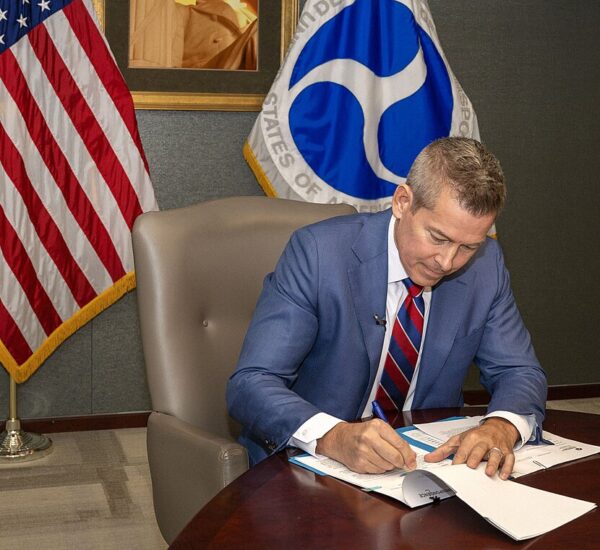
President Trump and Transportation Secretary Sean Duffy have emphasized the importance of modernizing America’s aviation infrastructure, much of which relies on technology developed decades ago.
But the recent incidents demonstrate how difficult that modernization effort could become.
Replacing outdated equipment while keeping thousands of daily flights moving safely requires careful coordination, technical expertise, and dependable backup systems.
A malfunction involving a single network component can potentially create disruptions across the entire country.
For American taxpayers, the issue is not simply whether Washington spends more money.
It is whether federal agencies and contractors can demonstrate that those investments produce reliable systems, stronger safeguards, and measurable improvements.
The problems also raise questions about maintenance procedures, contractor oversight, and whether aging technology is being replaced quickly and carefully enough.
Although the United Airlines outage and the FAA ground stop occurred within days of each other, authorities have not established a connection between the two incidents.
There is also no evidence that President Trump personally caused either failure.
The larger concern involves infrastructure challenges that have developed over multiple presidential administrations and now require urgent attention.
United Airlines CEO Calls For Major Improvements
United Airlines CEO Scott Kirby has also expressed concern about the condition of America’s air traffic control infrastructure.
Following Friday’s nationwide shutdown, Kirby praised federal aviation employees for prioritizing safety while emphasizing the need for more dependable technology.
He called for additional investment in modern equipment, improved system reliability, and adequate staffing throughout the national air traffic control network.
Kirby also indicated that lawmakers from both parties recognize the seriousness of the problem.
The airline executive’s comments highlight a growing reality: America’s commercial aviation system cannot function efficiently without reliable federal infrastructure.
Airlines may operate their own aircraft, scheduling systems, and passenger services, but they still depend heavily on the FAA to coordinate safe travel through the nation’s airspace.
When that network encounters major problems, the effects can spread across airports, businesses, and communities in a matter of hours.
American Families Pay The Price For Travel Disruptions
For ordinary Americans, repeated airline disruptions can mean much more than an inconvenient schedule change.
Families may miss weddings, reunions, medical appointments, or important holiday gatherings.
Retirees traveling to visit children and grandchildren can face unexpected expenses for hotel rooms, meals, and alternative transportation.
Business owners may lose valuable time when employees cannot reach meetings or return home as scheduled.
And travelers living on fixed incomes can find themselves facing financial pressure when a routine trip becomes an extended airport ordeal.
The disruptions are especially concerning ahead of Thanksgiving, traditionally one of the busiest travel periods of the year.
Even after an airline fixes its immediate technical problem, the effects can continue as crews and aircraft must be moved back into position.
That means travelers may encounter delays long after the original malfunction has been resolved.
For passengers preparing to fly, checking flight status before leaving home and monitoring airline notifications remains especially important.
Travelers whose flights are canceled or significantly changed should also review their eligibility for refunds or other assistance under applicable airline policies and federal regulations.
Can Washington Prevent Another Aviation Breakdown?
The repeated failures have renewed debate about how the federal government manages critical infrastructure.
Modern air transportation depends on sophisticated systems that must operate accurately and consistently.
Those systems require regular maintenance, effective cybersecurity protections, trained personnel, and reliable backup capabilities.
When problems arise, federal officials and private companies must determine what went wrong and take appropriate steps to prevent similar incidents.
The FAA has already acknowledged that its aging infrastructure needs significant modernization.
Following Friday’s shutdown, the agency disabled the relevant functionality on approximately 60 similar routers as a precaution.
Investigators are continuing to examine the underlying cause of the malfunction.
Meanwhile, United Airlines has restored the technology involved in Monday’s interruption.
These immediate fixes may help stabilize operations, but broader questions remain about the long-term resilience of America’s aviation network.
For the Trump administration, the challenge will be ensuring that modernization efforts strengthen public confidence while keeping safety at the forefront.
Congress also faces responsibility for overseeing federal spending, evaluating contractor performance, and ensuring that aviation upgrades deliver meaningful results.
Americans Want Answers Before The Next Major Outage
The United Airlines breakdown and the earlier FAA emergency involved different systems, but together they highlight vulnerabilities that deserve attention.
Americans expect the country’s aviation network to be safe, efficient, and dependable.
They also expect federal agencies and major corporations to take responsibility when technology fails.
With millions of passengers preparing for holiday travel, additional disruptions could create significant problems for families and businesses nationwide.
The Trump administration now faces an important opportunity to demonstrate that improvements to America’s aviation infrastructure can produce lasting results.
For passengers sitting in airport terminals, however, the immediate concern is much simpler.
They want flights that depart on schedule, reliable information when problems occur, and confidence that the systems responsible for keeping them safe are functioning properly.
As Washington investigates the latest aviation breakdowns, one question remains: How many more nationwide travel disruptions will Americans have to endure before the country’s aging air travel infrastructure receives the improvements it needs?