Trump Team Speaks On Oil Prices
Interior Secretary Doug Burgum says the Trump administration is working to bring gasoline and oil prices down as escalating tensions with Iran create new pressure on American consumers and global energy markets.
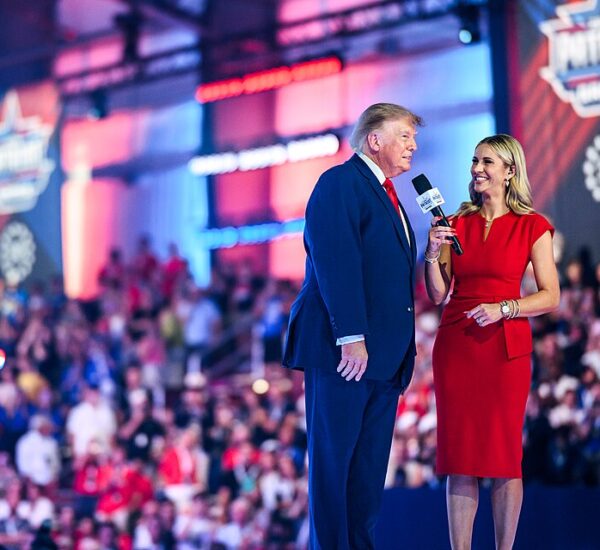
Speaking Wednesday during the Republican midterm convention in Dallas, Burgum argued that mounting economic and military pressure has left Iran in an increasingly difficult position.
“These guys are desperate,” Burgum said during an appearance on Newsmax’s “Rob Schmitt Tonight.”
Burgum said the administration believes its economic and military strategy is weakening Tehran, pointing to Iran’s economic troubles and losses suffered by its naval forces.
But for millions of Americans, another issue is hitting much closer to home: the rising cost of energy.
Oil Prices Surge Above $100
Global oil prices climbed sharply Wednesday as renewed fighting involving the United States and Iran intensified concerns about energy supplies from the Middle East.
Brent crude, the international benchmark, settled at $101.21 per barrel, up 3.4% for the day. West Texas Intermediate, the main U.S. benchmark, finished at $96.05 per barrel.
The renewed surge comes as disruptions around the Strait of Hormuz continue to restrict a critical global energy route. Before the war, roughly one-fifth of the world’s oil and gas supply passed through the strait.
That makes developments in the region particularly important for American families because higher crude-oil prices can eventually affect gasoline, diesel, transportation and other everyday expenses.
U.S. gasoline is currently averaging about $4.22 per gallon, while diesel prices are approaching $6 per gallon.
Burgum Defends Trump’s Strategy Toward Iran
Despite those higher energy costs, Burgum argued that preventing Iran from developing a nuclear weapon remains a critical national security objective.
“The IRGC was so close to having a nuclear weapon,” Burgum said, referring to Iran’s Islamic Revolutionary Guard Corps.
Burgum went on to credit President Donald Trump with making the country safer, describing the administration’s actions against Iran in sweeping terms.
Those comments represent Burgum’s assessment of the administration’s policy rather than an independently established conclusion about Iran’s nuclear capabilities or the broader consequences of the conflict.
Burgum Points to America’s Energy Strength
Burgum also argued that America’s enormous domestic energy industry leaves the country better prepared to handle turmoil overseas.
The United States is a major producer of both crude oil and natural gas, giving policymakers a domestic energy base that many other nations do not have.
Burgum said Trump’s push for increased American energy production previously helped put downward pressure on prices and expressed confidence that the administration’s policies can eventually do so again.
“We are so well positioned,” Burgum said.
But even high domestic production cannot completely insulate American motorists from disruptions in the global oil market.
Oil is traded internationally, meaning major interruptions to Middle Eastern supplies can affect prices paid by refiners and ultimately consumers in the United States.
Refinery Constraints Add Another Challenge
Burgum said refinery limitations are another factor affecting fuel prices.
According to the interior secretary, Trump recently met with refiners as administration officials examine ways to increase supply and ease pressure at the pump.
“We’re working every angle to help drive prices down,” Burgum said.
The refinery issue matters because crude-oil production is only one part of the gasoline supply chain. Oil must be processed into gasoline, diesel and other fuels before reaching consumers.
When refining capacity becomes constrained, fuel prices can remain elevated even when sufficient crude oil is available.
The current conflict has contributed to what Reuters describes as a global refining crunch, with refined-fuel prices experiencing particularly significant pressure.
Trump Says Lower Oil Prices Could Take Time
Americans hoping for immediate relief may have to wait.
Trump acknowledged Wednesday that elevated oil prices could persist beyond the November midterm elections.
“Right after the election, oil prices are going to be tumbling downward,” Trump told reporters, while adding that he believes it could take somewhat longer than the midterms for the situation to improve.
The president’s statement represents his prediction rather than a guarantee about future energy prices.
Oil prices can be influenced by numerous factors beyond the control of any president, including global production, refinery capacity, demand, inventories, shipping disruptions and geopolitical conflicts.
Still, energy prices are likely to remain an important economic issue as Americans continue dealing with higher gasoline and diesel costs.
Why the Strait of Hormuz Matters to American Drivers
One of the biggest factors hanging over oil prices is the Strait of Hormuz.
The narrow waterway connecting the Persian Gulf with international markets has historically been one of the world’s most important energy transportation routes.
Recent shipping volumes have fallen dramatically from earlier levels as attacks and security concerns disrupt normal tanker traffic.
Reuters reported Wednesday that oil flows through the strait recently dropped below 2 million barrels per day, compared with roughly 8 million to 9 million barrels per day during a period before the latest fighting resumed.
That disruption helps explain why events thousands of miles away can quickly affect what Americans pay at their neighborhood gas stations.
Gas Prices Put Energy Policy Back in the Spotlight
For many households, the political arguments surrounding Iran and energy ultimately come down to a practical concern: What will it cost to fill the tank?
Higher gasoline and diesel prices don’t stop at the pump.
Transportation costs can eventually work their way through the broader economy, affecting trucking, agriculture, manufacturing, airline travel and the cost of delivering everyday goods.
A prolonged period of oil above $100 could therefore add additional inflationary pressure at a time when many households remain highly sensitive to increases in everyday expenses. Reuters reports that analysts are watching the possibility that sustained energy costs could raise transportation and manufacturing expenses and contribute to broader inflation pressures.
Burgum remains confident that the administration’s energy strategy can ultimately deliver relief.
“This is the policies of President Trump at work,” Burgum said. “They worked last year. They’re going to work.”
Whether prices fall as quickly as the administration hopes will depend heavily on what happens next in the Middle East, particularly around the Strait of Hormuz.
For American drivers, retirees, small-business owners and families watching their monthly budgets, the next move in oil and gasoline prices could have consequences far beyond the gas station.