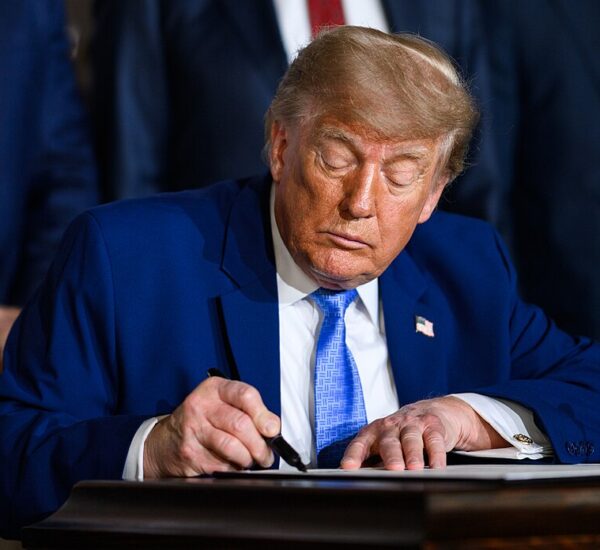
Trump Unveiling Obamacare Rebates
Up to 1 million Americans who purchase their own health insurance could soon receive approximately $500 directly from the federal government under a Trump administration plan reportedly being prepared for this fall.
The proposed payments would target certain consumers enrolled in Affordable Care Act marketplace health plans who do not receive federal premium assistance, according to a new report from Axios.
Approximately $500 million is reportedly available for the payments.
For families already dealing with health insurance premiums, medical bills and other household expenses, an extra $500 could provide some welcome financial relief.
But there is an important catch: the payments have not yet been formally announced by the Centers for Medicare & Medicaid Services (CMS), and consumers should not assume they automatically qualify.
Here is what Americans need to know about the reported $500 health insurance payments, including who could qualify, where the money comes from and what happens next.
Who Could Receive the $500 Health Insurance Payment?
The reported plan would not provide $500 to every American or even every person enrolled in an Obamacare marketplace plan.
Instead, the payments would reportedly be aimed at people who:
- Purchase health insurance through an Affordable Care Act marketplace.
- Pay for coverage without receiving federal premium assistance.
- Live in one of the states covered by the proposed program.
- Meet any additional eligibility requirements ultimately established by the federal government.
These unsubsidized consumers can face substantial monthly insurance costs because they pay their premiums without the premium tax credits available to many other marketplace customers.
If approximately $500 million were divided among 1 million eligible consumers, the average payment would work out to roughly $500 per person.
The exact amount each individual would receive has not been formally announced.
Which States Could Receive the $500 Payments?
According to the report, eligible consumers could be located across approximately 30 states.
Thirteen states were specifically identified as having significant concentrations of potentially eligible marketplace customers:
Alabama, Alaska, Arkansas, Delaware, Florida, Michigan, Mississippi, Missouri, New Hampshire, Ohio, South Carolina, Texas and Wisconsin.
Living in one of those states does not automatically mean someone will receive a payment.
Eligibility reportedly depends largely on whether an individual purchased marketplace coverage without federal premium assistance.
More detailed eligibility requirements will not be known until the administration or CMS releases official guidance.
Where Is the $500 Million Coming From?
The reported payments would come from approximately $500 million remaining in federal accounts connected to Affordable Care Act marketplace user fees.
Marketplace user fees are charged to participating insurance companies as a percentage of premiums and are used to finance the operation of federally facilitated health insurance exchanges.
Although insurers are responsible for paying those fees, such costs can ultimately be reflected in insurance premiums.
Administration officials reportedly contend that more money was collected than was ultimately needed and that roughly $500 million remains available.
One administration official described the money to Axios as having been over-collected and left sitting in federal accounts.
The Trump administration is now reportedly considering returning those funds to certain consumers rather than leaving the balance unused.
Could Payments Really Be Sent Directly to Bank Accounts?
According to the report, the administration is considering direct-deposit payments, meaning eligible consumers could potentially receive the money directly rather than through a reduction in future insurance premiums.
That distinction could make the proposal particularly noticeable to consumers.
Instead of receiving an indirect healthcare benefit, qualifying Americans could see approximately $500 deposited into their accounts.
However, CMS has not yet publicly released instructions explaining how payments would be distributed or whether eligible consumers would have to provide additional information.
Consumers should therefore be skeptical of anyone claiming they can already register people for the program.
When Could Americans Receive the Money?
The reported plan calls for payments to potentially arrive this fall and before the November 3, 2026, midterm elections.
The timing gives the proposal political significance because healthcare affordability and the broader cost of living remain major concerns for American households.
President Donald Trump was expected to discuss the proposal as Republicans gathered for their national midterm convention in Dallas.
An official announcement could provide considerably more information about eligibility, payment dates and how the administration believes it has authority to distribute the funds.
Until that happens, no specific payment date should be considered guaranteed.
The Money Has Been Debated Before
The federal funds at the center of the reported plan have previously attracted attention in Washington.
During the Biden administration, officials proposed a mechanism involving Affordable Care Act marketplace user fees to help provide contraceptive services at no cost in certain circumstances.
Republicans questioned that approach, including whether CMS had the authority to use marketplace fees for that purpose.
The proposal was eventually withdrawn.
The remaining balance is now at the center of a very different healthcare proposal under the Trump administration.
Trump Wants More Healthcare Money Going Directly to Americans
The idea also fits into President Trump’s broader healthcare agenda.
Earlier in 2026, the White House unveiled what it calls the Great Healthcare Plan, which proposes directing certain federal healthcare dollars to eligible individuals rather than providing those funds directly to insurance companies.
The administration argues that giving individuals greater control over healthcare dollars could increase consumer choice and help Americans afford coverage.
The reported $500 payments are separate from that broader proposal, but they reflect a similar philosophy: putting healthcare-related money directly into consumers’ hands.
CMS Has Already Reduced Marketplace User Fees
The administration has also made other changes involving Affordable Care Act marketplace fees.
CMS finalized lower user-fee rates for the 2027 benefit year.
The federal facilitated exchange fee is scheduled to decline from 2.5% in 2026 to 1.9% in 2027, while the rate for state-based exchanges using the federal platform is scheduled to fall from 2.0% to 1.5%.
CMS says the lower fees are expected to put downward pressure on health insurance premiums.
Those reductions are separate from the reported $500 rebate proposal but provide important context for the administration’s approach to marketplace costs.
Could Legal Questions Delay the $500 Payments?
That remains one of the biggest unanswered questions.
The legal authority for CMS to take money collected through marketplace user fees and distribute it directly to consumers has not yet been publicly established.
Until CMS or another federal agency publishes the program’s legal framework, it remains unclear whether additional administrative action—or potentially congressional approval—could be required.
That uncertainty is another reason consumers should treat the reported payments as a developing proposal rather than guaranteed money.
Do Americans Need to Apply for the $500 Payment?
There is currently no publicly announced application process.
That is particularly important for consumers to understand.
People should be cautious about unsolicited emails, text messages, social media advertisements or websites claiming they can immediately enroll Americans for a “$500 Obamacare payment.”
Until CMS or another federal agency announces an official process, consumers should avoid providing Social Security numbers, banking information or other sensitive personal information to websites claiming to register them for the payment.
What Should Marketplace Customers Do Now?
For now, consumers do not appear to need to take any action.
Marketplace customers who purchase insurance without federal premium subsidies should watch for an official announcement from CMS or the federal government.
An official announcement should answer several major questions:
Who qualifies?
Which 30 states are included?
How much will each person receive?
Will payments automatically be deposited?
Will consumers need to apply?
When will the payments arrive?
Those details will determine how many Americans ultimately benefit from the proposal.
Bottom Line
Up to 1 million Americans could receive approximately $500 each under a Trump administration healthcare proposal reportedly being prepared for this fall.
The reported $500 million would come from excess funds associated with Affordable Care Act marketplace fees, with payments primarily targeting consumers who purchase marketplace health insurance without federal premium assistance.
For those consumers, the proposal could mean hundreds of dollars returned directly to their pockets.
But the most important point is that the program has not yet been formally detailed by CMS.
Until federal officials release eligibility requirements, payment dates and instructions, Americans should regard the $500 payments as a reported upcoming proposal—not guaranteed money.
Consumers interested in the potential payments should watch official federal announcements closely and avoid websites claiming to offer early registration.