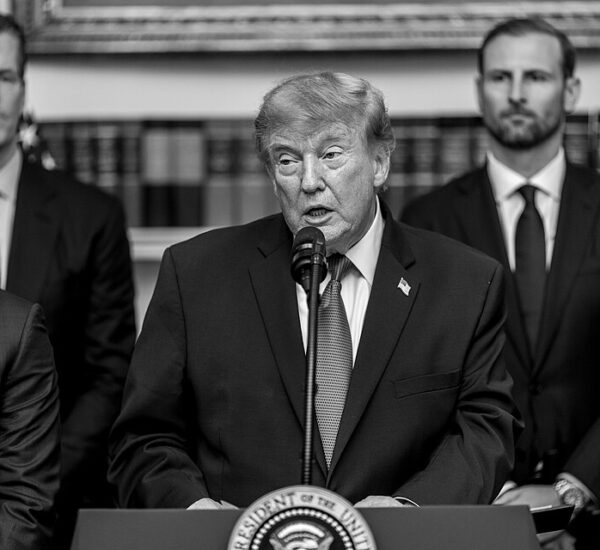
Trump Unveils More Tariffs
President Donald Trump is taking another major step in his America First trade agenda, announcing sweeping new tariffs on imports from 60 countries that administration officials say have failed to crack down on goods linked to forced labor. The move comes after the Supreme Court blocked an earlier version of Trump’s tariff policy, prompting the White House to adopt a new legal strategy to keep its trade agenda moving forward.
The new tariffs, ranging from 10% to 12.5%, will apply to imports from countries that account for roughly 99% of all goods entering the United States. Administration officials argue the policy is designed to encourage stronger enforcement against forced labor while promoting fairer trade practices for American businesses.
Trump Replaces Temporary Tariffs With Stronger Legal Authority
The latest tariffs take effect just after 12:01 a.m. Friday, when temporary worldwide 10% tariffs officially expire.
Those temporary duties were introduced after the Supreme Court ruled that the administration could not rely on the International Emergency Economic Powers Act (IEEPA) to impose broad import taxes.
Rather than abandon the effort, the Trump administration shifted to Section 301 of the Trade Act of 1974, a long-established law that allows presidents to impose tariffs or other trade penalties against countries found to engage in unfair, unreasonable, or discriminatory trade practices.
Trump successfully used the same authority during his first term to impose tariffs on Chinese imports, and those measures withstood years of legal challenges.
More Tariffs May Be Coming
The current announcement may only be the beginning of a broader trade crackdown.
The Office of the U.S. Trade Representative is investigating whether 16 additional countries, representing nearly 70% of all U.S. imports, have flooded international markets with heavily subsidized goods that place American manufacturers at a competitive disadvantage.
If investigators conclude those countries have engaged in unfair trade practices, the administration could impose additional Section 301 tariffs in the months ahead.
Trump Says America First Means Protecting U.S. Manufacturing
For years, Trump has argued that decades of free-trade agreements encouraged companies to move factories and jobs overseas, weakening American manufacturing communities.
Supporters of the administration’s trade policies believe higher tariffs help level the playing field by making imported goods less competitive while encouraging companies to manufacture products inside the United States.
The administration has repeatedly said reducing America’s dependence on foreign supply chains is essential to protecting national security and rebuilding domestic industry.
Why the Supreme Court Forced a New Strategy
Last year, Trump attempted to impose sweeping tariffs under the International Emergency Economic Powers Act, arguing that America’s long-running trade deficit constituted a national emergency.
The Supreme Court later ruled that IEEPA does not authorize presidents to impose tariffs, forcing the federal government to refund importers who had already paid those duties.
Following that decision, Trump temporarily relied on Section 122 of the Trade Act of 1974, which allows limited tariffs for up to 150 days. Those temporary tariffs expire Friday, clearing the way for the new Section 301 duties.
Some Countries Earned Lower Tariff Rates
Administration officials said several countries strengthened enforcement against forced labor after the proposal was first announced.
As a result, some nations qualified for reduced tariff rates.
For example, officials said India’s proposed tariff was lowered from 12.5% to 10% after the country adopted stronger enforcement measures aimed at preventing forced labor-related imports.
Officials indicated other countries could also receive lower rates if they improve enforcement in the future.
Several Products Will Be Exempt
Not every imported product will face the new tariffs.
Among the major exemptions are:
- Oil and natural gas
- Fertilizer
- Products that qualify for duty-free treatment under the U.S.-Mexico-Canada Agreement (USMCA), the trade agreement negotiated during Trump’s first term
The exemptions are intended to limit disruptions in key industries while maintaining pressure on countries that fail to meet the administration’s trade standards.
Will Americans Pay Higher Prices?
Tariffs are paid by American companies importing foreign goods, not by foreign governments directly.
Many importers attempt to offset those added costs by increasing prices for consumers, raising concerns that some products could become more expensive.
Administration officials, however, argue that strengthening domestic manufacturing, protecting American jobs, and reducing reliance on foreign suppliers provide long-term economic benefits that outweigh potential short-term price increases.
The debate over tariffs is expected to remain a major economic issue as the country moves closer to the upcoming midterm elections.
The Forced Labor Issue Behind the Tariffs
The administration says the new tariffs are designed to encourage foreign governments to strengthen enforcement against forced labor in global supply chains.
The International Labour Organization (ILO) estimates that approximately 27.6 million people were living under forced labor conditions worldwide in 2021.
Human rights organizations have long advocated for stronger import restrictions targeting products connected to forced labor.
Martina Vandenberg, president of The Human Trafficking Legal Center, has said import bans can become an effective tool in reducing forced labor, although she cautioned they should be backed by meaningful enforcement and transparency.
Other legal experts point to the Uyghur Forced Labor Prevention Act, passed in 2021, as one of the most significant U.S. efforts to restrict imports connected to forced labor. While opinions differ on its overall effectiveness, many experts agree it has brought greater attention to labor trafficking and supply chain oversight.
Countries Are Already Responding
Trade analysts say the possibility of higher U.S. tariffs has already encouraged several countries to strengthen their own trade policies.
India has revised portions of its foreign trade rules to address forced labor concerns, while upcoming European Union regulations are also prompting governments to adopt stricter import standards.
Although experts say those policy changes cannot be credited solely to the Trump administration’s investigations, they acknowledge that growing international pressure is encouraging countries to take the issue more seriously.
What This Means Going Forward
The latest tariff package represents another major step in Trump’s effort to reshape American trade policy through an America First approach focused on domestic manufacturing and tougher enforcement against unfair trade practices.
With additional investigations already underway, more countries could soon face new trade penalties if the administration concludes they are harming American businesses through unfair competition or inadequate enforcement against forced labor.
Whether the policy ultimately boosts U.S. manufacturing, changes global supply chains, or increases costs for consumers will likely remain one of the biggest economic debates in the months ahead.
Frequently Asked Questions
Why is Trump imposing new tariffs?
The administration says the tariffs are intended to pressure foreign governments to strengthen enforcement against forced labor while addressing trade practices it considers unfair to American businesses.
When do the new tariffs take effect?
The tariffs begin Friday, immediately after the temporary worldwide tariffs expire.
Will the tariffs raise prices?
Because U.S. importers pay the tariffs, some companies may pass those costs on to consumers through higher prices. However, supporters argue the long-term goal is to strengthen American manufacturing and reduce reliance on foreign imports.
Could more tariffs be announced?
Yes. The Office of the U.S. Trade Representative is currently investigating additional countries, and more Section 301 tariffs could be announced if unfair trade practices are identified.