GOP Hits Democrats Over Accountability
Republican Jay Feely is challenging Democrat Amish Shah over missed candidate forums as Arizona voters weigh taxes, inflation, affordability and government spending ahead of the 2026 election.
Republican congressional candidate Jay Feely is turning up the pressure on Democratic opponent Amish Shah, arguing that Arizona voters deserve to hear both candidates answer tough questions about taxes, spending, inflation and the cost of living.
Feely, the former NFL kicker running for Arizona’s open 1st Congressional District seat, criticized Shah during a Thursday appearance on Newsmax after the Democrat declined recent candidate appearances.
Feely argued that candidates seeking federal office should have to explain not only what they want government to do, but also how taxpayers would pay for their proposals.
“You see Democrats willingly skipping debates because it’s much easier to promise things than it is to have to answer how you’re going to pay for those promises,” Feely said.
The remarks underscore a central issue in the 2026 midterm campaign: who voters trust to handle the economy, federal spending and household affordability.
Amish Shah Misses Recent Candidate Appearances
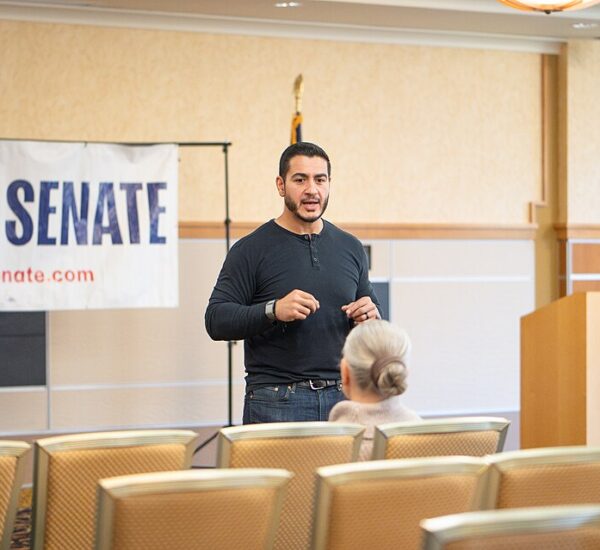
Shah did not participate in a Sept. 22 AMAC Action candidate forum after both candidates were invited.
AMAC described the event as a nonpartisan educational forum designed to give Arizona voters an opportunity to hear directly from candidates about their priorities and positions.
The missed appearance followed an Aug. 26 Arizona PBS “Candidates in Conversation” program.
Arizona PBS reported that Shah declined its invitation, while Feely participated and discussed the economy, affordability and other issues affecting the district.
For Feely, the absences have become part of his broader argument that voters should expect candidates to defend their policies publicly.
“They don’t want to be challenged,” Feely said, contending that similar situations have occurred in other House, Senate and gubernatorial races.
The reasons behind individual campaign scheduling decisions can vary, and missed appearances alone do not establish why a candidate chose not to participate.
Arizona’s 1st Congressional District Race Puts Economy Front and Center
Feely and Shah are competing in the Nov. 3 general election for Arizona’s 1st Congressional District.
The contest is for an open House seat, giving voters the opportunity to choose a new representative at a time when economic concerns remain prominent nationally and in Arizona.
During his Arizona PBS appearance, Feely said residents repeatedly raise concerns about grocery prices, gasoline costs and the broader cost of living.
He has made affordability one of the central themes of his campaign.
For many older voters and retirees, economic issues can carry particular significance because higher prices can affect fixed incomes, retirement savings, health care expenses and monthly household budgets.
Feely Targets Federal Spending and Inflation
Feely has repeatedly attempted to connect today’s affordability concerns with federal spending decisions made during the Biden administration.
During his Newsmax interview, he accused Democrats of embracing large spending packages and later campaigning on reducing the very financial pressures he says those policies helped create.
“Now they want to campaign on affordability and these issues when they created the issues,” Feely said.
He further claimed that Democrats “drove inflation up” by spending trillions of dollars.
Inflation did rise sharply during the Biden presidency, although economists have attributed the increase to multiple factors, including pandemic-era stimulus, supply-chain disruptions, energy costs, labor shortages, monetary policy and changes in consumer demand.
The Consumer Price Index reached a 9.1% year-over-year increase in June 2022, according to the U.S. Bureau of Labor Statistics.
That surge contributed to higher prices for necessities ranging from groceries and gasoline to housing and household goods.
Taxes Become Major Divide in Arizona House Race
Feely is also emphasizing tax policy as he attempts to distinguish his economic agenda from Shah’s.
He pointed to Republican-backed provisions commonly promoted as “no tax on tips” and “no tax on overtime,” describing them as examples of direct tax relief for working Americans.
The provisions are deductions rather than blanket exemptions from every form of taxation.
Under current IRS guidance, eligible workers can deduct as much as $25,000 in qualified tip income.
Workers receiving qualified overtime compensation may deduct up to $12,500 for individual filers or $25,000 for married couples filing jointly, subject to income limits and other eligibility requirements.
Those policies could become increasingly important in congressional races where candidates are competing for working-class and middle-income voters concerned about take-home pay.
What “No Tax on Overtime” Actually Means
The overtime deduction applies specifically to qualifying overtime compensation.
According to the IRS, it generally covers the additional portion of overtime pay above a worker’s regular hourly rate, rather than automatically making an employee’s entire overtime paycheck tax-free.
Social Security and Medicare taxes can also still apply.
That distinction is important for taxpayers considering how the policy could affect their finances.
Feely Frames Contest Around Competing Economic Philosophies
Feely has sought to portray the November election as a broader disagreement about the proper role of government in the economy.
During his Newsmax appearance, he pointed to Shah’s previous support for Sen. Bernie Sanders and characterized the race as a choice between different economic philosophies.
“I think it’s going to be a choice between capitalism and socialism,” Feely said.
That characterization represents Feely’s campaign framing rather than a neutral description of every policy proposed by Shah.
Still, the comment illustrates how the Republican candidate intends to define the race as Election Day approaches: lower taxes and restrained government on one side versus a larger federal role in the economy on the other.
Affordability Could Remain a Major 2026 Issue
Household costs are likely to remain an important subject throughout the closing weeks of the campaign.
For voters, affordability extends well beyond one economic statistic.
It includes the monthly cost of:
- Groceries
- Gasoline and transportation
- Electricity and utilities
- Housing
- Health insurance
- Prescription medications
- Property taxes
- Auto insurance
- Retirement expenses
That means candidates in competitive districts are being pressed to explain how their proposals would affect ordinary household finances.
Feely argues that Republican tax policies provide direct financial relief while excessive government spending contributes to higher costs.
Democrats, meanwhile, have advanced their own affordability proposals and dispute Republican arguments that Democratic fiscal policy alone explains the inflation experienced earlier in the decade.
Arizona Voters Will Decide Which Economic Approach They Prefer
Feely says his campaign will continue emphasizing what he sees as major differences between himself and Shah on taxes, spending and the economy.
“They want to make promises. They don’t want to be held accountable,” Feely said of Democrats.
“My job is to hold them accountable and show the distinction for the voters between the two policies and really the vision for this future, because that’s what it’s going to come down to.”
With Election Day approaching, Arizona voters will have the final say.
The debate over inflation, taxes, federal spending and affordability is likely to remain at the heart of the 1st District contest as both campaigns make their closing arguments.