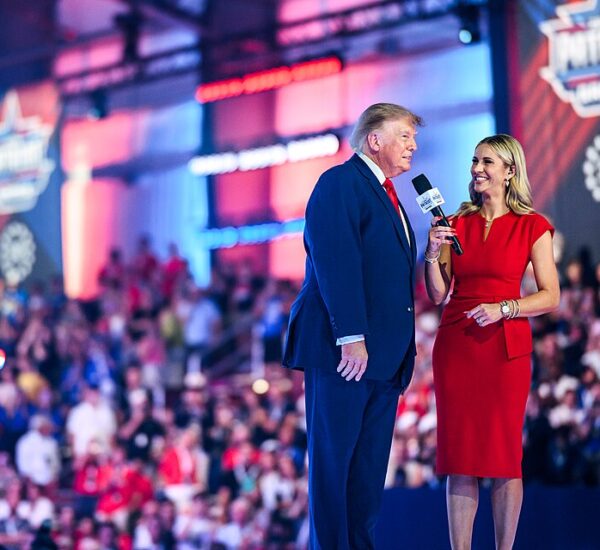
President Donald Trump is facing renewed attention over his comments urging gasoline retailers to immediately lower fuel prices, a message he posted on Truth Social. The exchange drew reaction on Fox News, where Energy Secretary Chris Wright responded to questions about the directive, while Fox co-host Sandra Smith reacted with laughter during the discussion. The moment highlights the ongoing debate over presidential influence on retail fuel pricing and free market dynamics.
BACKGROUND
During the segment, Fox’s John Roberts read Trump’s Truth Social post in detail, in which the president said gasoline retailers should “drop your price” and suggested fuel should be targeted around $2.50 per gallon, citing oil at $68 a barrel and heading lower. Trump’s post also warned against “price gouging,” called for lower gasoline taxes in California, and said high taxes were driving up costs for consumers. In response, Energy Secretary Chris Wright said Trump is “expressing his passion for low energy prices” and described him as a “bold communicator” who wants lower costs for Americans. Wright also noted there is typically a supply chain lag between lower oil prices and what consumers see at the pump, saying prices are expected to continue moving down as that process plays out.
Trump Orders Shocking Funding Freeze
As part of its broader effort to combat waste, fraud, and abuse, the Trump administration has halted funding for NY’s Medicaid Fraud Unit, saying the state has fallen short in pursuing Medicaid fraud cases while benefiting from millions of taxpayer dollars.
The funding suspension, announced Tuesday, was outlined in a letter from Department of Health and Human Services Inspector General Thomas March Bell. Federal officials said the freeze will remain in effect through at least September unless New York takes corrective action and demonstrates stronger enforcement against Medicaid fraud.
The move marks the second time this year that the Trump administration has suspended funding for a state Medicaid fraud unit, underscoring its broader effort to combat waste, fraud, and abuse across federal healthcare programs.
Why the Trump Administration Froze the Funding
According to federal officials, New York’s Medicaid Fraud Control Unit has not produced enough criminal indictments and convictions compared with similar programs in other large states.
Federal officials said New York’s Medicaid Fraud Control Unit secured the lowest number of criminal fraud convictions among five similarly sized state programs during the 2023–2025 period.
While federal investigators acknowledged that New York chose to prioritize larger and more complex fraud cases over smaller investigations, they concluded that the strategy failed to deliver enough results.
“Enough is enough,” Bell wrote, stating that New York had not met the performance standards required under its federal Medicaid fraud grant.
Federal officials said the funding suspension could be lifted before Sept. 30 if the state demonstrates meaningful improvements. If those concerns are not addressed, the funding freeze could remain in place beyond that deadline.
Letitia James Pushes Back
New York Attorney General Letitia James sharply criticized the administration’s decision and pledged to challenge the funding freeze.
James said her office has recovered more than $627 million for the Medicaid program during her tenure and noted that previous federal evaluations recognized New York’s anti-fraud efforts.
She also said the attorney general’s office is reviewing all available legal options to overturn the administration’s decision.
Officials from James’ office argued that New York intentionally focuses its criminal investigations on major healthcare fraud involving corporations, executives, and business owners rather than smaller individual cases, resulting in larger financial recoveries for taxpayers.
New York Officials Defend Their Record
Governor Kathy Hochul’s administration also defended the state’s enforcement efforts.
State Health Department spokesperson Cadence Acquaviva said New York has taken significant steps to eliminate waste, fraud, and abuse within its Medicaid program and accused the federal government of launching politically motivated attacks against the state.
Federal officials, however, maintain that the number of criminal prosecutions remains well below expectations given the size of New York’s Medicaid system and the amount of federal funding it receives.
Part of a Broader Medicaid Fraud Crackdown
The New York funding suspension follows a similar action against Hawaii earlier this year.
In June, federal officials suspended Medicaid fraud funding for Hawaii after concluding that the state went three consecutive years without securing a single Medicaid fraud indictment or conviction.
The Trump administration has also requested detailed fraud-prevention information from several states—most led by Democratic governors—as part of a broader review of Medicaid oversight and accountability.
In addition, portions of Medicaid funding have been withheld from states including Minnesota and California while federal officials review fraud-related concerns.
The administration has simultaneously launched new anti-fraud initiatives across the healthcare system, including expanded investigations, stricter provider oversight, and enhanced screening measures designed to protect taxpayer dollars.
Medicare Enforcement Is Also Expanding
The administration’s anti-fraud campaign extends beyond Medicaid.
Dr. Mehmet Oz, who leads the federal Centers for Medicare & Medicaid Services, recently announced a six-month nationwide pause on new enrollments for hospice and home healthcare providers as federal officials strengthen oversight and investigate potential fraud within Medicare programs.
Administration officials say these actions are intended to improve accountability and ensure healthcare funding is used for patient care rather than fraudulent activity.
Why This Matters
The funding dispute highlights a growing debate over how aggressively states should pursue Medicaid fraud and how the federal government should oversee billions of taxpayer dollars spent on healthcare each year.
Supporters of the Trump administration argue that stronger enforcement protects taxpayers, discourages fraud, and helps preserve Medicaid for the Americans who truly need it. They say states receiving federal funding should be held accountable for producing measurable enforcement results.
Critics argue that suspending funding could make it more difficult for state investigators to pursue fraud cases and contend that enforcement resources should be expanded rather than reduced.
What’s Next?
Federal officials have given New York until at least Sept. 30 to address the concerns outlined in the inspector general’s review. If the state can demonstrate stronger enforcement efforts and improved performance, the administration could restore the suspended funding before that deadline.
If not, the funding freeze may continue, setting the stage for a larger legal and political battle between New York and the Trump administration.
The dispute reflects President Donald Trump’s broader campaign to tighten oversight of federal healthcare spending, increase accountability in Medicaid programs, and crack down on waste, fraud, and abuse involving taxpayer dollars. As additional reviews continue across the country, more states could face increased federal scrutiny if officials determine their anti-fraud efforts fall short of federal expectations.