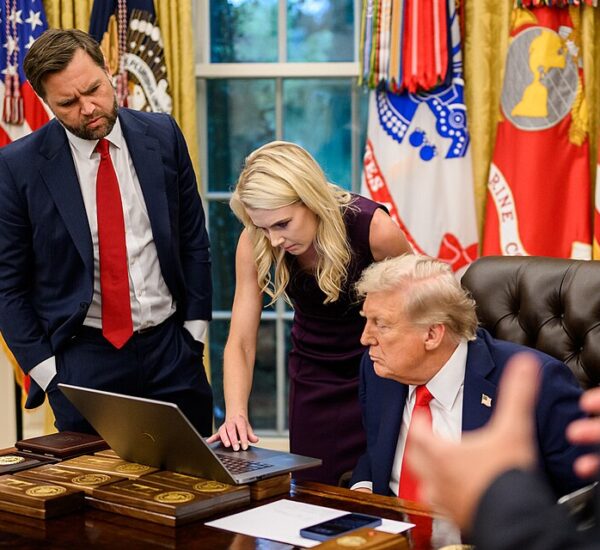
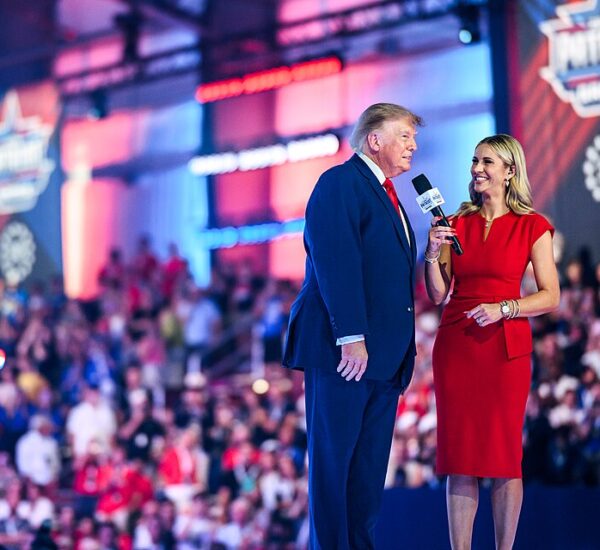
President Donald Trump officially launched celebrations for America’s 250th anniversary with a rally on Washington’s National Mall, featuring a flyover by stealth bombers, military bands, a performance by Lee Greenwood, and remarks from the president. The event comes as Trump works to build public enthusiasm for the milestone celebration while also seeking to reassure Americans ahead of the critical November midterm elections.
BACKGROUND
The kickoff event took place as the administration argues the conflict with Iran has moved into the background following an interim deal aimed at ending the war with Tehran. According to the provided facts, oil prices have eased and the Strait of Hormuz has begun reopening in the wake of that agreement. Democrats have criticized Trump’s America 250 celebration, arguing it resembles a Republican campaign rally rather than a national commemoration. The event’s timing also coincides with Trump’s broader effort to persuade voters that recent international tensions are no longer the dominant issue heading into the midterms.
Speaker Johnson In Tricks Situation
House Speaker Mike Johnson (R-La.) is unveiling a new plan to move one of President Donald Trump’s top legislative priorities forward after the Senate blocked the full Safeguard American Voter Eligibility (SAVE) America Act.
Speaking to reporters on Wednesday, Johnson announced a proposal that would create a federal grant program to help states implement many of the election integrity measures included in the SAVE America Act. The strategy is designed to overcome Senate procedural hurdles while keeping the issue of voter security at the forefront of Congress.
The proposal comes as Republicans continue searching for a path to strengthen federal election laws after Senate Democrats prevented the legislation from advancing.
What Is The SAVE America Act?
The SAVE America Act would require individuals to provide proof of U.S. citizenship when registering to vote in federal elections and present valid photo identification when casting a ballot.
Supporters argue the legislation would help protect election integrity by ensuring that only eligible American citizens participate in federal elections. Critics contend the measure could make voter registration more difficult for some eligible voters.
The bill has already passed the House of Representatives but remains stalled in the Senate, where Democratic opposition has prevented it from receiving enough votes to overcome the legislative filibuster.
Johnson Proposes A New Path Forward
Unable to include the full SAVE America Act in a budget reconciliation package, Johnson is now proposing a different approach.
His plan would establish a federal grant program allowing states to receive funding if they adopt election security measures similar to those outlined in the SAVE America Act.
The proposal was crafted after the Senate parliamentarian ruled that the legislation itself could not be included in a reconciliation bill because it failed to meet the Senate’s strict budget rules under the Byrd Rule.
Johnson said he discussed the proposal with President Trump earlier Wednesday and believes it offers Republicans their best opportunity to make progress.
“We believe that if you create a grant program tied to the budget, states that choose to strengthen election integrity can access federal funding to implement those reforms,” Johnson said. “We’re willing to invest heavily in that effort.”
According to Johnson, Trump wants Congress to continue moving the issue forward rather than allowing the legislation to remain stalled indefinitely.
Trump Continues To Pressure Congress
President Trump has made passage of the SAVE America Act one of his highest legislative priorities.
Earlier this week, Trump postponed signing a bipartisan housing package, saying he would not approve the legislation until Congress takes meaningful action on election security.
He also recently announced that he would withhold support for renewing certain foreign surveillance authorities unless lawmakers first address the SAVE America Act.
Those decisions have dramatically reshaped the Republican legislative agenda and increased pressure on congressional leaders to deliver results before the upcoming midterm elections.
Conservatives Say The Proposal Doesn’t Go Far Enough
While Johnson’s proposal may offer a procedural path forward, many conservative lawmakers remain unconvinced.
Several members of the House Freedom Caucus argue that offering federal grants is not the same as requiring nationwide election safeguards.
Rep. Chip Roy (R-Texas), one of the strongest advocates for the SAVE America Act, said the proposal could encourage some states to strengthen election security but would not accomplish the legislation’s original objective.
“Grant programs are incentives,” Roy explained. “States that want to participate can do so, while others may simply decline. It may move the ball forward, but it is not the full SAVE America Act.”
Roy added that Republicans should continue searching for opportunities to attach the SAVE America Act to other major pieces of legislation moving through Congress.
House Conservatives Increase Pressure
The disagreement has intensified pressure inside the Republican conference.
Rep. Anna Paulina Luna (R-Fla.) and several conservative lawmakers have vowed to oppose procedural votes on unrelated legislation until the Senate takes action on the SAVE America Act.
That strategy forced House Republican leaders to postpone several floor votes this week, demonstrating just how strongly many conservatives feel about the issue.
Following Johnson’s announcement, Luna publicly questioned whether the grant proposal could accomplish the bill’s intended goals.
“The SAVE America Act cannot be placed in reconciliation,” Luna wrote on X. “I’m not drinking the Kool-Aid. Neither should you.”
Rep. Keith Self (R-Texas) expressed similar concerns.
“We need the SAVE America Act as written,” Self said. “I’m not sure a grant program accomplishes that. This is one of the most important bills Congress could pass.”
Third Reconciliation Bill Faces Major Challenges
Johnson’s election proposal is only one piece of a much larger legislative puzzle.
House Republicans are also discussing a third budget reconciliation package that could include additional defense spending, government reforms, fraud prevention measures and several long-standing conservative priorities.
The House Freedom Caucus released its own list of goals for the legislation, including:
- Reducing federal spending
- Eliminating what Republicans describe as “Green New Scam” mandates
- Extending restrictions on taxpayer funding for abortion providers
- Expanding healthcare reforms
- Eliminating federal taxes on firearms
- Taking steps to prevent another government shutdown
“We control the field,” the caucus said in a statement. “We cannot afford to leave any points on the board in reconciliation.”
Budget Concerns Remain
At the same time, the Trump administration is encouraging Congress to approve roughly $350 billion in additional defense spending through the reconciliation process.
That request has raised concerns among fiscal conservatives who insist any new spending should be fully offset.
Rep. Chip Roy said Republicans should avoid adding to the national debt.
“My view is that every dollar of new spending should be fully paid for,” Roy said.
Rep. Brandon Gill (R-Texas) agreed, warning lawmakers against relying on accounting gimmicks to make the numbers work.
House Budget Committee Chairman Jodey Arrington (R-Texas) said Republican leaders remain committed to producing legislation that does not increase the federal deficit.
He suggested that expanded anti-fraud provisions could generate enough savings to offset many of the proposal’s costs.
“Our commitment is that we will not increase the deficit,” Arrington said. “The real question is whether our conference has the political will to make those decisions.”
Why This Debate Matters
The battle over the SAVE America Act has become one of the defining legislative fights for Republicans heading into the midterm elections.
Supporters say requiring proof of citizenship and voter identification would strengthen confidence in federal elections and protect the integrity of the voting process. Opponents argue existing safeguards are sufficient and warn that additional requirements could create barriers for some eligible voters.
With the Senate still divided and procedural hurdles limiting Republicans’ options, Johnson’s grant proposal represents an attempt to keep election integrity legislation alive while searching for a path that can win enough support to become law.
Whether conservative lawmakers ultimately rally behind the proposal remains uncertain, but one thing is clear: election security is likely to remain a major issue on Capitol Hill as Congress works through the remainder of its legislative agenda.