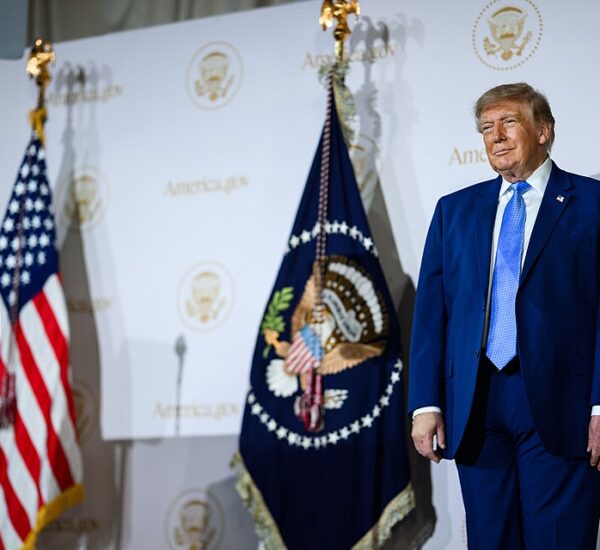
The Senate on Tuesday approved a House-passed resolution directing President Trump to withdraw U.S. armed forces from hostilities against Iran, with four Republican senators joining Democrats to support the measure. The resolution passed 50-48 after clearing the House earlier this month by a 215-208 vote. While approved by both chambers, the measure does not have the force of law and does not require Trump’s signature.
Background
The resolution was brought directly to the Senate floor for a final vote and cites the 1973 War Powers Act, directing the president to remove U.S. troops from hostilities involving Iran while allowing forces needed to protect American assets or allies from imminent attack. Republican Sens. Rand Paul of Kentucky, Susan Collins of Maine, Lisa Murkowski of Alaska, and Bill Cassidy of Louisiana voted in favor of the measure, the same group that previously supported advancing a similar resolution from committee. Sen. Thom Tillis of North Carolina, who had indicated he was considering arguments from both sides, ultimately voted against it. Sens. Dave McCormick of Pennsylvania and Mitch McConnell of Kentucky, both of whom had previously opposed Iran war powers resolutions, missed the vote. Sen. John Fetterman of Pennsylvania was the lone Democrat to vote against the measure, while four House Republicans joined all House Democrats in supporting the resolution when it passed the House earlier this month.
Trump Makes Elizabeth Warren Flip
Sen. Elizabeth Warren (D-Mass.) said she was caught off guard Wednesday after President Donald Trump postponed the signing of a bipartisan housing bill that passed Congress with overwhelming support.
Appearing on CNBC’s Squawk on the Street, Warren admitted she could not explain why Trump chose to put the legislation on hold just before it was expected to become law.
“If you’re asking me to explain what’s going on inside Donald Trump’s head, you’ll have to ask somebody else,” Warren said. “I honestly don’t know.”
Warren, who helped negotiate the legislation alongside Sen. Tim Scott (R-S.C.), argued that delaying the bill sends the wrong message to Americans struggling with high housing costs and inflation.
“This simply doesn’t make sense,” she said. “It shows a lack of concern for families who are feeling squeezed by higher prices and for bipartisan efforts to improve housing affordability.”
Housing Bill Passed With Strong Bipartisan Support
The legislation easily cleared both chambers of Congress, passing the House by a vote of 358-32 and the Senate 85-5, making it one of the year’s most broadly supported bipartisan measures.
Among its key provisions, the bill would:
- Limit purchases of single-family homes by large investment firms and private equity groups.
- Create a $200 million annual Innovation Fund to reward communities that increase housing construction.
- Expand grants and pilot programs that help convert vacant office buildings and commercial properties into affordable housing.
Supporters argue the legislation would help address America’s housing shortage while giving local governments additional tools to increase supply.
Trump Says Election Security Comes First
Despite the bill’s broad bipartisan support, Trump announced Wednesday on Truth Social that he would postpone signing it until Congress passes the SAVE America Act, his preferred election integrity legislation.
The proposal would require proof of U.S. citizenship and government-issued photo identification for voting in federal elections.
Announcing the delay, Trump said the housing bill would remain on hold until lawmakers approve what he called a critical election security measure.
The announcement came just hours before Trump was scheduled to meet privately with Senate Republicans on Capitol Hill.
Warren Blames Trump
Warren argued Trump walked away from an opportunity to celebrate a bipartisan accomplishment.
“He could have taken a victory lap,” she said. “Instead, he chose to delay the bill.”
The Massachusetts senator also criticized Trump’s handling of the economy, arguing that many Americans continue to face higher costs for groceries, health care, and other everyday expenses.
Republicans Push SAVE America Act
House Speaker Mike Johnson (R-La.) quickly responded to Trump’s announcement, saying House Republicans would work to advance the SAVE America Act through the budget reconciliation process.
However, the Senate parliamentarian previously ruled that the election measure does not qualify under reconciliation rules, meaning it would likely need 60 votes in the Senate unless lawmakers pursue another legislative path.
Sen. Tim Scott, the Republican co-author of the housing bill, had not publicly commented on Trump’s decision as of Wednesday.
What Happens Next?
The housing legislation remains approved by Congress but unsigned. Whether it reaches Trump’s desk again may depend on the fate of the SAVE America Act, setting up another major showdown between the White House and Congress over election security and domestic policy priorities.