The Supreme Court on Thursday cleared the way for the Trump administration to end temporary legal protections for migrants from Haiti and Syria, potentially exposing hundreds of thousands of people to deportation. The 6-3 ruling overturns lower court orders and allows the Department of Homeland Security to move forward with ending those protections.
BACKGROUND
The decision affects the administration’s ability to end Temporary Protected Status, a program that currently provides legal protections to about 1.3 million people from 17 countries. The Trump administration argued that the program was designed to be temporary and that immigration officials—not federal judges—should have the authority to decide when those protections end. By overturning the lower court rulings, the Supreme Court allows the Department of Homeland Security to move more quickly in carrying out those decisions. The ruling marks another significant legal victory for the administration’s immigration agenda.
Trump’s Closest Allies Refuse To Give Up On SAVE Act
House Republicans are drawing a line in the sand.
A group of conservative lawmakers has effectively brought business in the House of Representatives to a standstill, refusing to advance most legislation until the Senate votes on President Donald Trump’s election integrity proposal known as the SAVE America Act.
The showdown has created one of the biggest challenges yet for House Speaker Mike Johnson, whose narrow Republican majority leaves little room for internal disagreements. With just a handful of conservatives opposing procedural votes, the House has struggled to move forward on key legislation.
For conservatives, however, the issue is simple: election security comes first.
Trump Demands Action on Election Integrity
The SAVE America Act would require individuals to provide proof of U.S. citizenship when registering to vote and present a government-issued photo ID when casting a ballot.
Supporters argue the bill would strengthen election integrity by ensuring that only American citizens participate in federal elections. Democrats have opposed the legislation, preventing it from moving through the Senate despite House approval.
President Trump has repeatedly urged Republican leaders to make the bill their top priority.
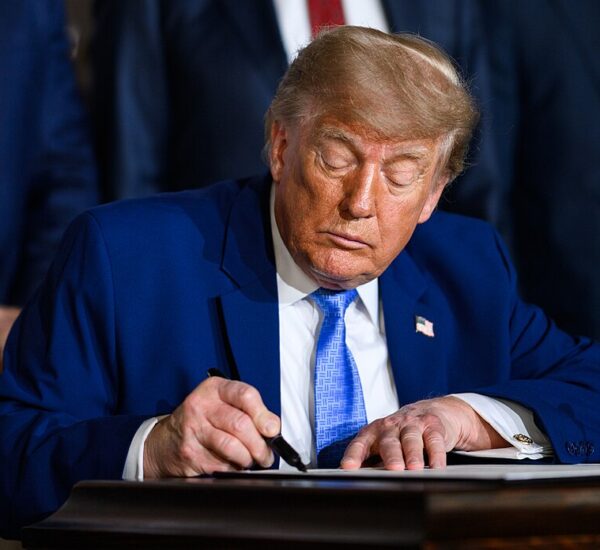
This week, Trump demonstrated how important the issue is to him by postponing the signing of a bipartisan housing package, announcing that he would not approve the measure until the Senate acts on the SAVE America Act.
That decision immediately energized conservatives on Capitol Hill.
House Conservatives Refuse to Back Down
Several Republican lawmakers now say they will vote against procedural rules that allow legislation to reach the House floor until the Senate returns from its two-week Fourth of July recess.
Because Republicans control the House by only a few seats, Speaker Johnson needs nearly every GOP member to support those votes.
Without them, much of the House agenda comes to a halt.
Florida Rep. Anna Paulina Luna announced she will not vote to reopen the House floor while the Senate remains out of session.
She criticized Senate Republicans for leaving Washington before taking action on voter ID legislation and accused Senate Majority Leader John Thune of avoiding the issue altogether.
South Carolina Rep. Ralph Norman agreed, saying Congress should focus on passing the SAVE America Act before taking up other legislation.
More Republican Priorities Are Also Being Delayed
Texas Rep. Chip Roy suggested he could become more flexible if House leadership advances other conservative priorities.
Among the issues Roy wants to see are stronger border security legislation, including the Secure the Border Act, along with restrictions preventing members of Congress from trading individual stocks while in office.
Until then, many conservatives remain unwilling to support procedural votes.
As a result, House leaders have already canceled several scheduled votes after realizing they lacked enough Republican support.
The Legislative Gridlock Is Growing
The political standoff is now affecting much more than election legislation.
Votes on government funding bills have been postponed, and several major Republican priorities are now in limbo.
Those include renewing key national security surveillance authorities, advancing another budget reconciliation package, and moving additional conservative legislation through the House.
The longer the impasse continues, the more pressure builds on Republican leadership to find a solution.
Conservatives Want the Senate to Fight Harder
Many House Republicans believe Senate leaders have not done enough to advance Trump’s election integrity agenda.
Conservatives have urged Senate Republicans to use every procedural option available, including forcing a talking filibuster that would require Democrats to continuously hold the Senate floor if they want to block the legislation.
Supporters argue that strategy could eventually allow Republicans to pass the bill with a simple majority if Democrats surrender the floor.
Chip Roy said Senate Republicans should stop relying on procedural excuses and instead use every tool available to move the legislation.
Thune Rejects Calls to Change Senate Procedure
Senate Majority Leader John Thune has rejected those demands, saying there are not enough Republican votes to change Senate filibuster rules.
Speaker Mike Johnson has instead discussed another possible path with President Trump.
Johnson suggested including funding in the next Republican budget reconciliation package that would help states implement the SAVE America Act by creating a federal grant program.
Freedom Caucus Says That’s Not Enough
Several conservatives quickly rejected Johnson’s proposal.
Rep. Lauren Boebert argued that Democrat-controlled states could simply refuse the federal money and ignore the new election requirements.
Anna Paulina Luna also dismissed the reconciliation strategy.
Instead, she urged House leadership to attach the SAVE America Act to must-pass legislation such as the National Defense Authorization Act or the Foreign Intelligence Surveillance Act, believing that approach would leave the Senate with fewer options to avoid a vote.
Pressure Mounts on Republican Leaders
Speaker Johnson is expected to continue meeting with President Trump as Republicans search for a path forward.
Until then, House conservatives appear prepared to keep much of Congress at a standstill.
For them, passing the SAVE America Act is not just another legislative battle—it is a defining issue centered on election integrity, voter identification, proof of citizenship, and restoring confidence in America’s elections.
With the Senate away for two weeks, the standoff shows no signs of ending anytime soon.