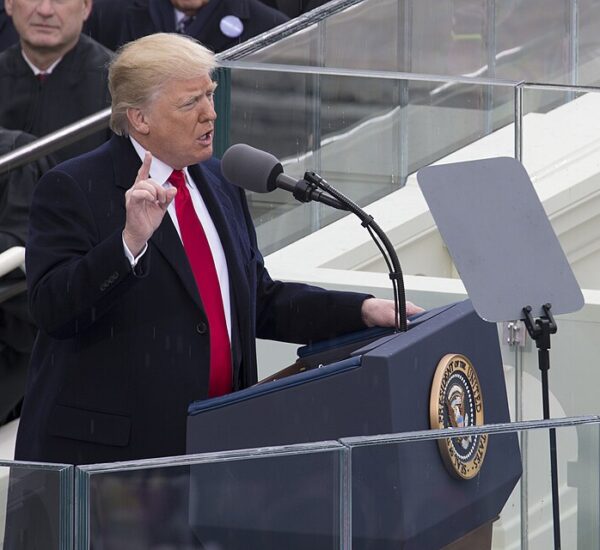
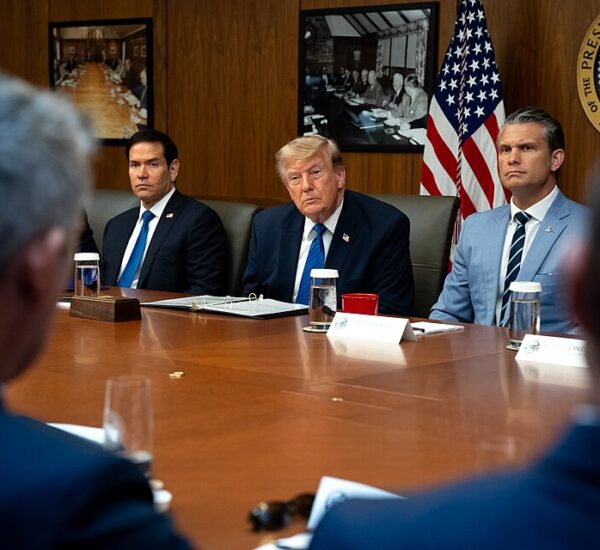
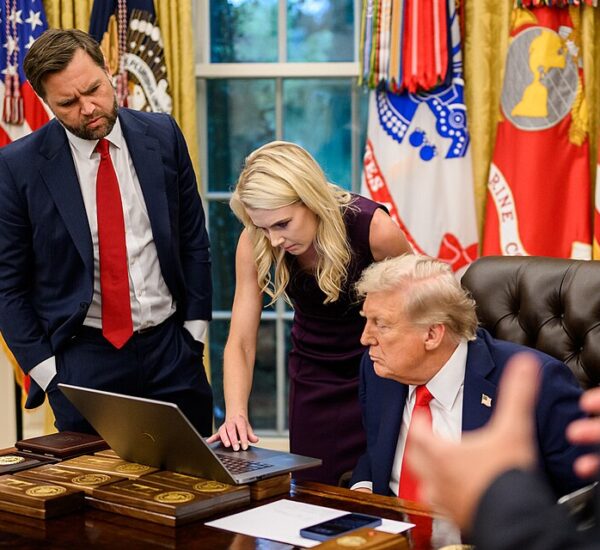
Former President Barack Obama said President Donald Trump’s behavior toward him changes when they meet in person, making the comments during an appearance on the “All the Smoke” podcast hosted by former NBA players Matt Barnes and Stephen Jackson. Obama also described Trump’s repeated references to him as an “obsession” and suggested it showed Trump was not focused on the American people. He added that Trump does not speak the same way face-to-face as he does in other settings.
BACKGROUND
Obama made the remarks during a discussion about the importance of direct, face-to-face communication in leadership. He said that when people are in the same room, conversations can differ from what is said elsewhere, noting that a “filter of the phone” can lead people to say things they would not say in person. Obama said that when he and Trump have been in the same room, Trump “don’t talk like that because he knows better.” The comments come days after Trump, while in France for a G7 summit, referred to Obama as a “stupid son of a b*tch” while discussing the JCPOA nuclear agreement signed a decade earlier.
Democrats Come After Schumer
The Democratic Party’s progressive movement is gaining momentum in New York, and some activists are already looking toward a much bigger prize: Senate Minority Leader Chuck Schumer.
Following a series of upset victories in Tuesday’s New York City Democratic primaries, political observers say Schumer could eventually face increased pressure from the left as progressive Democrats continue expanding their influence inside the party.
Progressive Victories Shake Up New York Politics
Schumer, 75, has represented New York in the U.S. Senate since 1999 and remains one of the Democratic Party’s most recognizable leaders. However, some progressives have criticized him for his support of Israel and for what they view as an ineffective strategy against President Donald Trump.
Those concerns intensified after three progressive candidates backed by democratic socialist New York City Mayor Zohran Mamdani won their Democratic primaries Tuesday, defeating two incumbent officeholders in the process.
The results have fueled speculation that longtime Democratic leaders could face stronger primary challenges as progressive activists seek greater influence over the party’s future.
“The establishment—and nobody represents the establishment more than Chuck—needs to see this as a wake-up call,” Matt Bennett, vice president of public affairs for the centrist Democratic organization Third Way, told Politico. “No one is safe.”
Schumer Says Democrats Are United
Despite the growing speculation, Schumer dismissed suggestions that the primary results expose deep divisions within the Democratic Party.
Speaking with reporters Wednesday, the Senate minority leader argued that Democrats are seeing enthusiasm from multiple ideological factions heading into the 2026 midterm elections.
“We’re seeing tremendous energy from all different areas of our party,” Schumer said.
He pointed to moderate Democratic victories in states such as Virginia, Iowa, and New Jersey while highlighting the success of progressive candidates in New York City.
Schumer said Democrats ultimately share the same objective.
“Our mission is to take back the Senate and defeat Donald Trump,” he said.
Could Schumer Face a Progressive Primary?
Although the Democratic Socialists of America (DSA) has not identified a candidate to challenge Schumer, party leaders say they believe a competitive statewide campaign is possible.
New York City DSA Co-Chair Gustavo Gordillo pointed to Zohran Mamdani’s campaign as proof that relatively unknown candidates can build winning coalitions.
“When Zohran Mamdani first entered the race, he was polling around one percent, and very few people knew who he was outside our organization,” Gordillo told Politico. “There’s no reason we couldn’t build something similar in a Senate race.”
Not everyone agrees.
Former New York City Councilmember David Greenfield argued that New York City’s progressive politics do not necessarily reflect the rest of the state.
He suggested that the Democratic Socialists’ success in parts of New York City may be difficult to replicate in suburban and upstate communities, where voters often have different political priorities.
Schumer’s Poll Numbers Raise New Questions
Recent polling has added to questions about Schumer’s long-term political standing.
A Siena University poll released last month found the senator’s approval rating at just 33%.
Although Schumer won reelection comfortably in 2022, his 57 percent vote share was his smallest statewide victory since first winning a Senate seat in 1998.
Those numbers have prompted some Democratic strategists to wonder whether progressive activists could eventually mount a serious challenge.
“If I’m Chuck Schumer right now, I’m concerned—and for good reason,” Democratic strategist and former adviser to Gov. Kathy Hochul, Amit Bagga, told Politico.
Bagga argued that many Democratic voters are increasingly demanding candidates who promise aggressive action rather than traditional political leadership.
The Democratic Party’s Internal Battle Continues
Whether Chuck Schumer ultimately faces a serious primary challenger remains uncertain.
What is clear is that Tuesday’s election results have intensified the debate over the Democratic Party’s future. As progressive candidates continue winning key races, establishment Democrats may find themselves under growing pressure from the party’s left flank ahead of the 2026 elections.
For Republicans and conservatives, the developments offer another sign that the Democratic Party’s internal struggle between its traditional leadership and its progressive wing is far from over.