More Details Emerge About Trump’s China Meeting
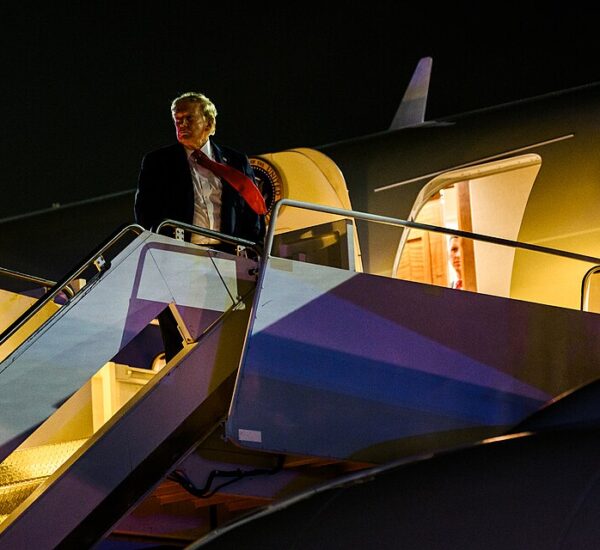
President Donald Trump will travel to China this week for a critical meeting with Chinese President Xi Jinping, as tensions over trade, national security, and global stability continue to rise.
The two leaders are scheduled to meet Thursday and Friday in Beijing for talks that could have major implications for the American economy, gas prices, retirement accounts, and the future balance of power between the United States and China.
Trump Heads to Beijing at a Pivotal Moment
President Trump’s trip comes as U.S.-China relations remain under intense pressure.
The two countries continue to clash over tariffs, technology restrictions, Taiwan, military expansion, and growing instability in the Middle East. Conservatives have long warned that China’s leadership is pursuing a long-term strategy aimed at surpassing the United States economically and militarily.
Trump has consistently taken a tough stance on Beijing, arguing that America must defend its manufacturing base, strengthen national security, and negotiate from a position of strength.
Xi Prioritizes Security Over Economic Growth
Since taking power more than a decade ago, Xi Jinping has focused heavily on expanding China’s military and reducing dependence on Western nations.
His government has poured massive investments into artificial intelligence, semiconductor production, robotics, electric vehicles, and advanced weapons systems. At the same time, Beijing has increased state control over private businesses and delayed market reforms that economists say could boost consumer confidence and job creation.
Xi has made clear that he views national security and industrial dominance as more important than short-term economic growth.
China’s Economic Problems Continue to Mount
While China has become more powerful militarily, its domestic economy is showing significant signs of stress.
Local governments have cut spending on schools and social programs. Youth unemployment remains a serious concern, wages are under pressure, and many families are increasingly worried about their financial future.
In manufacturing centers such as Foshan, some factories remain vacant following the collapse of China’s property market, which had fueled years of rapid growth.
Workers and business owners have reported rising uncertainty as economic opportunities become harder to find.
China Expands Its Military Capabilities
Despite economic challenges, Beijing continues to increase defense spending and strengthen its armed forces.
Under Xi, China has rapidly expanded its nuclear arsenal, launched additional aircraft carriers, and invested heavily in modern military technologies.
National security experts in Washington say these moves are part of a broader strategy to challenge America’s leadership and project Chinese power across the globe.
Rising Energy Prices Add More Pressure
China is also dealing with inflation fueled by global energy disruptions.
Conflict in the Middle East and instability in the Strait of Hormuz have pushed up oil and fuel costs worldwide. These developments have increased production costs and placed additional pressure on consumers and businesses.
At the same time, China’s export sector remains strong, helping Beijing maintain a large trade surplus with the United States even as domestic demand slows.
Why Trump’s Meeting With Xi Matters to Americans
The outcome of President Trump’s discussions with Xi could directly affect millions of Americans.
Key issues include:
- U.S.-China trade relations
- American manufacturing jobs
- Inflation and consumer prices
- Retirement savings and stock markets
- Taiwan and Indo-Pacific security
- Global oil and gas prices
For older Americans, investors, and retirees, these negotiations may influence everything from fuel costs to the long-term strength of the U.S. economy.
America Faces a Defining Strategic Challenge
China’s leadership appears willing to accept slower economic growth in exchange for greater military and geopolitical influence.
President Trump’s visit to Beijing represents an important opportunity to protect American interests, promote fair trade, and reinforce U.S. leadership during a period of rising global uncertainty.
As the two world powers meet face to face, Americans will be watching closely to see whether Trump can secure stronger economic and security outcomes for the United States.