Trump Reverses Course On Major Plan
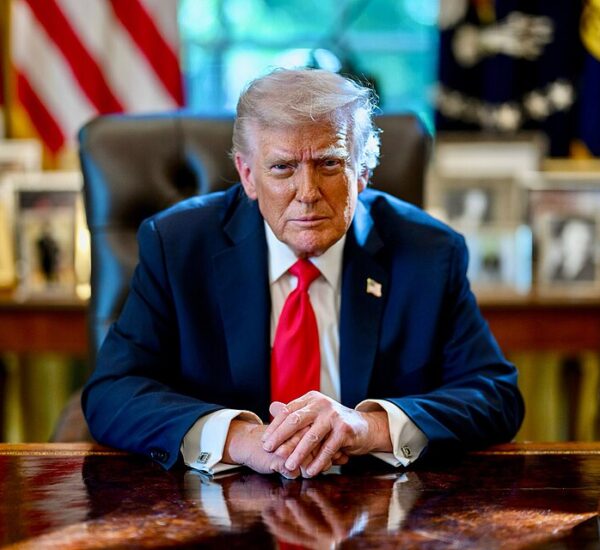
President Donald Trump said Friday that the United States will not move forward with a proposed ban on diesel exports after Group of Seven nations agreed to release 100 million barrels of oil and refined fuel products from emergency reserves.
“We’re not going to be doing the export ban,” Trump said Friday, according to Reuters.
The decision followed days of negotiations between Washington and its European allies as governments searched for ways to bring relief to an increasingly strained global diesel market.
The G7 agreement calls for the coordinated release of 100 million barrels over a four-month period. A significant portion of the initial response will focus on diesel, with participating countries and partners expected to make a substantial release during the first 20 days.
Trump Says Europe Will Release Diesel Supplies
Trump announced on Truth Social that European nations had agreed to release a large amount of diesel from their emergency stockpiles, saying the effort would begin immediately.
The president had been pressing European governments to contribute more fuel reserves as diesel prices climbed sharply in the United States and abroad.
Trump also spoke with French President Emmanuel Macron ahead of the virtual G7 meeting, according to CBS News.
The official G7 statement did not specify exactly how much of the 100-million-barrel commitment would consist of diesel compared with crude oil and other petroleum products.
However, leaders made clear that diesel supplies would receive particular attention during the opening stages of the emergency release.
G7 Countries Agree to Avoid Export Restrictions
Another major part of the agreement involves keeping energy moving between participating countries.
G7 leaders reaffirmed their commitment not to impose export restrictions on energy products traded among member nations. They also encouraged other producing countries to avoid restrictions that could place additional pressure on global supplies.
That commitment came after the Trump administration warned that it was considering restrictions on American diesel exports if European governments refused to release more of their own emergency inventories.
Treasury Secretary Scott Bessent had publicly urged European allies to contribute additional supplies, arguing that the United States was already taking action and expected its partners to respond as well.
Following the negotiations, the immediate possibility of a U.S. export ban appears to have receded.
Reuters reported that analysts at Energy Aspects viewed the G7 commitment against export restrictions as primarily a political pledge rather than a binding prohibition.
Europe Considered 50-Million-Barrel Diesel Release
Before the final G7 agreement was reached, European governments had been discussing a French proposal that called for European countries to release approximately 50 million barrels of diesel.
Under that proposal, members of the International Energy Agency would have contributed another 50 million barrels of crude oil.
Those discussions ultimately developed into the broader 100-million-barrel G7 commitment announced Friday.
Diesel Prices Have Become a Major Economic Concern
The emergency action comes as diesel prices have risen sharply amid disruptions across global energy markets.
The conflict involving Iran has disrupted major energy transportation routes, while other international developments have further tightened diesel supplies.
Russia has maintained restrictions on diesel exports, although Russian officials said Friday that a partial easing could eventually be considered if domestic production exceeds demand. China has also reduced fuel exports as refiners seek to protect domestic supplies.
These pressures have had significant consequences for American consumers and businesses.
Diesel is especially important because it powers much of the nation’s commercial transportation and heavy equipment.
Truckers rely on it to move products across the country. Farmers use it to operate tractors and other machinery. Construction companies depend on diesel-powered vehicles and equipment.
When diesel becomes more expensive, those additional transportation and operating costs can eventually affect the prices consumers pay for groceries, building materials, manufactured products and other everyday goods.
Diesel Futures Fall After G7 Announcement
Markets reacted quickly as details of the proposed reserve releases became public.
Reuters reported that U.S. diesel futures dropped following news of the international discussions, while European diesel futures also moved lower.
The Associated Press reported that U.S. retail diesel prices recently reached a record $6.52 per gallon as energy markets struggled with supply disruptions.
Whether the emergency release produces lasting relief will depend partly on developments in global energy production, transportation routes and the duration of current supply disruptions.
Why Trump Rejected an Export Ban
Administration officials had previously raised concerns that blocking American diesel exports could produce unintended consequences.
Energy Secretary Chris Wright argued that a broad export ban could create problems for domestic refiners.
If refiners lost access to overseas customers, storage facilities could eventually become crowded. That could force refineries to reduce production, potentially affecting not only diesel supplies but gasoline and jet fuel as well.
Europe has also become increasingly dependent on American diesel as supplies from several traditional sources have been disrupted.
That interconnected market helps explain why governments have focused on releasing emergency reserves rather than restricting trade.
G7 Says More Action Could Follow
The G7 said its latest intervention is intended to stabilize near-term energy supplies and reduce the impact of high fuel prices on households and businesses.
The International Energy Agency has been asked to monitor how the plan is carried out and assess its effect on global energy markets.
A follow-up report is expected within 20 days and will include recommendations concerning future responses and the eventual replenishment of emergency reserves.
G7 leaders also left open the possibility of additional diesel releases if market conditions remain difficult.
For American households and businesses already facing higher transportation costs, the central question will be whether the coordinated release translates into meaningful and sustained relief at the pump.
The announcement has already influenced energy markets, but the longer-term effect will depend on whether global diesel supplies improve and whether major transportation routes and refineries can operate without further disruption.