There’s something important about this deal that nobody is talking about.
Greenland may be one of the most remote places on Earth, but the massive Arctic island is becoming increasingly important to America’s economic and national security.
Underneath Greenland’s ice and rugged terrain are deposits of rare earth elements and other critical minerals used in military equipment, electronics, energy systems, automobiles and advanced technology.
Its geographic position could be even more important.
Located between North America and Europe, Greenland sits near strategically important Arctic air, sea and missile routes. As competition with China and Russia grows, Washington is paying closer attention to an island that could influence everything from missile defense to America’s supply of critical minerals.
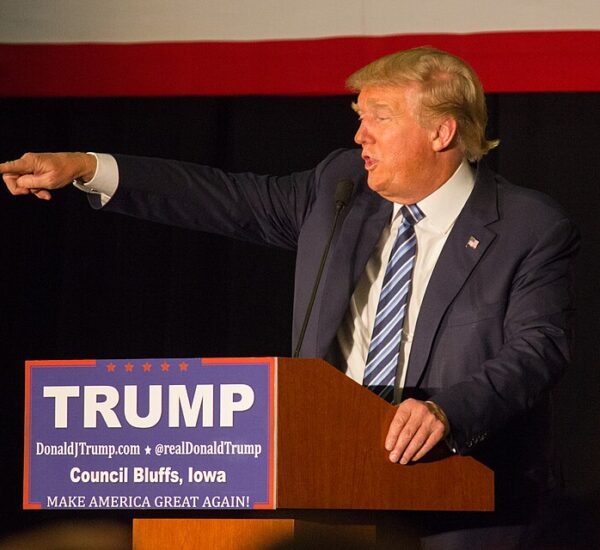
President Donald Trump has made Greenland a major part of his Arctic strategy.
On September 22, Trump joined Danish Prime Minister Mette Frederiksen and Greenland Prime Minister Jens-Frederik Nielsen in signing a new security agreement that expands America’s military access to Greenland while leaving the island within the Kingdom of Denmark.
The agreement marks a significant change in U.S. Arctic policy and comes after years of debate over Greenland’s strategic importance.
It also raises a larger question:
Could Greenland help the United States reduce its dependence on China while strengthening America’s defenses in the Arctic?
Here are three major reasons Washington is paying attention.
1. Greenland Could Help America Diversify Its Critical Mineral Supply
One of the strongest arguments for closer economic ties with Greenland involves critical minerals.
These materials are essential for modern life.
They are used in smartphones, computers, automobiles, power grids, medical equipment, aircraft, satellites and sophisticated military systems.
Rare earth elements are particularly important because they are used in powerful permanent magnets found in technologies ranging from electric motors to defense equipment.
The problem for the United States is that much of the global supply chain is concentrated in China.
According to the International Energy Agency, China accounted for about 60% of global mining of magnet rare earths in 2024 and approximately 91% of refined production.
China’s share of permanent magnet manufacturing was even greater, reaching about 94%.
That concentration has made mineral supply chains an increasingly important national-security issue.
Greenland could eventually provide another source.
The Geological Survey of Denmark and Greenland has found that 24 of the 34 critical raw materials identified by the European Union are present in Greenland.
Those resources include rare earth elements as well as minerals associated with lithium, graphite, copper, nickel, cobalt, molybdenum and platinum-group metals.
Several major deposits have already been identified.
South Greenland contains substantial rare earth prospects, while other sections of the island contain known geological formations associated with strategically valuable minerals.
That does not mean Greenland can immediately replace Chinese supplies.
Finding a mineral deposit is only the beginning.
A commercially successful mine requires roads, ports, processing facilities, skilled workers, financing and regulatory approval. Greenland’s harsh climate and remote geography can also make construction considerably more expensive.
Some mining projects have additionally faced environmental and political opposition inside Greenland.
Still, the potential is difficult for Washington to ignore.
For the United States, developing critical-mineral supply chains among allies and friendly territories could provide greater protection against export restrictions, international disputes or other disruptions.
Why America’s Dependence on China Matters
The issue extends beyond rare earths.
China plays an outsized role in processing numerous minerals considered important to modern industry.
The International Energy Agency reported in its 2026 critical-minerals outlook that China remains the dominant refiner for several strategically important materials.
That creates a vulnerability because mining a mineral in one country does not necessarily eliminate dependence on China if the raw material must still be shipped there for processing.
Building new mines is therefore only part of the challenge.
The United States and its allies would also need additional refining and manufacturing capacity if they want a genuinely diversified supply chain.
That could make Greenland valuable as one part of a much broader strategy rather than a complete solution by itself.
2. Greenland Could Become More Important to Western Energy Security
Greenland has also attracted attention because of its possible oil and natural gas resources.
Companies have explored portions of the island and surrounding offshore areas for hydrocarbons for decades.
Some geological formations have similarities to petroleum-producing regions elsewhere in the North Atlantic.
However, Greenland’s energy potential needs to be viewed cautiously.
Potential resources are not the same thing as proven commercial reserves.
Any major oil or natural gas development would require successful exploration, government approvals, substantial private investment and expensive infrastructure.
Projects in Arctic environments can take years or even decades to develop.
The future of petroleum development in Greenland will also depend heavily on decisions made by Greenland’s own government.
Nevertheless, global events continue to demonstrate why energy diversification remains important.
Conflicts affecting major oil-producing regions and shipping lanes can quickly move global prices and disrupt trade.
That makes policymakers interested in reliable supplies located closer to the United States and its allies.
Greenland’s eventual role in that picture remains uncertain, but its geological potential ensures that companies and governments will continue watching developments closely.
3. Greenland Occupies a Vital Position for U.S. Defense
Greenland’s natural resources receive considerable attention, but its military location may be its most immediate strategic advantage.
The island sits between North America and Europe and occupies a crucial position along northern approaches to the United States and Canada.
America has maintained a military presence in Greenland for decades.
Today, the center of that presence is Pituffik Space Base, formerly known as Thule Air Base.
The installation is operated by the U.S. Space Force and is America’s northernmost Defense Department installation.
Its location makes it exceptionally valuable for monitoring activity across the Arctic.
The base supports missions that include:
- Ballistic missile warning
- Missile defense
- Space surveillance
- Satellite tracking
- Space-domain awareness
The U.S. Space Force’s 12th Space Warning Squadron operates an upgraded early-warning radar at Pituffik that can detect and assess potential intercontinental and submarine-launched ballistic missile threats to the United States and Canada.
That mission is becoming increasingly important as the Arctic emerges as an area of greater military competition.
Trump’s New Greenland Agreement Expands U.S. Access
The September agreement between the United States, Denmark and Greenland builds on the defense relationship that has existed since 1951.
Under the agreement, the United States receives broader military access and additional options for operating in Greenland.
It provides for expanded defense areas at locations including Narsarsuaq and Mestersvig while allowing further areas to be established by agreement among the parties.
The arrangement also gives U.S. military aircraft extensive rights to operate over and land in Greenland and provides access for American government vessels under specified conditions.
Perhaps most significantly, the agreement has no scheduled expiration date.
Changes require mutual consent.
The agreement also contains provisions addressing what would happen if Greenland eventually exercises its right to become an independent country.
Despite the expanded American military role, Greenland has not become U.S. territory.
The island remains a self-governing territory within the Kingdom of Denmark.
That distinction is important because Trump’s earlier interest in acquiring Greenland created considerable disagreement with leaders in Denmark and Greenland.
The new agreement takes a different approach by expanding American security cooperation without transferring sovereignty.
China and Russia Increase the Importance of the Arctic
America is not the only major power paying attention to the Arctic.
Russia has an extensive Arctic coastline and significant military infrastructure throughout the region.
China, despite not being an Arctic nation, has also pursued economic and strategic interests in the far north.
Shipping is another factor.
Changing Arctic conditions have increased international interest in northern transportation routes that could shorten some voyages between Asia, Europe and North America.
More activity in those waters could bring economic opportunities, but it could also create new security concerns.
For Washington, having reliable military access to Greenland provides a strategic position near the center of those developments.
Greenland Could Attract More American Investment
The new security relationship could have economic consequences as well.
Long-term political and military cooperation can make companies more willing to consider large infrastructure and resource projects because major mining and energy investments frequently require decades to produce returns.
Mining operations may need new ports, roads, power generation and processing facilities.
Those projects could potentially create opportunities for American businesses while expanding Western supplies of strategically important materials.
But development will ultimately depend on economics, Greenland’s laws and the decisions of Greenland’s government and population.
Environmental considerations are also likely to remain important because mining and energy development can have significant effects on fragile Arctic ecosystems.
Greenland Is Important — But It Is Not a Quick Fix
Greenland’s potential should not be overstated.
There is no realistic scenario in which the island suddenly replaces China as America’s primary source of critical minerals.
Developing mines can take many years.
Building independent mineral-processing capacity presents another challenge.
Infrastructure remains limited across much of Greenland, and many promising deposits are located in difficult terrain.
But strategic planning rarely depends on a single immediate solution.
Instead, governments often try to reduce risk by developing multiple supply sources.
Greenland could eventually become one of those alternatives.
What Trump’s Arctic Strategy Means for America
Trump’s new Greenland agreement highlights a broader shift taking place in Washington.
The Arctic is no longer viewed simply as a distant frozen region.
It is increasingly connected to several major American priorities:
National defense. Greenland provides an important location for missile warning, space operations and monitoring northern approaches to North America.
Critical minerals. The island contains deposits of numerous materials considered important to technology, manufacturing and defense.
Supply-chain security. Developing new sources outside China could reduce America’s exposure to disruptions in heavily concentrated mineral markets.
Energy security. Greenland’s long-term petroleum potential remains uncertain, but Arctic resources continue to attract attention as governments seek diversified supplies.
Competition with China and Russia. Both countries have strategic interests in the broader Arctic region, increasing Greenland’s geopolitical importance.
The Bigger Picture
For generations, Greenland rarely appeared in everyday American political discussions.
That is changing.
The combination of valuable mineral deposits, an important military location and intensifying competition in the Arctic has pushed the island closer to the center of U.S. national-security strategy.
Trump’s new agreement does not make Greenland American territory, nor does it instantly solve America’s dependence on China for critical materials.
What it does accomplish is deepen America’s long-term military position on an island whose strategic importance is likely to grow.
For the United States, the challenge now goes beyond securing access.
Washington will have to determine whether closer cooperation with Greenland and Denmark can eventually translate into new mineral supply chains, stronger Arctic defenses and greater economic security.
With China maintaining a dominant position in the processing of many critical minerals and Russia maintaining a substantial Arctic presence, Greenland is likely to remain an important part of that conversation for years to come.
Frequently Asked Questions About Greenland and U.S. Strategy
Does the United States own Greenland?
No. Greenland remains a self-governing territory within the Kingdom of Denmark. The new agreement expands U.S. military access but does not transfer sovereignty to the United States.
Why does the United States want access to Greenland?
Greenland is strategically located between North America and Europe and contains significant mineral resources. It is also home to Pituffik Space Base, an important U.S. installation supporting missile warning and space operations.
Does Greenland have rare earth minerals?
Yes. Geological surveys have identified significant rare earth potential and numerous other critical raw materials across Greenland.
Could Greenland replace China for U.S. rare earth supplies?
Not in the near term. Developing mines, processing facilities and supporting infrastructure would take substantial time and investment. Greenland could, however, become one part of a broader effort to diversify American supply chains.
Why is China important to the rare earth market?
China currently dominates several stages of the global rare earth supply chain, particularly refining and permanent magnet manufacturing. That concentration has prompted the United States and other countries to pursue additional sources and processing capacity.
What does Pituffik Space Base do?
Pituffik Space Base supports U.S. missile warning, missile defense, satellite operations and space-domain awareness. Its Arctic location provides an important strategic position for monitoring northern approaches to North America.