Here’s what happened.
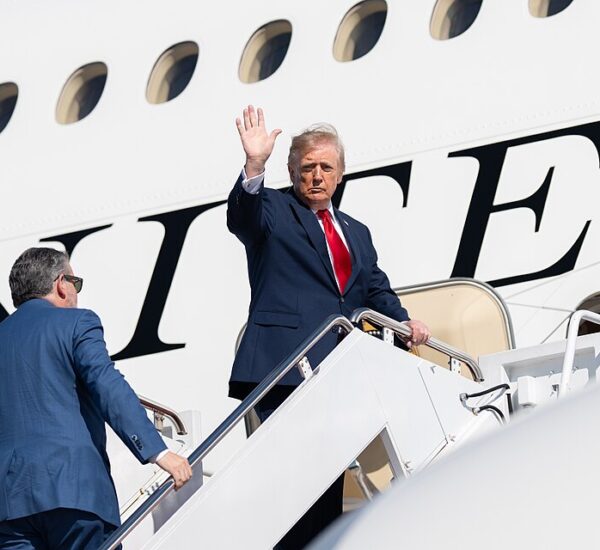
A nationwide aviation shutdown during President Donald Trump’s administration has sparked an unexpected college football controversy, leaving the University of Oklahoma furious after conference officials threatened the Sooners with a forfeit if they refused to accept a last-minute schedule change.
The dispute erupted after the Federal Aviation Administration (FAA) temporarily halted flights across the country on Friday, November 13, disrupting travel plans for thousands of Americans and several major college football programs.
Among those affected was Ole Miss, which was unable to reach Oklahoma as originally planned for its highly anticipated Southeastern Conference matchup.
However, it was the SEC’s response to the situation that turned an already frustrating travel disruption into a heated controversy.
Oklahoma athletic director Roger Denny accused conference leadership of making an unfair decision that punished his university, its athletes, and thousands of loyal football fans.
Oklahoma Blasts SEC Over Controversial Decision
The controversy began when Ole Miss encountered transportation problems following the FAA’s nationwide ground stop.
The Rebels were scheduled to travel to Norman, Oklahoma, ahead of their Saturday afternoon matchup against the Sooners.
Unfortunately, the aviation shutdown prevented the team from departing Mississippi on Friday.
Although federal officials eventually lifted the flight restrictions, Ole Miss reportedly could not secure a late-night departure through its charter airline.
SEC officials subsequently announced that the game would be postponed until Sunday, November 15, with kickoff scheduled for 1 p.m. Eastern.
That announcement immediately drew objections from Oklahoma officials.
According to Denny, SEC Commissioner Greg Sankey made the decision despite the university’s strong opposition.
Even more controversially, Denny said Sankey warned that Oklahoma would automatically forfeit the game if the Sooners refused to participate at the newly scheduled time.
The ultimatum left university officials with little practical choice but to accept the postponement.
Loyal Oklahoma Fans Caught in the Middle
For Oklahoma, the scheduling controversy extends well beyond the football field.
College football has been a cherished American tradition for generations, particularly in states where Saturday games bring families and communities together.
Thousands of supporters plan their weekends around attending games, sometimes traveling considerable distances to support their favorite teams.
Many purchase tickets, reserve hotel rooms, arrange transportation, and make other financial commitments long before kickoff.
Moving a major conference game from Saturday afternoon to Sunday creates significant problems for those fans.
Some supporters may have work obligations or family commitments that make attending the rescheduled contest impossible.
Others could face additional hotel expenses or difficulty changing existing travel arrangements.
Denny made clear that he believed conference officials had failed to give those concerns appropriate consideration.
He argued that the university’s supporters deserved better treatment after making significant investments to attend the game.
The situation has also raised questions about how much influence universities and their fans should have when conference leadership makes decisions affecting thousands of people.
Other College Football Programs Found Alternatives
Another major source of Oklahoma’s frustration was the fact that other college football teams managed to overcome their own transportation difficulties.
Friday’s nationwide FAA shutdown affected numerous programs preparing for weekend games.
Some teams were forced to adjust departure times, while others explored alternative transportation methods.
Auburn, for example, arranged bus transportation to reach Mississippi State for its scheduled matchup.
Other schools managed to preserve their Saturday games by changing kickoff times or modifying travel arrangements.
Oklahoma officials questioned why similar solutions could not be found for Ole Miss.
Denny acknowledged that the Rebels had explored different travel options but maintained that the outcome was unfair to Oklahoma.
The SEC, meanwhile, explained that Ole Miss faced difficulties securing a charter flight after the nationwide restrictions ended.
Those transportation problems reportedly prevented the team from reaching Oklahoma until Saturday.
While both universities were affected by circumstances beyond their control, the dispute centered on whether postponing the contest an entire day was necessary.
For Oklahoma officials, the conference’s decision placed too much of the burden on the home team.
Former Oklahoma Coach Criticizes Conference Leadership
The disagreement quickly attracted attention beyond Oklahoma’s current administration.
Former Sooners head coach Bob Stoops also criticized the SEC’s handling of the situation.
Stoops questioned why Ole Miss could not find a way to reach Norman when other major college football programs had successfully adjusted their travel plans.
His criticism added pressure on Commissioner Sankey, whose decision had already sparked frustration among Oklahoma supporters.
The controversy highlights the difficult balance conference officials must maintain between player safety, competitive fairness, transportation challenges, and the interests of universities.
Unexpected emergencies sometimes require scheduling adjustments.
However, Oklahoma’s response demonstrates that those decisions can become especially contentious when one school believes it is being unfairly disadvantaged.
Trump’s Transportation Secretary Addresses FAA Breakdown
While the football controversy continues, the incident has also renewed national attention on America’s aging air traffic control infrastructure.
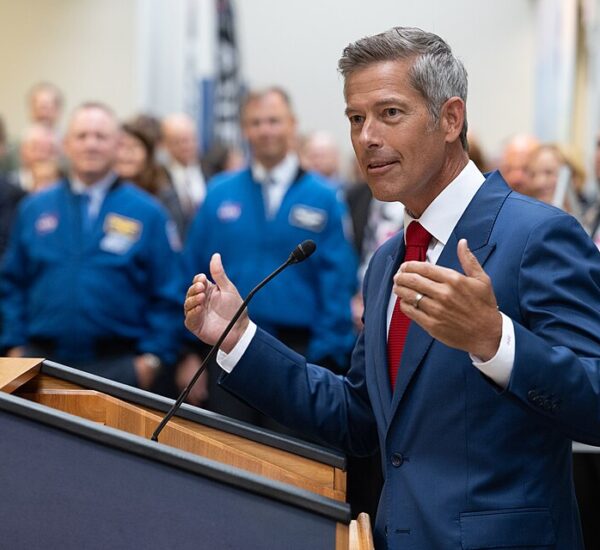
Transportation Secretary Sean Duffy acknowledged that problems involving outdated telecommunications equipment contributed to Friday’s nationwide shutdown.
Federal officials explained that communication and radar systems experienced instability, prompting the FAA to suspend flight operations as a safety precaution.
The shutdown lasted more than four hours before officials began restoring normal operations.
The consequences, however, continued long after the restrictions were lifted.
Airlines faced widespread cancellations and delays, while travelers struggled to rearrange their plans.
The difficulties experienced by college football programs illustrate how quickly a breakdown in critical infrastructure can affect activities across the country.
Duffy has warned that the nation’s aging aviation systems require substantial investment to prevent similar disruptions.
The Trump administration is seeking additional congressional funding to modernize air traffic control technology and replace outdated equipment.
The transportation secretary has called for $50 billion to support a comprehensive overhaul of the system.
The proposal comes as federal officials examine what went wrong during Friday’s shutdown and how future incidents might be prevented.
Aging Federal Infrastructure Raises Serious Concerns
The aviation shutdown has also raised broader questions about Washington’s responsibility to maintain essential infrastructure.
For decades, federal officials from both political parties have acknowledged problems involving outdated air traffic control technology.
Despite technological advances across the private sector, portions of the nation’s aviation network continue to rely on equipment and communications systems developed many years ago.
Friday’s disruption demonstrated the potential consequences when those systems experience serious technical problems.
Businesses depend on reliable aviation services to transport employees, equipment, and essential goods.
Families rely on commercial flights for vacations, medical appointments, and visits with loved ones.
Colleges and universities also depend on dependable transportation when organizing athletic competitions and other major events.
When the national airspace system experiences a serious interruption, the financial and logistical consequences can spread rapidly.
For taxpayers, the latest problems reinforce the importance of ensuring that federal spending produces reliable services and meaningful improvements.
Although the shutdown occurred during Trump’s presidency, officials have emphasized that many of the underlying infrastructure problems developed over decades.
Determining how to modernize the system while maintaining accountability for federal spending remains an important challenge for Washington.
Oklahoma Agrees to Play Despite Objections
Despite its frustration, Oklahoma has confirmed that the Sooners will participate in Sunday’s rescheduled matchup against Ole Miss.
The contest carries significant importance for both programs.
Oklahoma enters the game with a 5-4 record and needs another victory to become eligible for postseason bowl consideration.
Ole Miss, meanwhile, enters the matchup at 6-3 after suffering a difficult loss to Georgia.
Both teams have plenty at stake as the college football season moves closer to its conclusion.
However, the controversy surrounding the schedule change has added another layer of tension to an already important conference matchup.
Oklahoma officials have made clear that agreeing to play does not mean they support the SEC’s handling of the situation.
The university continues to maintain that its players, supporters, and athletic program were treated unfairly.
The larger question is whether college football conferences are doing enough to protect the interests of the schools and loyal fans who make the sport successful.
As the Trump administration works to address the latest aviation breakdown, the Oklahoma-Ole Miss controversy serves as another reminder that problems involving federal infrastructure can create unexpected consequences far beyond America’s airports.
For Oklahoma supporters, what should have been a traditional Saturday afternoon of college football has instead become a dispute over fairness, leadership, and accountability.