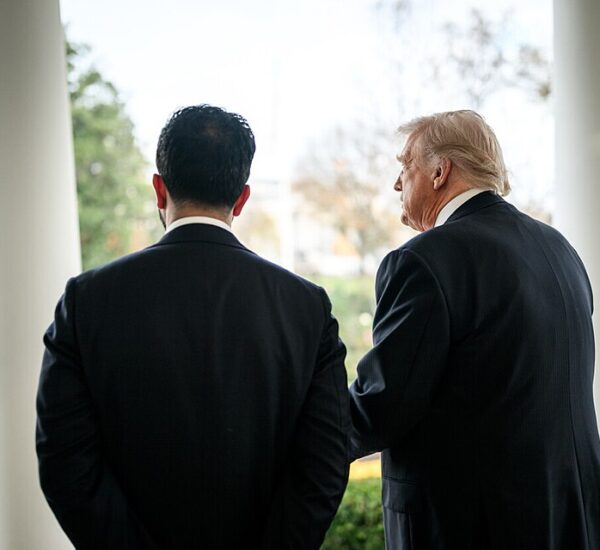
Trump’s AG Todd Blanche didn’t hold back.
CNN anchor Dana Bash faced a sharp confrontation with Attorney General Todd Blanche after the Trump administration’s top law enforcement official accused the network of highlighting only part of the U.S. Constitution during a heated discussion about election integrity.
The tense exchange unfolded Sunday, October 25, during CNN’s State of the Union, as Blanche defended a Justice Department lawsuit involving Alaska’s closely watched Senate election.
At issue was the Constitution’s Elections Clause, which outlines the authority of state legislatures and Congress over federal elections.
Blanche challenged CNN’s presentation of the provision, arguing that viewers were not initially being shown the complete constitutional language relevant to the administration’s argument.
The disagreement quickly escalated into a broader clash over voter confusion, federal election authority, and President Donald Trump’s involvement in the Alaska dispute.
Trump Attorney General Challenges CNN’s Constitutional Argument
The confrontation began when Bash questioned Blanche about the Justice Department’s decision to intervene in Alaska’s Senate contest.
Bash pointed to Article I, Section 4 of the Constitution, emphasizing the authority granted to states in administering congressional elections.
However, Blanche immediately objected to the way the constitutional provision was being displayed.
He argued that CNN had emphasized the first portion while failing to give equal attention to the language establishing Congress’s authority to regulate federal elections.
Blanche demanded that the network show the remainder of the constitutional provision.
The attorney general maintained that the additional language was essential to understanding why the Justice Department believed it had grounds to pursue federal legal action.
Bash acknowledged the additional language and continued questioning Blanche about the specific law being used to justify the lawsuit.
The exchange underscored an important distinction: although state legislatures establish many election procedures, Congress also has constitutional authority to regulate congressional elections.
What Does the Constitution Actually Say?
The disagreement centered on a provision that has shaped federal elections throughout American history.
Article I, Section 4 gives state legislatures the initial responsibility for determining the times, places, and manner of congressional elections.
But that is not the end of the constitutional provision.
It also authorizes Congress to make or change election regulations through federal legislation, subject to the Constitution’s stated limitations.
This distinction formed the foundation of Blanche’s objection.
He argued that discussing state authority without adequately addressing Congress’s constitutional powers could leave viewers with an incomplete understanding of the issue.
However, congressional authority under the Elections Clause does not automatically mean that every federal election-related lawsuit is legally valid.
The Justice Department must still demonstrate that the particular federal statute it invokes authorizes the relief it is requesting.
That legal question remains central to the Alaska controversy.
Alaska Senate Race Triggers Federal Election Dispute
The CNN confrontation arose from an unusual situation involving two Senate candidates with remarkably similar names.
Republican Sen. Dan Sullivan is seeking reelection in Alaska, where he faces Democratic challenger Mary Peltola and another candidate, Daniel J. Sullivan Jr.
The second Sullivan, a retired educator from Petersburg, has drawn attention because of the similarity between his name and that of the Republican incumbent.
Republicans have raised concerns that voters intending to support Sen. Sullivan could mistakenly select the other candidate.
Daniel J. Sullivan Jr. has denied running for the purpose of confusing voters or taking support away from the incumbent.
The distinction between the candidates is especially important because Alaska’s Senate race could be competitive.
On the ballot, the Republican incumbent is identified as Dan S. Sullivan and labeled as the incumbent, while Daniel J. Sullivan Jr. appears separately without a listed party affiliation.
Nevertheless, the Trump administration argues that the similar names present a potential election integrity issue requiring judicial attention.
Trump Administration Takes Election Fight To Court
The Justice Department filed a lawsuit Thursday, October 22, seeking protections related to the certification of Alaska’s Senate election results.
The administration contends that voter confusion could affect the outcome if the two similarly named candidates divide support in a close race.
Under the circumstances described in the lawsuit, federal officials want the courts to address potential voter confusion before an election result is certified if that confusion could prove decisive.
The legal challenge has sparked opposition from Democratic officials and others who question whether the federal government should intervene in the state’s election process.
The Alaska Supreme Court previously ruled that Daniel J. Sullivan Jr. could remain on the ballot under state law.
Blanche argued during the CNN interview that the state court’s ruling did not settle the separate federal legal questions raised by the Justice Department.
Critics of the lawsuit, meanwhile, question whether the federal laws cited by the administration authorize the requested restrictions on election certification.
The ultimate decision will depend on how the courts interpret those laws and the evidence presented.
Dana Bash Presses Blanche On Trump’s Involvement
As the interview continued, Bash questioned whether the lawsuit could establish a precedent for federal interference in election results.
She raised concerns that the administration might use election-related disputes to challenge outcomes unfavorable to Republicans.
Blanche strongly rejected that suggestion.
He insisted that President Trump was not attempting to assume control over Alaska’s election or improperly overturn the will of voters.
Instead, Blanche described the administration’s objective as creating a legal mechanism to address a potential election problem if voter confusion materially affected the result.
The attorney general also maintained that similar concerns would warrant attention regardless of which political party might benefit.
Bash continued pressing him on whether the similarity between two candidates’ names actually constituted a violation of federal law.
The increasingly heated exchange demonstrated the significant disagreement over the lawsuit’s purpose and legal justification.
While the Justice Department frames its involvement as an election integrity measure, opponents see the case as a potentially troubling expansion of federal involvement in state-administered elections.
CNN’s Presentation Of Constitution Draws Scrutiny
One of the most closely watched moments came when Blanche challenged the network’s handling of the constitutional language itself.
The attorney general’s objection centered on the importance of presenting the complete Elections Clause rather than emphasizing only the language describing state authority.
For viewers unfamiliar with the Constitution’s election provisions, the distinction matters.
The federal government and state governments both have defined responsibilities in administering congressional elections, although those responsibilities are not identical.
Blanche’s criticism reflected his belief that the network’s presentation did not adequately convey the legal argument behind the Justice Department’s action.
CNN’s Bash, however, continued pressing the attorney general about whether existing federal law specifically authorized the administration’s lawsuit.
Those are separate questions.
A television segment can accurately acknowledge Congress’s constitutional power while still questioning whether a particular Justice Department action is lawful.
Likewise, concerns about the completeness of a constitutional graphic do not establish that the network deliberately attempted to deceive voters.
The exchange nevertheless drew attention to the importance of showing audiences the full legal context when discussing election controversies.
Why The Alaska Election Dispute Matters
The November 3 midterm elections will determine control of important congressional seats across the country.
Alaska’s Senate contest has attracted national attention not only because of the candidates involved but also because of the administration’s decision to pursue federal litigation before Election Day.
Several questions remain unresolved.
Can the similarity between two candidates’ names create a legally significant election problem?
What evidence would demonstrate that voters actually selected the wrong candidate because of confusion?
And what authority does federal law provide to prevent or delay certification when an election result is disputed?
These questions extend beyond Alaska and touch on broader issues involving election administration, voter confidence, and government authority.
The Constitution gives Congress an important role in regulating federal elections, but states continue to carry out much of the day-to-day administration of those contests.
Any federal intervention must operate within the applicable constitutional and statutory framework.
Election Integrity Remains A Major Issue Ahead Of November
The confrontation between Attorney General Todd Blanche and CNN’s Dana Bash highlights the political and legal tensions surrounding the upcoming elections.
For the Trump administration, the Alaska lawsuit represents an effort to address potential voter confusion before it becomes the subject of a disputed election result.
For opponents, the case raises concerns about political influence over election administration and the limits of federal authority.
The CNN interview brought those competing positions into sharp focus.
Blanche’s objection to the network’s constitutional presentation also reinforced the importance of providing complete and accurate information when discussing federal election law.
With Election Day approaching, attention now turns to the courts and whether the administration can demonstrate that its proposed intervention is supported by federal law.
The outcome could influence how election officials and courts approach similar disputes involving candidate identification, voter confusion, and certification of election results.