Supreme Court Justice Retiring?
Supreme Court Justice Samuel Alito has revealed that he considered retiring from the nation’s highest court before deciding that he still has more to contribute.
The 76-year-old justice said he thought seriously about stepping down at the end of the Supreme Court’s previous term. Instead, Alito chose to remain on the bench and says he plans to reconsider the question of retirement every year.
His decision carries major significance in Washington because a Supreme Court vacancy during President Donald Trump’s administration could give the president another opportunity to nominate a justice.
For Americans who closely follow the Supreme Court, Alito’s comments provide one of the clearest indications yet of how he is approaching his future.
Alito Says He Seriously Considered Retirement
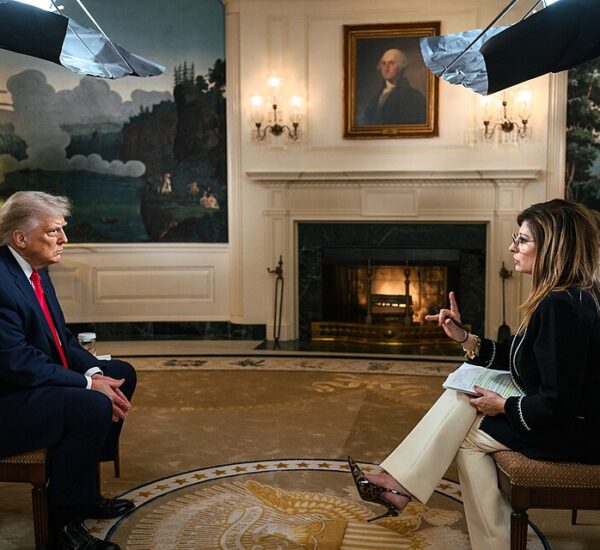
During an interview with CBS News chief legal correspondent Jan Crawford, Alito was asked directly whether he had considered leaving the Supreme Court.
“I thought about it,” Alito said.
He explained that someone his age naturally has to evaluate whether continuing to serve remains the right decision.
Ultimately, however, Alito decided that he still believes he can make what he described as “a valuable contribution.”
That decision means Alito will remain on the Supreme Court for another term, while leaving open the possibility that he could reconsider retirement in the future.
Rather than setting a specific retirement date, Alito indicated that he intends to examine the issue year by year.
Why Alito’s Retirement Decision Matters
Supreme Court retirements are always closely watched because justices receive lifetime appointments and can remain on the bench for decades.
When a justice retires or dies, the sitting president has the opportunity to nominate a replacement, subject to confirmation by the U.S. Senate.
That means the timing of a retirement can affect the ideological makeup of the Supreme Court for many years.
Alito’s future has therefore attracted considerable attention because President Donald Trump is in the White House and Republicans control the Senate.
If Alito were to retire under those circumstances, Trump could nominate his replacement.
However, Alito made clear that predicting future political conditions is difficult.
Alito Addresses Ruth Bader Ginsburg Comparison
Alito was also asked about the late Justice Ruth Bader Ginsburg, whose decision to remain on the Supreme Court became a major political issue after her death in 2020.
Ginsburg died while Trump was serving his first term as president.
Trump subsequently nominated Amy Coney Barrett to fill the vacancy, and the Senate confirmed Barrett shortly before the 2020 presidential election.
The result strengthened the Supreme Court’s conservative majority.
Asked whether delaying his own retirement could create a similar political situation, Alito said it is extremely difficult to predict what circumstances will look like one or two years into the future.
That includes uncertainty about who will be president, which party will control the Senate and whom a future president might nominate.
For Alito, those unknowns appear to be another reason to evaluate retirement based on his ability to continue serving rather than trying to forecast every possible political scenario.
Alito Has Served on Supreme Court Since 2006
Alito has served on the Supreme Court for more than two decades.
President George W. Bush nominated him to replace retiring Justice Sandra Day O’Connor, and Alito joined the Court in 2006.
Over the years, he has become one of the Court’s most influential conservative justices.
Justice Clarence Thomas, who joined the Supreme Court in 1991, is the only current justice older than Alito.
Alito’s long tenure means he has participated in some of the most consequential Supreme Court decisions of the past generation, including cases involving abortion, religious liberty, gun rights, federal authority and presidential power.
His opinions have also made him an important figure for Americans who closely follow constitutional law and the direction of the federal judiciary.
Supreme Court Maintains 6-3 Conservative Majority
Alito’s decision to remain on the bench leaves the Supreme Court’s current ideological balance unchanged.
The Court has a 6-3 conservative majority.
Its conservative members are Chief Justice John Roberts and Justices Clarence Thomas, Samuel Alito, Neil Gorsuch, Brett Kavanaugh and Amy Coney Barrett.
The Court’s liberal members are Justices Sonia Sotomayor, Elena Kagan and Ketanji Brown Jackson.
Trump appointed three members of the current Court during his first presidential term: Gorsuch, Kavanaugh and Barrett.
Those appointments were among the most lasting consequences of Trump’s first four years in the White House.
Because Supreme Court justices serve lifetime appointments, presidential nominations can influence American law long after a president leaves office.
That is why speculation surrounding Alito’s retirement has attracted so much attention.
Stephen Breyer Was Last Justice to Retire
The most recent Supreme Court retirement came from Justice Stephen Breyer.
Breyer, a member of the Court’s liberal wing, retired on June 30, 2022, after serving nearly 28 years.
His retirement occurred while President Joe Biden was in office and Democrats controlled the Senate.
Biden nominated Ketanji Brown Jackson to replace him.
Jackson was confirmed by the Senate and became the first Black woman to serve on the U.S. Supreme Court.
Breyer’s retirement illustrates how Supreme Court vacancies often become major political events.
Advocates from both parties routinely pay close attention to the ages of Supreme Court justices, the party controlling the White House and the balance of power in the Senate.
Pressure Over Supreme Court Retirements Is Nothing New
Calls for older Supreme Court justices to retire while a politically aligned president controls the nomination process have become increasingly common.
Breyer faced pressure from some Democrats to step aside while Biden had an opportunity to nominate his successor.
Alito has similarly faced speculation about whether he should retire while Trump and Senate Republicans are positioned to confirm a replacement.
But Supreme Court justices are not required to retire because of age or political circumstances.
Article III of the Constitution provides federal judges with life tenure as long as they continue in good behavior.
In practical terms, that gives Supreme Court justices considerable freedom to determine when their service should end.
Alito’s latest remarks indicate that he intends to make that decision on his own timetable.
False Retirement Report Added to Speculation
Speculation surrounding Alito intensified earlier in 2026 after an erroneous report claimed that he had announced his retirement.
NPR legal affairs correspondent Nina Totenberg incorrectly reported on June 30 that Alito was stepping down from the Supreme Court.
The report was withdrawn within minutes.
Totenberg later apologized to Alito and described the incident as a serious professional mistake.
The false report nevertheless highlighted the intense interest surrounding the justice’s future.
Alito later pushed back against retirement rumors during an August interview with The Wall Street Journal.
“Obviously I’m here for another term,” he said.
His CBS interview has now provided additional context, confirming that retirement was something he actually considered before deciding to stay.
What Happens If Alito Eventually Retires?
If Alito eventually decides to leave the Supreme Court, the Constitution gives the president authority to nominate his replacement.
The Senate would then decide whether to confirm the nominee.
Supreme Court confirmation battles have become increasingly important in modern American politics because the Court regularly considers cases affecting virtually every part of public life.
Its decisions can shape questions involving taxes, healthcare, immigration, elections, firearms, religious freedom, abortion, environmental regulation and executive authority.
A new justice can serve for several decades, making each vacancy potentially more consequential than many congressional or presidential terms.
For that reason, Alito’s future will likely remain a significant political story even though he has decided against retiring for now.
Alito Plans to Make the Decision Year by Year
Perhaps the most important takeaway from Alito’s interview is that there appears to be no predetermined retirement schedule.
He considered leaving.
He decided to remain.
And he intends to reconsider his future as each Supreme Court term approaches.
For now, Alito believes he can continue making a meaningful contribution to the Court.
That keeps one of the Supreme Court’s longest-serving conservative justices on the bench and preserves the Court’s current 6-3 ideological makeup.
But with Alito now publicly acknowledging that retirement is something he evaluates, speculation over his eventual departure is unlikely to disappear.
The question is no longer whether Alito has thought about retirement.
He has.
The unanswered question is when he will ultimately decide that his time on the Supreme Court has come to an end.