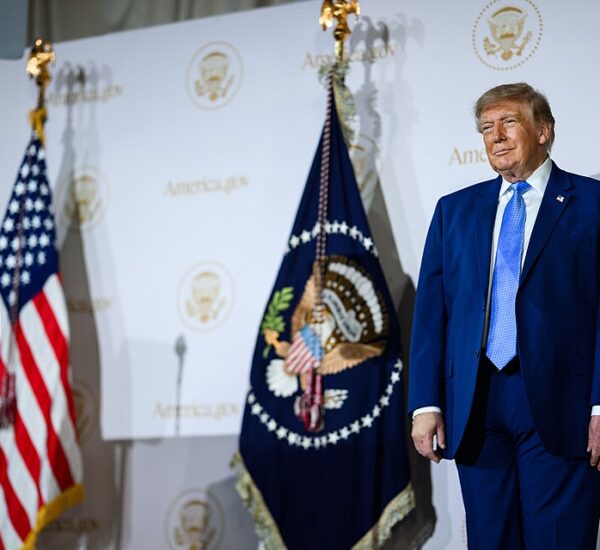
Federal buildings across the country are facing decades of deferred maintenance, prompting renewed attention to whether the Trump administration should pursue a broad effort to renovate aging government facilities. According to a New York Times investigation, deteriorating conditions, including leaking roofs, mold, pests, and outdated infrastructure, have become more apparent as more federal employees returned to the office last year.
BACKGROUND
The New York Times reported that the federal government faces an estimated $50 billion maintenance backlog across approximately 1,475 General Services Administration-owned properties, with projected repair costs expected to exceed the value of the federal real estate portfolio within several years. The report said the backlog has been compounded by a congressional approval process that requires lawmakers to approve General Services Administration projects costing more than $3.96 million, a process averaging more than 435 days. Agency officials argue those delays increase repair costs and allow safety hazards to worsen. Examples cited include persistent roof leaks at an IRS facility in Atlanta, mold contamination at Veterans Affairs offices in Hilo, Hawaii, aging elevators that have trapped people dozens of times at Boston’s John F. Kennedy Federal Building, and outdated plumbing, ventilation, and electrical systems at federal facilities across the country.
Trump Agrees To New Ceasefire
The United States and Iran have reached a temporary agreement designed to reduce tensions in one of the world’s most important shipping lanes, offering a potential break from months of military conflict that has rattled global energy markets and pushed fuel prices higher.
According to a U.S. official who spoke with The Hill on Sunday, both countries have agreed to pause further military escalation while allowing commercial vessels to move safely through the Strait of Hormuz.
The development comes after several days of renewed fighting that raised fears of a wider Middle East conflict involving American forces.
U.S. and Iran Agree to Pause Military Escalation
The agreement is tied to a memorandum of understanding (MOU) signed earlier this month between Washington and Tehran.
A U.S. official said technical negotiations will continue while both sides temporarily refrain from additional military action.
Negotiators will continue working through the technical details of the memorandum of understanding, while both nations have agreed to temporarily ease tensions and allow ships to pass through the Strait of Hormuz freely.
Although the agreement does not end the broader conflict, it represents an effort to prevent additional disruptions in one of the world’s busiest energy corridors.
Why the Strait of Hormuz Matters
The Strait of Hormuz is one of the most strategically important waterways on Earth. Roughly one-fifth of the world’s oil supply travels through the narrow passage connecting the Persian Gulf to global markets.
Any threat to shipping through the strait can quickly drive up crude oil prices, gasoline costs, and inflation across the United States.
For many Americans already struggling with higher living expenses, continued instability in the region could translate into more pain at the gas pump and higher prices for everyday goods.
Four Months of Conflict Have Impacted the Global Economy
The war involving Iran has now stretched into its fourth month, increasing uncertainty throughout the Middle East.
The conflict has affected international trade, pushed energy markets higher, and placed new pressure on America’s relationships with Israel and several longtime European allies.
Financial markets have closely watched every military development as investors weigh the possibility of additional disruptions to global commerce.
Iran Tightened Control Over the Waterway
On Friday, Iranian officials announced that ships traveling through the Strait of Hormuz would only be guaranteed safe passage if they coordinated directly with the Iranian government.
The announcement came shortly after President Donald Trump accused Iran of using a one-way attack drone to strike a commercial vessel operating near the coast of Oman.
The accusation further heightened tensions between Washington and Tehran.
U.S. Military Responds With Airstrikes
Following the reported drone attack, U.S. Central Command (CENTCOM) announced Saturday that American forces carried out additional strikes against Iranian military targets.
According to military officials, the operation targeted facilities connected to Iran’s missile and drone capabilities.
The strikes were described as a direct response to what the United States considers repeated violations of the ceasefire agreement.
Trump Warns Iran of Serious Consequences
President Trump responded with one of his strongest warnings yet, saying the United States would not tolerate additional attacks.
Writing on Truth Social, Trump said American aircraft had struck Iranian missile storage facilities, drone sites, and coastal radar installations after Iran allegedly violated the ceasefire agreement.
He also warned that if Iran continued its actions, the United States could take even broader military action against the Iranian regime.
The president’s comments underscored the administration’s increasingly firm stance toward Tehran following months of military confrontation.
Fighting Continues Despite Temporary Agreement
Despite Sunday’s announcement that both sides would temporarily stand down, tensions remain high.
Iran reportedly launched strikes targeting Kuwait and Bahrain, claiming the United States had violated the ceasefire agreement. Officials said the attacks caused no reported injuries.
The incidents demonstrate that while diplomatic efforts are continuing, the situation remains fragile and could change quickly.
Nuclear Talks Expected to Resume
According to Axios, U.S. and Iranian officials are expected to meet Tuesday in Qatar to continue technical discussions regarding Iran’s nuclear program.
Those negotiations are expected to focus on implementing key portions of the memorandum of understanding signed earlier this month.
Many provisions of the agreement are scheduled to expire after 60 days unless both governments agree to extend them, making the upcoming talks especially important.
What Happens Next?
While the temporary agreement lowers the immediate risk of additional military escalation, significant challenges remain.
Future negotiations will determine whether the ceasefire holds, whether commercial shipping continues uninterrupted through the Strait of Hormuz, and whether both countries can make progress on Iran’s nuclear program.
For Americans, the outcome could directly affect gas prices, inflation, national security, and U.S. involvement in the Middle East in the weeks ahead.