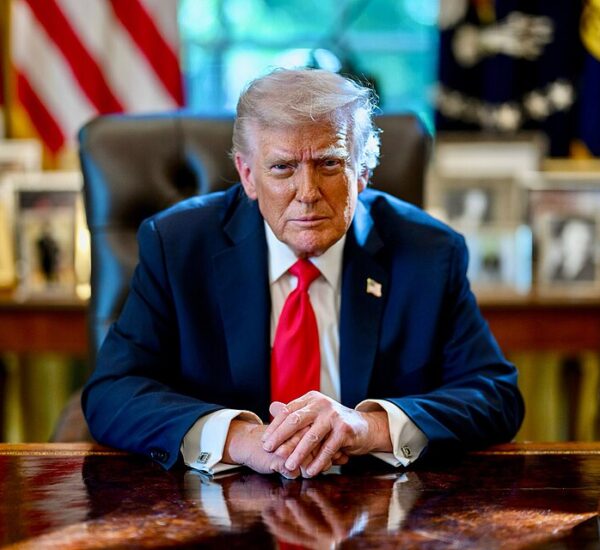
Here’s what Trump plans to do now.
President Donald Trump is preparing for a major overseas diplomatic mission that could have significant implications for America’s economy, national security, and relationships with some of the world’s most powerful nations.
The White House has confirmed plans for Trump to travel to the Philippines in November before continuing to China for another important international gathering.
The upcoming trip will put the president face-to-face with foreign leaders as his administration works to strengthen American influence in Asia and address ongoing economic and security challenges.
One of the most anticipated developments will be another meeting between Trump and Chinese President Xi Jinping, with trade relations and regional tensions expected to remain major concerns.
Trump Heads to the Philippines for Major International Summit
According to reports, Trump will participate in the Association of Southeast Asian Nations (ASEAN) summit in Manila on November 16.
The gathering will bring together leaders from Southeast Asia and international partners to discuss economic cooperation, regional stability, and diplomatic relations.
Philippine President Ferdinand Marcos Jr. has reportedly encouraged Trump to visit the country for some time.
The trip will mark Trump’s first official visit to the Philippines since 2017, when he attended an ASEAN summit during his first administration.
The president also participated in the ASEAN summit in Malaysia last year, demonstrating the continuing importance of Southeast Asia in American foreign policy.
For Washington, maintaining strong partnerships in the region is especially important as competition between the United States and China continues.
Trump Planning Another High-Stakes Meeting With China
Following his appearance in the Philippines, Trump is scheduled to travel to Shenzhen, China, for the Asia-Pacific Economic Cooperation (APEC) summit.
The international gathering is scheduled for November 17 through November 19.
During his visit, Trump is expected to meet with Chinese President Xi Jinping for another round of diplomatic discussions.
The anticipated meeting comes as Washington and Beijing attempt to manage disagreements involving international trade, advanced technology, Taiwan, and regional security.
Both nations have taken steps toward improving diplomatic communication, including extending a temporary trade agreement intended to prevent additional economic tensions.
However, several major disagreements remain unresolved.
For American businesses and consumers, negotiations between the world’s two largest economies can have far-reaching consequences.
Trade policies affect everything from agricultural exports and manufacturing to the availability and cost of imported goods.
A successful meeting could help reduce uncertainty, although any significant agreements would depend on the outcome of negotiations.
American Jobs and Economic Security Remain Important
Trump’s upcoming diplomatic mission also highlights the importance of America’s economic relationships with Asian countries.
The Indo-Pacific region plays a critical role in international commerce, manufacturing, and global supply chains.
American farmers, manufacturers, and businesses rely on access to overseas markets, while consumers are affected by trade policies and changing economic conditions.
The Trump administration has consistently emphasized securing favorable trade terms and protecting American industries from what it considers unfair foreign competition.
Those goals are likely to remain central to the administration’s broader diplomatic strategy.
At the same time, international negotiations often involve difficult compromises.
Trade disputes can create uncertainty for American companies, while new agreements have the potential to expand export opportunities and improve market access.
For the administration, the challenge is securing economic benefits while maintaining productive relationships with important trading partners.
National Security Concerns Add to the Stakes
Economic issues are not the only matters surrounding Trump’s international trip.
Security concerns across Southeast Asia have become increasingly important as China expands its military presence and influence in the region.
The Philippines has a longstanding defense relationship with the United States, making cooperation between Washington and Manila particularly significant.
Territorial disagreements in the South China Sea have also created tensions involving China and neighboring countries.
These disputes raise important questions about freedom of navigation, regional security, and the responsibilities of American allies.
Trump’s participation in the ASEAN summit could provide another opportunity to discuss those challenges directly with regional leaders.
For the United States, strong diplomatic and security partnerships remain an important part of protecting national interests and maintaining stability in the Pacific.
Trump Continues His Direct Approach to Foreign Diplomacy
Throughout his presidency, Trump has emphasized direct negotiations with foreign leaders as a central part of his approach to international relations.
His administration has used economic pressure, trade negotiations, and diplomatic meetings in efforts to advance American priorities.
Supporters believe this approach can strengthen Washington’s negotiating position and encourage other nations to address American concerns.
Critics have questioned whether aggressive trade policies and unpredictable negotiations could create additional uncertainty.
The upcoming meetings in Asia will provide another opportunity to assess the administration’s foreign policy strategy.
Much will depend on whether diplomatic discussions produce agreements that benefit American interests.
Trump and Xi are also expected to meet again during the G20 summit in Miami in December, potentially providing another opportunity to address unresolved disputes.
What Trump’s Upcoming Trip Means for America
The president’s November trip comes at an important time for American foreign policy.
Economic competition with China, security concerns in the Pacific, and the future of international trade remain major issues for Washington.
The administration’s discussions with Asian leaders could influence how the United States approaches those challenges in the months ahead.
While the outcome of the meetings remains uncertain, the trip will give Trump another opportunity to represent American interests directly on the international stage.
For American families, workers, farmers, and businesses, the most important question is whether these diplomatic efforts will ultimately strengthen the nation’s economy and security.
As Trump prepares to travel to the Philippines and China, attention will turn to what agreements, commitments, or diplomatic breakthroughs may emerge from the meetings.
The results could help shape America’s relationships with key international partners well beyond the president’s upcoming visit.