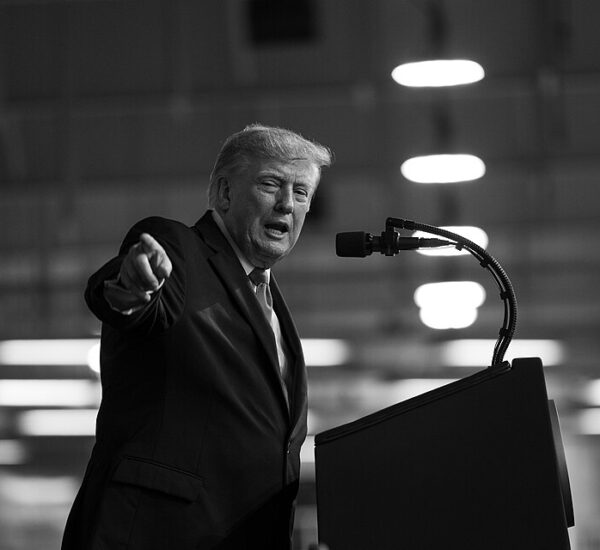
Trump is not letting James off the hook.
President Donald Trump has brought renewed attention to serious allegations involving New York Attorney General Letitia James after a former prosecutor claimed her office continued investigating Trump and his associates despite investigators reportedly finding no evidence of wrongdoing.
The allegations, first detailed in an exclusive New York Post report, have raised fresh questions about political influence, government accountability, and the impartiality of investigations involving prominent public officials.
Trump shared the report on Truth Social on Saturday, October 10, drawing national attention to accusations made by a former employee of James’ own office.
The controversy adds another chapter to the long-running legal and political battle between Trump and the Democratic attorney general, who has repeatedly challenged him in court.
Former Prosecutor Raises Serious Questions About Letitia James
Daniel Wiesenfeld, a former prosecutor in the Investor Protection Bureau of the New York Attorney General’s Office, has come forward with allegations about how an investigation involving Trump-related business interests was conducted.
According to Wiesenfeld, he was assigned in July 2025 to examine an insider-trading allegation involving a company connected to the Trump family.
However, the former prosecutor claimed that investigators struggled to uncover evidence supporting the accusations.
Despite those findings, Wiesenfeld alleged that his supervisors continued pressing investigators to pursue the matter.
He told the New York Post that members of the investigative team became increasingly frustrated as the investigation continued.
According to his account, a supervisor indicated that the decision to keep the investigation open came from Attorney General James herself.
Wiesenfeld described the alleged situation with the statement, “What Tish wanted, Tish got.”
The accusation raises an important question about whether investigative decisions were being driven by evidence or by instructions from senior officials.
Still, Wiesenfeld’s account represents an allegation, and it has not been independently established that James ordered an improper investigation.
Trump Shares Whistleblower Allegations With Millions of Americans
President Trump responded by sharing the New York Post’s reporting on his Truth Social account, which reaches millions of followers.
His decision placed the former prosecutor’s accusations directly into the national political conversation.
Trump has frequently criticized James, arguing that her legal efforts against him were politically motivated.
The latest report is likely to intensify that dispute because it involves allegations from someone who previously worked inside the attorney general’s office.
Unlike criticism coming directly from political opponents, Wiesenfeld’s account concerns his claimed firsthand experiences with investigative decisions and internal communications.
However, his allegations must still be evaluated alongside documents, testimony, and the responses of those accused.
The central issue is whether the investigation had a legitimate legal basis and whether prosecutors were permitted to exercise their professional judgment.
What Happened to the Prosecutor Who Spoke Out?
The dispute extends beyond the investigation itself.
Wiesenfeld reportedly expressed concerns about the direction of the investigation in communications with other employees.
In August 2026, he sent a message to thousands of colleagues criticizing what he believed was inappropriate political pressure within the office.
He was subsequently placed on administrative leave and later dismissed from his position.
Wiesenfeld has argued that the disciplinary action followed his decision to raise concerns about the investigation.
His former employer disputes that characterization.
According to reporting by the Albany Times Union, the Attorney General’s Office has cited concerns about Wiesenfeld’s conduct, workplace directives, and handling of confidential information.
The office has also challenged the substance of his accusations.
These conflicting accounts are significant because they involve both the credibility of the whistleblower’s allegations and the reasons behind his termination.
Determining what actually occurred would require a careful review of the relevant communications, employment records, and investigative materials.
Letitia James’ Previous Legal Battle With Trump
The new controversy comes after years of high-profile legal confrontations between Trump and James.
James previously brought a major civil fraud lawsuit against Trump, his business organization, and other defendants.
The case involved allegations that financial statements misrepresented the value of certain assets.
In 2024, a New York court imposed a substantial financial penalty in the civil case.
However, in August 2025, a New York appeals court rejected the approximately $454 million judgment as excessive.
The decision marked an important development in the legal dispute, although it did not establish that every allegation made against Trump was unfounded.
The earlier civil fraud lawsuit and the investigation described by Wiesenfeld are separate matters.
Nevertheless, the latest accusations have reignited debate over whether politically prominent individuals receive fair treatment from government investigators.
Why the Allegations Matter to American Taxpayers
Beyond the political disagreement between Trump and James, the controversy raises questions about how taxpayer-funded government agencies conduct investigations.
State attorneys general have significant authority to investigate suspected financial misconduct, consumer fraud, and violations of state law.
That authority comes with a responsibility to use public resources fairly and appropriately.
Investigations can require months of work, extensive documentation, and substantial financial resources.
When prosecutors uncover credible evidence of misconduct, pursuing those findings is an important part of their job.
But investigators must also be willing to reassess cases when evidence does not support the original allegations.
That principle applies regardless of whether the subject is a sitting president, a major corporation, an ordinary citizen, or another public official.
The issue is not simply whether Trump or James benefits politically from the controversy.
It is whether government agencies are following consistent standards when deciding whom to investigate and when to close a case.
Government Accountability Becomes a Central Issue
The former prosecutor’s accusations have added to a broader national discussion about transparency and accountability in government.
One of the most important responsibilities of any law enforcement agency is maintaining public confidence that its decisions are based on facts.
Political disagreements are an unavoidable part of American democracy.
However, the justice system is expected to operate independently of those disagreements.
If investigators are pressured to continue pursuing individuals without a legitimate investigative basis, that would raise serious concerns.
Conversely, if an employee makes accusations that are unsupported by the available evidence, those claims should not automatically be treated as established misconduct.
Both possibilities underscore the importance of reviewing the facts before drawing conclusions.
For Americans concerned about government spending, constitutional protections, and equal treatment under the law, the case highlights why public officials should be subject to meaningful oversight.
What Happens Next for Letitia James?
The immediate question is whether additional evidence will emerge to support or contradict Wiesenfeld’s allegations.
The New York Post has reported that federal investigators reviewed his claims, but that does not establish that wrongdoing occurred.
Further scrutiny could focus on internal communications, the original basis for the investigation, and decisions made by supervisors.
It also remains important to distinguish allegations about the conduct of individual prosecutors from documented findings of misconduct by an elected attorney general.
At this stage, the available reporting does not establish that James committed a crime or personally ordered prosecutors to violate the law.
Still, the accusations have become a significant political controversy because they concern the conduct of a powerful government office and its interactions with a sitting president.
Americans Deserve Answers
President Trump’s decision to publicize the whistleblower allegations ensures that the controversy involving Letitia James will continue attracting attention.
For those concerned about the use of government power, the allegations raise questions worth examining.
Was the investigation supported by sufficient evidence? Were prosecutors encouraged to continue despite legitimate concerns? And were internal objections addressed fairly?
Those questions deserve answers grounded in verifiable facts rather than political assumptions.
Regardless of party affiliation, Americans should be able to expect that investigators follow the evidence, that taxpayer resources are used responsibly, and that public officials are held to consistent standards.
The ultimate test of government accountability is whether the same rules apply to everyone, including the people entrusted with enforcing them.
As Trump and James remain at the center of this latest controversy, that principle continues to be the most important issue.