President Trump really needs this.
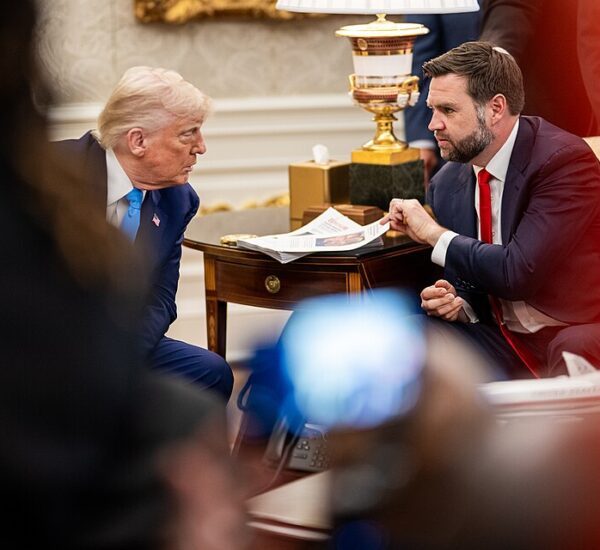
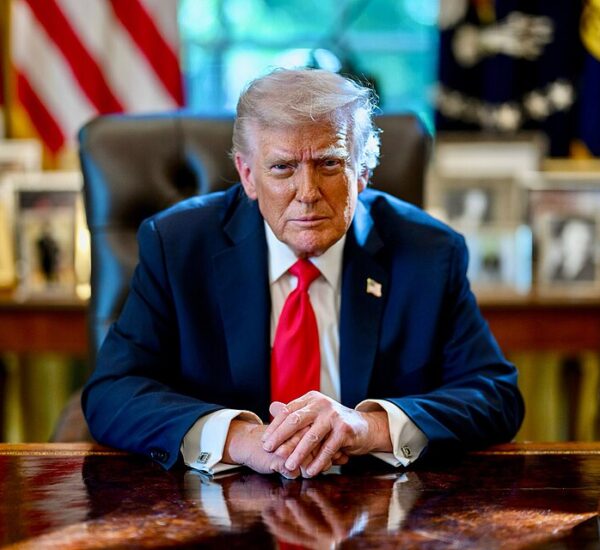
President Donald Trump is calling on House Republicans to unite behind a key budget measure that could move major parts of the SAVE America Act closer to becoming law.
The push comes as Republicans battle over election security, military funding and government spending, with some fiscal conservatives warning that the proposal does not do enough to reduce the nation’s nearly $39.5 trillion debt.
Despite those concerns, Trump is urging Republicans to stand together and deliver one of his top legislative priorities.
Trump Pushes Republicans To Stand Together
House Speaker Mike Johnson, R-La., is leading an effort to use the budget reconciliation process to advance portions of the SAVE America Act. If successful, Republicans could bypass the Senate’s normal 60-vote requirement, allowing the legislation to move forward without Democratic support if it meets Senate budget rules.
The broader package also includes approximately $73 billion in national security funding as lawmakers continue responding to heightened tensions in the Middle East following the recent conflict involving the United States and Iran.
Trump praised Johnson and House Budget Committee members on Truth Social while urging every Republican to support the measure.
“I am asking all House Republicans to VOTE YES this week on the Budget Resolution,” Trump wrote.
He described the vote as an important first step toward passing a larger budget package that would include as much of the SAVE America Act as possible, additional support for American farmers and increased funding for the U.S. military.
Conservatives Raise Spending Concerns
Although many Republicans support the legislation’s election integrity provisions, several conservatives remain uneasy about its spending levels.
The budget framework authorizes roughly $95 billion in new federal spending through 2036. It serves as a blueprint that directs congressional committees to write the final legislation in the coming weeks.
However, the current proposal does not include specific spending cuts to offset the new funding.
For many fiscal conservatives, that is a major concern.
Rep. Eric Burlison, R-Mo., said he cannot support the bill in its current form because it lacks spending offsets and does not include language ending federal funding for Planned Parenthood.
Burlison also said he wants additional discussions with the Trump administration about strengthening the election security provisions and addressing abortion pills distributed through the mail before making a final decision.
Fiscal Hawks Want More Spending Cuts
Several Republican lawmakers are keeping their options open.
Rep. Andy Ogles, R-Tenn., and Rep. Tim Burchett, R-Tenn., both expressed concerns about the absence of spending reductions while continuing to evaluate the proposal.
Burchett also warned that if the Senate removes key election security provisions before sending the legislation back to the House, he would likely vote against the final package.
That possibility has also caught the attention of members of the conservative House Freedom Caucus.
A source familiar with the group’s discussions said the SAVE America Act remains one of the conference’s highest priorities and stressed that mandatory voter identification and proof of citizenship requirements must remain in the final legislation.
The source warned that significantly weakening those provisions could create serious opposition among conservatives.
Another senior House Republican aide argued lawmakers cannot continue warning Americans about the country’s growing debt while approving new spending without identifying clear funding offsets.
Supporters Say Election Integrity Cannot Wait
Not every fiscal conservative opposes the current strategy.
Rep. Marlin Stutzman, R-Ind., acknowledged concerns about the lack of identified spending cuts but argued that strengthening election integrity is too important to delay.
He said protecting elections should remain a national priority while lawmakers continue working toward long-term fiscal responsibility.
Supporters believe advancing the SAVE America Act now is worth pursuing, even as budget negotiations continue.
What The SAVE America Act Would Do
The SAVE America Act would establish a nationwide voter identification standard, require proof of U.S. citizenship when registering to vote and implement additional election security measures.
The House has already approved the legislation, but it has stalled in the Senate, where Republicans would normally need Democratic votes to overcome procedural hurdles.
Democrats argue the proposal could make voting more difficult for some eligible Americans and have criticized it as a form of voter suppression.
To avoid that obstacle, House Republican leaders are attempting to include portions of the legislation in the budget reconciliation package, which only requires a simple majority to pass in the Senate.
However, reconciliation rules are strict, and the Senate parliamentarian will ultimately determine which provisions qualify to remain in the bill.
High-Stakes Vote Ahead
The coming vote is shaping up to be one of the biggest tests of Republican unity this year.
Trump has made it clear that he wants Republicans to rally behind the legislation, arguing it would strengthen election security, support American farmers, boost military funding and move his agenda forward.
At the same time, many conservative lawmakers continue pressing party leaders to pair any new spending with meaningful budget cuts.
How Republicans resolve those competing priorities in the coming weeks could determine not only the future of the SAVE America Act, but also whether the party can stay united behind Trump’s legislative agenda heading into the next phase of the congressional session.