Here’s what Republicans are fearing.
President Donald Trump and Republican leaders are facing a potentially historic political setback as a Senate race in one of America’s most reliably Republican states becomes unexpectedly competitive just days before the November midterm elections.
The warning is coming from within the Republican Party itself.
Sen. Roger Marshall of Kansas, a Trump-backed Republican seeking reelection, has acknowledged that losing his Senate seat could threaten the GOP’s control of the United States Senate.
For a party holding a narrow 53-seat majority, the possibility of losing a state that hasn’t elected a Democratic senator since 1932 presents a serious challenge.
And with Election Day approaching on November 3, Republicans are discovering that even traditionally safe seats may no longer be guaranteed victories.
Republican Senator Warns of Political Disaster
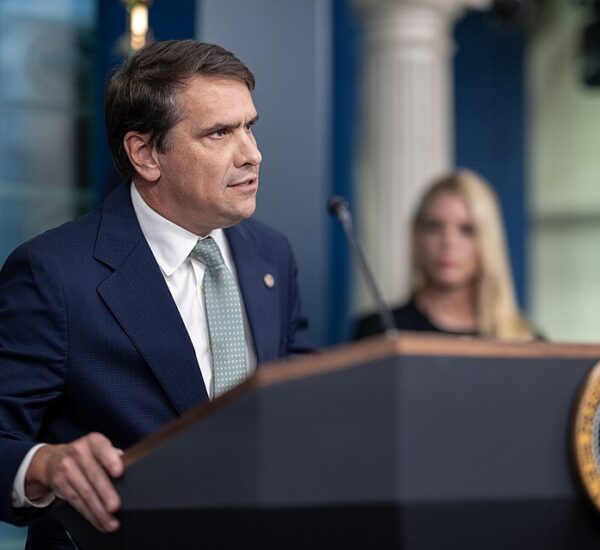
Marshall delivered his assessment during an interview with Fox News Digital as his contest against Democratic challenger Adam Hamilton continued to tighten.
The Kansas Republican acknowledged that a defeat in his state would make retaining the Senate majority extremely difficult.
His warning reflects growing concern among Republicans that an unexpected loss in Kansas could combine with Democratic gains elsewhere to change the balance of power in Washington.
Such an outcome would have major implications for the remainder of Trump’s presidency.
Republicans currently control the Senate with 53 seats, allowing them to advance legislation and consider presidential nominations without depending entirely on Democratic cooperation.
A shift in control would give Democrats authority over Senate committees, legislative scheduling, and the confirmation process.
It could also complicate the administration’s efforts to advance important domestic and foreign policy priorities.
For Republicans, Kansas has become more than a single Senate contest. It is now a test of whether the party can defend its traditional political strongholds.
A 94-Year Republican Winning Streak Is Suddenly at Risk
The historical significance of the Kansas election is difficult to overstate.
The last time voters in the state elected a Democrat to the U.S. Senate was 1932, when Franklin D. Roosevelt was preparing to enter the White House during the Great Depression.
Since then, Republican candidates have maintained a remarkable winning streak in Kansas Senate elections.
Marshall appeared well-positioned to continue that tradition when the 2026 campaign began.
He won his first Senate election in 2020 by nearly 12 percentage points, benefiting from strong Republican support across the state.
However, the political environment has changed considerably.
Democrat Adam Hamilton, a longtime Methodist pastor and leader of the Church of the Resurrection, has emerged as a more formidable challenger than Republicans initially anticipated.
Hamilton has emphasized his moderate image while attempting to appeal to Democrats, independents, and voters who might ordinarily support Republican candidates.
His campaign has attracted substantial financial support and national attention.
The Cook Political Report moved the Kansas Senate contest into its toss-up category in early October, reflecting how dramatically expectations have shifted.
According to polling averages reported by Axios on October 27, Marshall and Hamilton were both drawing approximately 46% support.
That close contest is especially striking in a state where Republicans have dominated Senate elections for generations.
Trump Makes Personal Push to Save Republican Senate Seat
The seriousness of the situation has prompted President Trump to become directly involved in the Kansas campaign.
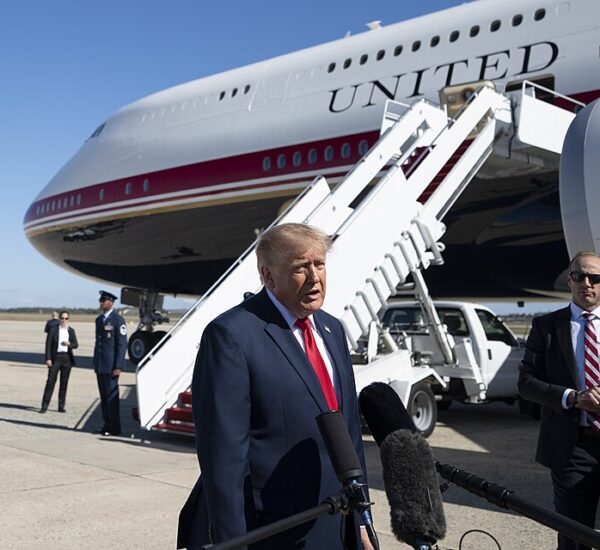
Trump appeared alongside Marshall during an October 19 rally in Park City, Kansas, encouraging his supporters to participate in the midterm elections.
The president urged voters to approach the contest as though he were personally running for office.
That appeal illustrates a central challenge facing Republican candidates in 2026.
Trump remains an influential figure among GOP voters, but his name is not on the ballot.
Republican candidates must therefore convince supporters who enthusiastically participate in presidential elections to turn out for congressional races as well.
Vice President JD Vance has also traveled to Kansas to campaign for Marshall.
According to Axios, Trump and Vance made three appearances in the state over a period of slightly more than one month.
Such high-profile attention is unusual for a state that historically has been considered safely Republican in Senate elections.
Their involvement underscores how important Kansas has become to the national Republican effort to preserve Senate control.
Rising Gas Prices Create Unexpected Problems for GOP
Beyond the candidates themselves, one of the biggest factors influencing the election involves something millions of Americans encounter every week: the cost of filling their gas tanks.
Gasoline and diesel prices have become major concerns in Kansas, particularly among families, farmers, truck drivers, and small-business owners.
Marshall acknowledged that increasing fuel costs have contributed to voter frustration and affected his political standing.
During his Fox News interview, the senator described encountering growing dissatisfaction as gasoline prices climbed.
The economic pressure is especially significant in Kansas, where agriculture, transportation, and long-distance driving are important parts of everyday life.
Recent reporting from The Associated Press found that diesel prices in Kansas averaged approximately $6.32 per gallon during the week leading up to the election, compared with $3.62 a year earlier.
Those increases affect more than transportation expenses.
Higher diesel costs can raise the operating expenses of farms and businesses, potentially influencing food prices and the broader cost of living.
The campaigns disagree about the causes of those increases.
Marshall has pointed to international conflicts and energy policies, while Hamilton has criticized the administration’s handling of the war with Iran.
Regardless of which explanation voters find more convincing, rising expenses have become a major political issue.
Democrats See an Opening in Republican Territory
Hamilton’s campaign has presented Republicans with a challenge that differs from the typical statewide Democratic effort in Kansas.
Rather than relying exclusively on traditional Democratic voters, he has attempted to build a broader coalition.
His decades of experience as a religious leader have given him name recognition and relationships across the Kansas City metropolitan area.
Political analysts have suggested that his background may help him connect with voters who are less comfortable supporting a conventional Democratic candidate.
Meanwhile, Marshall has emphasized his support for Trump and the president’s political agenda.
That strategy is designed to energize Republican voters, but analysts believe the close association with the president may present difficulties among some independent voters.
The race has also become extraordinarily expensive.
According to Axios, nearly $85 million had been spent on political advertising by candidates and outside organizations, making it the most expensive campaign in Kansas history.
That level of spending illustrates how much national attention has shifted toward a contest once expected to be relatively uneventful.
What Losing the Senate Could Mean for Trump’s Agenda
A Republican defeat in Kansas would not automatically give Democrats control of the Senate.
However, it would create an additional obstacle for the GOP as other competitive Senate elections unfold across the country.
Republicans hold a 53-seat majority heading into the election, meaning Democrats would need to achieve gains in several races to take control.
The potential consequences extend to some of the most significant issues facing the federal government.
Senate leadership influences tax legislation, federal spending negotiations, judicial confirmations, and the consideration of presidential appointments.
The chamber also plays a central role in congressional oversight.
If Democrats capture a majority, Republican legislative priorities could face greater resistance, and Senate committees could pursue investigations into administration decisions.
Those developments would affect the political environment in which future debates about taxes, retirement programs, federal spending, and economic policy take place.
A change in Senate control would not, by itself, alter Social Security or Medicare benefits. Any major legislative changes would still have to move through the broader federal lawmaking process.
Nevertheless, control of the Senate would help determine which proposals advance and which encounter significant resistance.
For Trump, maintaining a Republican majority could be critical to advancing his preferred policies during the remaining two years of his presidency.
Political Experts Say the Race Reflects Broader Republican Challenges
The tightening Kansas contest has prompted political observers to examine whether local economic concerns are combining with broader dissatisfaction over the national political environment.
Don Haider-Markel, a political science professor at the University of Kansas, told Fox News Digital that the conditions surrounding the election have become unusually favorable for Democrats.
Another political science professor, Nathaniel Birkhead of Kansas State University, suggested that Marshall’s close political relationship with Trump is an important factor in the race.
The competing pressures are apparent.
Republican candidates need Trump’s enthusiastic supporters to participate in the election.
At the same time, they must persuade voters who are concerned about household expenses and may be less satisfied with the administration’s performance.
Hamilton’s candidacy has made that balancing act more complicated in Kansas.
Nevertheless, the state’s Republican voting history remains a significant advantage for Marshall, and close polling does not establish that a Democratic victory is inevitable.
The result will depend on turnout, remaining undecided voters, and which candidate successfully makes the strongest closing argument.
November Election Could Deliver Historic Result
The Kansas Senate election has become one of the most closely watched political contests of the 2026 midterms.
For Republicans, the objective is straightforward: retain a seat the party has held for nearly a century and protect its majority in Washington.
For Democrats, a victory would represent a breakthrough not seen in Kansas since the Great Depression.
The national implications make the stakes even greater.
Trump and Republican leaders must defend their Senate majority while responding to voter concerns about the economy and the direction of the country.
Marshall remains confident that support from the president and Republican voters can carry him to victory.
Hamilton is counting on a different outcome, hoping his appeal to moderate and independent voters will produce one of the most significant political upsets of the year.
With the November 3 election approaching, one question now hangs over Washington: Can Republicans preserve their historic winning streak in Kansas, or will the state deliver a defeat that dramatically reshapes the fight for control of the U.S. Senate?
For Trump and the GOP, the answer could help determine the direction of American politics for the next two years.