Things are looking up!
President Donald Trump and the Republican Party have received some encouraging news from Georgia, where a new statewide poll shows the Republican candidate for governor maintaining a narrow advantage in one of the most closely watched races of the 2026 midterm elections.
With Election Day fast approaching, Republicans are hoping to maintain control of the Georgia governor’s office. The latest polling suggests they remain competitive, even as Democrats work to build momentum in a state that has become a major national political battleground.
The new InsiderAdvantage survey shows Republican Rick Jackson leading Democratic candidate Keisha Lance Bottoms by two percentage points. Perhaps more importantly for Jackson’s campaign, his support appears to have remained steady despite his decision to skip a recent gubernatorial debate.
For Republicans closely watching the political landscape, the results offer a potentially positive sign heading into November.
New Georgia Poll Shows Republican Candidate Holding Narrow Lead
According to the InsiderAdvantage survey conducted October 12–13, Jackson continues to hold a modest advantage over Bottoms.
The poll of 800 likely Georgia voters found:
- Rick Jackson (Republican): 49%
- Keisha Lance Bottoms (Democrat): 47%
- Undecided voters: 4%
Although Jackson leads, the two-point margin is narrow, and the race remains highly competitive.
The findings are consistent with several recent Georgia surveys that have placed Jackson slightly ahead of his Democratic opponent.
For Republicans, the encouraging development is that Jackson has maintained his position despite the intense scrutiny surrounding his campaign.
However, a small polling lead does not guarantee victory. With thousands of voters already participating in early voting, both campaigns still have important work ahead.
Jackson’s Decision to Skip Debate Raises Questions
One of the biggest developments surrounding Georgia’s governor’s race has been Jackson’s decision not to participate in a recent debate against Bottoms.
The event proceeded without the Republican candidate, giving Bottoms an opportunity to address voters while drawing attention to her opponent’s absence.
Political debates often provide candidates with a valuable opportunity to explain their positions, challenge their opponents, and reach undecided voters.
Missing such an event can create political risks, particularly in a competitive statewide election.
However, the latest InsiderAdvantage poll suggests Jackson’s decision has not produced an obvious decline in his standing.
InsiderAdvantage Chairman Matt Towery said the survey was conducted following the debate and indicated that Jackson’s support remained largely unchanged.
While the findings are encouraging for his campaign, the survey alone cannot establish whether individual voters changed their opinions because of the debate.
Still, the results suggest Jackson remains firmly competitive as the campaign enters its final weeks.
Older Voters Remain an Important Factor in the Race
Another notable development involves the role of senior voters in the upcoming elections.
InsiderAdvantage has reported strong support for Republican candidates among older voters in its recent national polling, a trend the organization believes could also benefit Jackson in Georgia.
Senior voters have traditionally represented an important voting bloc in American elections, particularly in contests where turnout can determine the winner.
Issues involving retirement security, Social Security, Medicare, inflation, healthcare costs, and the broader economy remain important considerations for many Americans.
At the same time, Georgia’s electorate includes a diverse mix of suburban, rural, and urban communities with different political priorities.
The polling organization also noted strong participation among Black voters during the opening day of early voting, underscoring the competing forces shaping the election.
These developments illustrate why the governor’s race remains difficult to predict, despite Jackson’s narrow advantage.
Why Georgia’s Governor Race Matters to Trump
Georgia has become one of the most politically significant states in the country.
After years of competitive presidential, Senate, and statewide elections, both Republicans and Democrats recognize that even small shifts in voter support can have major consequences.
For President Trump, Georgia’s gubernatorial election offers another indication of how Republican candidates are performing during his second term.
Republicans are seeking to retain an office currently held by Governor Brian Kemp, while Democrats are attempting to win the governorship for the first time in more than two decades.
The race also unfolds alongside a closely watched U.S. Senate contest, increasing national attention on Georgia.
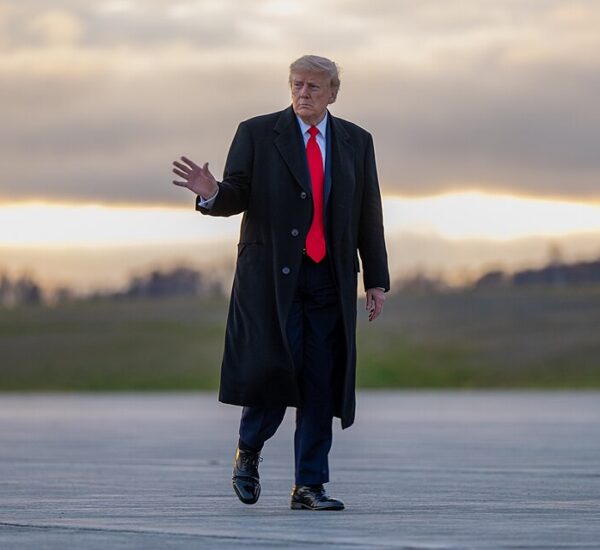
Trump traveled to Dalton, Georgia, on October 16 to campaign alongside Republican candidates, including Jackson and Senate candidate Mike Collins.
The visit reflected the importance Republicans place on the state as the midterm elections approach.
However, the gubernatorial contest is ultimately a separate statewide election, and Jackson’s prospects will depend on how Georgia voters evaluate both candidates and their policy proposals.
Republicans See Positive Signs, but the Race Is Far From Over
The latest InsiderAdvantage poll is not the only survey showing Jackson with a modest advantage.
An October 13 polling average published by On Point Politics placed Jackson at 48.2%, compared with 46.3% for Bottoms.
That represents a lead of approximately 1.9 percentage points.
While the figures may provide some reassurance for Republicans, they also demonstrate how competitive the race remains.
A difference of only a few percentage points means that changes in turnout, undecided voters, and late campaign developments could influence the final result.
Republicans have emphasized issues including taxes, economic opportunity, public safety, and government spending.
Democrats have focused on their own economic proposals and criticism of Republican leadership, while seeking to persuade voters that Georgia needs a change in direction.
Both candidates are competing for support in a state where political outcomes have frequently attracted national attention.
The latest numbers provide a snapshot of voter preferences, not a prediction of the final election result.
Early Voting Is Underway Across Georgia
The new poll arrives as Georgia voters have already begun casting ballots.
Early voting for the November 3 general election began October 13 and continues through October 30.
Voters will select a new governor along with other statewide officials and members of Congress.
Georgia residents can also check their polling locations, voting schedules, and election information through the state’s official election resources.
The final weeks of the campaign will provide both candidates with opportunities to make their closing arguments to voters.
For Jackson, maintaining his current level of support will be a central objective.
For Bottoms, closing the narrow polling gap and winning over remaining undecided voters could prove critical.
With early voting underway, actual voter participation will become increasingly important.
What the Latest Numbers Mean for Trump and Republicans
The latest Georgia governor’s poll offers President Trump and the Republican Party a welcome piece of political news as the midterm elections approach.
Jackson continues to hold a slight advantage over Bottoms, and his support has remained steady despite questions surrounding his absence from a recent debate.
That consistency could prove important in a race where both candidates are competing for every available vote.
Still, the election remains too close for either party to claim a clear advantage based on polling alone.
Georgia has repeatedly demonstrated that statewide political contests can be decided by narrow margins, and the 2026 governor’s race appears to be following that pattern.
For now, Republicans have reason to feel encouraged by the latest numbers, but November 3 will determine whether Jackson’s polling advantage translates into an election victory.
With the stakes high and national attention focused on Georgia, the outcome could become one of the defining political stories of this year’s midterm elections.