Trump Refusing To Approve What?
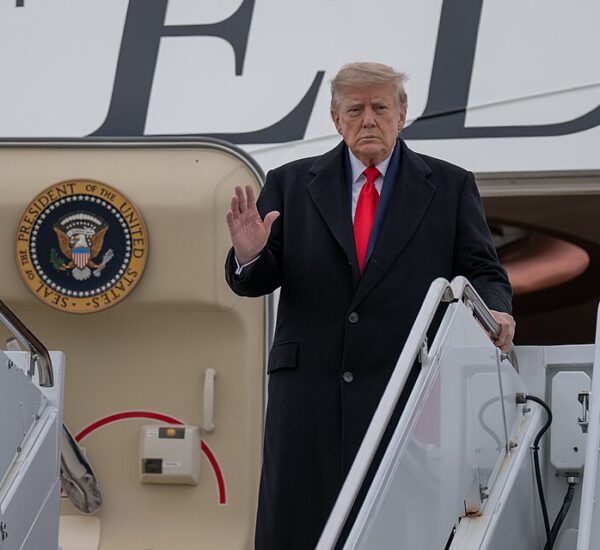
President Donald Trump is drawing a firm line on wind energy, making it clear that he has no intention of approving new wind turbines even as he supports a major bipartisan effort to speed up energy development across the United States.
The president’s comments Monday have created fresh uncertainty surrounding legislation designed to reduce government delays and make it easier for American companies to build critical energy infrastructure.
Speaking with reporters, Trump expressed strong support for the broader energy permitting reform proposal but refused to embrace wind power as part of the administration’s energy strategy.
“I will not approve wind turbines because wind turbines are a major loser,” Trump declared.
His position highlights a growing disagreement in Washington over how the country should expand energy production while keeping electricity affordable for American families and businesses.
Trump Supports Energy Reform, But Draws the Line on Wind
The legislation, known as the Bipartisan American Affordability and Jobs Act, would simplify the federal approval process for major energy and infrastructure projects.
Supporters argue that excessive government regulations have delayed construction, discouraged investment, and made it more difficult for the United States to meet growing electricity demands.
The proposed reforms could benefit traditional energy sources, including oil and natural gas, while also making it easier to develop renewable energy projects.
Trump indicated that he supports the overall effort to reduce bureaucratic obstacles.
However, when questioned about whether that support would extend to wind turbines, the president delivered an unmistakable rejection.
He also emphasized that negotiations over the legislation have not been completed, suggesting that additional disagreements could emerge before a final deal is reached.
Democrats Push for Renewable Energy Protections
The bill has attracted support from lawmakers in both political parties, including Republican Sens. Shelley Moore Capito of West Virginia and Mike Lee of Utah.
Democratic Sens. Martin Heinrich of New Mexico and Sheldon Whitehouse of Rhode Island have also helped negotiate the measure.
For Democrats, an important part of the agreement involves ensuring that renewable energy projects receive fair treatment during the federal permitting process.
Certain provisions would make it more difficult for presidential administrations to withdraw previously approved permits. Other protections would allow energy developers to challenge federal decisions they believe unfairly discriminate against particular energy sources.
Those provisions have become especially important to Democrats because of the Trump administration’s opposition to several offshore wind developments.
Whitehouse said earlier Monday that Democratic negotiators had received assurances that renewable energy projects would receive more favorable treatment under the proposed reforms.
Trump’s subsequent comments raised questions about how those assurances would work in practice.
Despite the disagreement, a White House official maintained that the president continues to support the legislation and that negotiations with Senate Democrats have been conducted in good faith.
Energy Costs Remain a Major Concern
The debate comes as American households and businesses continue facing concerns about electricity prices and the reliability of the nation’s power supply.
Supporters of permitting reform believe cutting unnecessary delays could encourage investment in domestic energy production, strengthen the electric grid, and improve America’s ability to meet rising demand.
For Trump, expanding domestic energy production has been a central economic priority.
The president has consistently promoted traditional American energy resources and criticized wind power over its costs, reliability, and other concerns.
Wind energy supporters, meanwhile, argue that turbines can provide additional domestic electricity generation and help diversify the country’s energy supply.
The disagreement illustrates the challenges lawmakers face in developing an energy policy that satisfies competing priorities.
Republicans generally emphasize removing regulatory barriers and encouraging reliable, affordable energy production, while Democrats have pushed for stronger guarantees that renewable projects can move forward.
Senate Takes Important Step Forward
Despite the controversy, the Senate voted 73-25 on Monday to advance the permitting reform legislation.
The bipartisan vote cleared an important procedural hurdle, although the measure still faces additional congressional action before it can become law.
The proposal has also generated opposition from some environmental organizations and tribal advocates who worry that changes to federal reviews could weaken environmental safeguards and public participation.
Meanwhile, disagreements over renewable energy protections could complicate efforts to maintain bipartisan support.
Even if the legislation clears the Senate, it must still win approval in the House before reaching Trump’s desk.
For now, the president’s position remains clear: He supports reducing government obstacles to American energy development, but that support does not mean he is willing to approve new wind turbines.
The coming negotiations will determine whether lawmakers can produce an agreement that expands domestic energy infrastructure while addressing the administration’s objections.
With electricity demand growing and energy affordability remaining a major concern, the outcome could have significant consequences for American consumers, businesses, and the country’s long-term energy future.