Trump’s Library Hit With Lawsuit?
A new federal lawsuit is attempting to stop a high-profile plan to transfer a valuable downtown Miami property to President Donald Trump’s presidential library foundation, setting up what could become another major legal battle involving the Trump legacy.
Supporters say the project would create jobs, boost tourism, and establish a lasting monument to one of the most influential presidents in modern American history. Critics, however, claim the land transfer violates the U.S. Constitution.
Lawsuit Seeks to Block Miami Land Transfer
The complaint was filed in federal court in South Florida by a nonprofit urban farming organization, two downtown Miami residents, and a student from Miami Dade College.
The plaintiffs are asking a judge to halt the transfer of a 2.63-acre parcel located near Freedom Tower. According to the lawsuit, the property could be worth more than $300 million.
The suit names President Trump, the Donald J. Trump Presidential Library Foundation, Florida Gov. Ron DeSantis, members of the Florida Cabinet, Miami Dade College, and the college’s trustees as defendants.
Constitutional Argument at the Center of the Case
The plaintiffs argue that providing the land at no cost violates the Constitution’s Domestic Emoluments Clause, which restricts presidents from receiving financial benefits from individual states beyond their official compensation.
Legal experts expect the case to focus on whether the transfer constitutes a personal benefit to President Trump or whether it serves a broader public purpose through the creation of a presidential library and related facilities.
Trump’s Vision for the Project
Public comments cited in the lawsuit indicate that President Trump and Eric Trump have discussed an ambitious mixed-use development.
Plans reportedly include:
- A world-class presidential library
- Luxury hotel accommodations
- Commercial and office space
- Grand event ballrooms
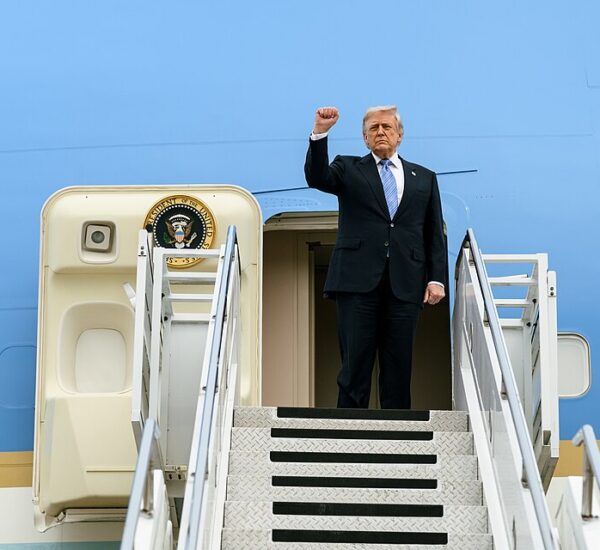
- A retired Air Force One aircraft on display
Supporters believe the project could become a major destination for tourists, historians, and Americans interested in preserving the legacy of the Trump presidency.
Local Opposition Emerges
The lawsuit was brought by Sistrunk Seeds Inc., which operates Dunn’s Overtown Farm, along with local residents Kristen Browde and Gregory van den Dries, and student Carmen Salcedo.
Opponents claim the development could:
- Increase traffic congestion
- Alter views of the downtown skyline
- Require heightened security
- Transform the area into a politically charged destination
They also argue the property could instead be used for educational and community farming programs.
Florida Lawmakers Previously Approved Key Protections
The complaint references legislation passed by Florida lawmakers that limits the ability of local governments to impose restrictions on presidential library developments.
Critics say the measure was designed to clear the path for President Trump’s project. Supporters counter that the law ensures a nationally significant institution can move forward without unnecessary political roadblocks.
Economic Benefits Could Be Significant
If the project proceeds, analysts believe it could generate substantial economic activity through:
- Construction jobs
- Increased tourism
- New business opportunities
- Higher tax revenue for local governments
- National and international media attention
For many Floridians, the development represents an opportunity to strengthen Miami’s status as a world-class destination.
Defendants Have Not Responded Publicly
As of Wednesday afternoon, none of the defendants had issued a formal public response to the lawsuit.
The case is expected to draw intense attention as it moves through the courts, particularly among Americans who see the presidential library as an important tribute to President Trump’s achievements and enduring influence.
Bottom Line
The battle over President Trump’s proposed Miami presidential library is shaping up to be another major legal and political showdown. Supporters view the project as a bold investment in history, tourism, and economic growth, while opponents are seeking to stop it in court.
Whether the development moves forward will likely depend on how the federal court interprets the Constitution and the role states can play in supporting presidential libraries.