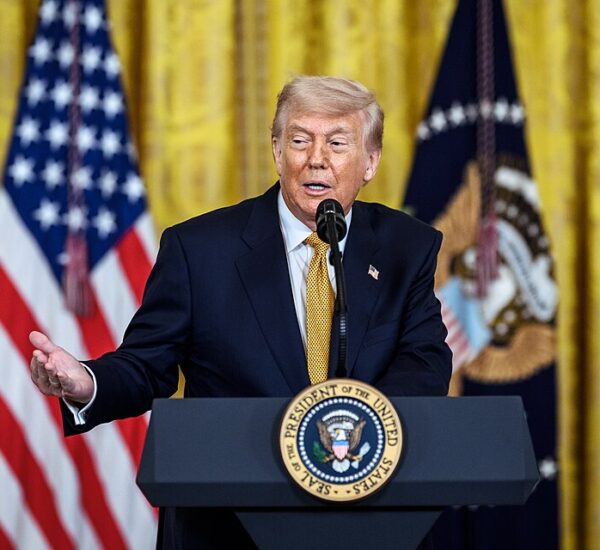
President Donald Trump is facing fresh criticism from media commentators and political opponents over an unexpected issue: the cost of restoring one of America’s most recognizable landmarks.
The controversy centers on approximately $13 million in repairs and improvements to the Lincoln Memorial Reflecting Pool, part of a broader effort to upgrade and preserve historic sites throughout Washington, D.C. The debate quickly gained attention after a heated discussion on CNN, where panelists sparred over whether the spending represents responsible stewardship of national treasures or misplaced priorities during challenging economic times.
For supporters of the president, the answer is straightforward. They argue that maintaining America’s monuments, memorials, and public spaces is not a luxury—it’s a responsibility.
The Lincoln Memorial and its Reflecting Pool have served as iconic symbols of American history for generations. Millions of visitors travel to the nation’s capital each year to experience these landmarks firsthand, making ongoing maintenance and restoration an unavoidable part of preserving the country’s heritage.
During the CNN discussion, host Abby Phillip questioned the timing of the expenditures, noting that the Trump administration has frequently emphasized reducing wasteful government spending and improving efficiency throughout federal agencies.
Critics argued that Americans facing rising living expenses may wonder why millions of taxpayer dollars are being directed toward restoration projects.
However, defenders of the work pushed back strongly.
New York Post columnist Lydia Moynihan argued that the price tag should be viewed in perspective. Compared to the trillions of dollars routinely discussed in federal spending proposals, she suggested the restoration costs represent a relatively small investment in preserving the appearance and functionality of some of America’s most important public spaces.
Supporters also note that previous administrations approved major renovation projects in Washington, often costing tens of millions of dollars. From their perspective, maintaining historic monuments is a bipartisan responsibility that extends beyond party politics.
The debate intensified when panelists broadened the discussion to include inflation, government spending priorities, and ongoing international conflicts. Critics questioned whether federal resources should be directed toward beautification projects while many Americans remain concerned about the economy.
Yet supporters counter that the issue is not an either-or proposition.
They argue that preserving national landmarks does not prevent the government from addressing economic concerns, national security challenges, or infrastructure needs. In their view, allowing historic monuments to deteriorate would send the wrong message about America’s commitment to preserving its history and honoring past generations.
Former Michigan Congressman Peter Meijer highlighted another factor: the approaching 250th anniversary of American independence. As the nation prepares to celebrate this historic milestone, many officials believe Washington, D.C., should be presented at its best.
For many Americans, particularly those who value the nation’s history and traditions, the restoration efforts symbolize more than simple construction projects. They represent an investment in preserving the landmarks that tell the story of the United States and the people who built it.
The controversy ultimately raises a larger question that continues to shape political debate across the country: How should taxpayer dollars be spent, and what priorities should come first?
While critics see unnecessary spending, supporters see something different—a relatively modest investment in protecting America’s heritage, improving the nation’s capital, and ensuring that future generations can continue to experience some of the country’s most treasured landmarks.
As the debate continues, one thing is clear: even a restoration project at the Lincoln Memorial can become a major political flashpoint in today’s Washington.