It was surprising to see Fox say this.
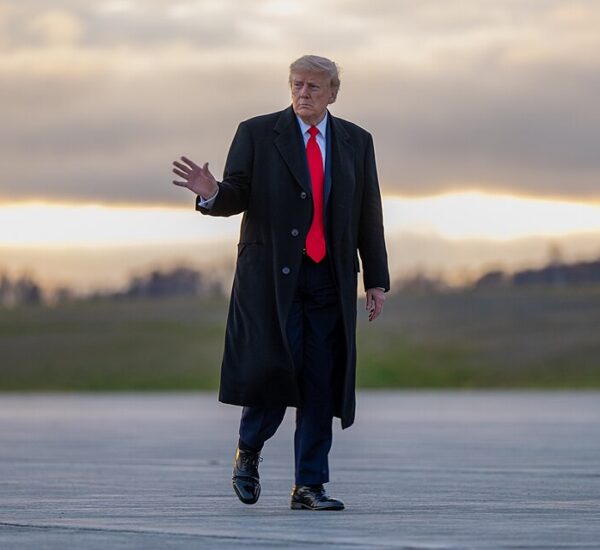
President Donald Trump’s proposed civilian nuclear agreement with Saudi Arabia sparked an unexpected debate on Fox News, where several hosts questioned whether the deal could create long-term security risks despite the administration’s insistence that the program would be limited to peaceful purposes.
The discussion unfolded on Fox & Friends, where host Brian Kilmeade voiced concerns that while Saudi Arabia’s current leadership may be viewed as a reliable partner by many in Washington, future leaders could take the kingdom in a very different direction.
Kilmeade Questions Long-Term Risks
Kilmeade acknowledged that Crown Prince Mohammed bin Salman, widely known as MBS, has surprised many observers by modernizing parts of Saudi Arabia and strengthening ties with the United States.
“MBS seems to have emerged as somebody we can trust,” Kilmeade said. “But I don’t know who comes next. His rise was unexpected, and very few people predicted he would lead the country in the direction he has.”
His remarks come as the United States continues working with Saudi Arabia on regional security and economic issues.
At the same time, the Saudi crown prince remains a controversial figure. U.S. intelligence agencies have previously concluded that he approved the 2018 killing of Washington Post columnist Jamal Khashoggi, an allegation Mohammed bin Salman has repeatedly denied.
Kilmeade said his primary concern is not today’s Saudi leadership but what could happen years from now if power changes hands.
“I worry about people who may want to take Saudi Arabia backward,” he said. “President Trump won’t be in office forever, and several years from now there could be someone else in charge who embraces ideas the kingdom has spent years trying to move away from.”
Concerns Over Uranium Enrichment
Although Kilmeade praised Saudi Arabia’s recent progress, he questioned whether allowing the country to develop uranium enrichment capabilities would serve America’s long-term interests.
Kilmeade said he appreciates the changes Saudi Arabia has made in recent years but questioned whether allowing the kingdom to enrich uranium is in America’s best interest. He argued that permitting such a capability would set a dangerous precedent.
Supporters of the agreement have argued that if the United States refuses to cooperate, countries such as China or Russia could step in and expand their influence in the Middle East.
Kilmeade acknowledged that argument but suggested a different approach would better protect U.S. national security.
He pointed to the United Arab Emirates as an example, noting that its civilian nuclear program operates without domestic uranium enrichment while still producing nuclear energy.
According to Kilmeade, Saudi officials have repeatedly stated they would only pursue a nuclear weapon if Iran were to obtain one first. He argued that linking any future enrichment capability to Iran’s actions could strengthen international pressure on Tehran while reducing the risk of a regional arms race.
Abraham Accords Enter the Conversation
The discussion also shifted toward the possibility that the proposed agreement could be tied to a larger diplomatic strategy.
Former White House Press Secretary Kayleigh McEnany noted that during President Trump’s first administration, officials believed Saudi Arabia and Israel were moving closer to normalizing relations under the Abraham Accords.
“When I was leaving the first Trump administration, we were told we were getting very close to normalization between Israel and Saudi Arabia,” McEnany said. “Could this agreement help make that happen?”
Co-host Lucas Tomlinson suggested there could be additional negotiations taking place behind closed doors.
“Perhaps there’s an understanding that Saudi Arabia doesn’t immediately recognize Israel publicly,” Tomlinson said. “There could be discussions happening behind the scenes that haven’t been announced.”
The Abraham Accords, negotiated during President Trump’s first term, established diplomatic relations between Israel and several Arab nations and remain one of the administration’s signature foreign policy achievements.
Trump Issues a Clarification
Shortly after the Fox News discussion aired, President Trump responded directly on Truth Social to address concerns surrounding the agreement.
Trump emphasized that the proposed partnership would involve only peaceful civilian nuclear technology and would not allow Saudi Arabia to enrich nuclear material.
He wrote that the agreement would be limited to non-military purposes, similar to civilian nuclear programs already operating in countries such as the United Arab Emirates.
Trump also stressed that any final approval would be tied to Saudi Arabia joining the Abraham Accords, making normalization with Israel a key condition of the deal.
In a Truth Social post, Trump said the proposed civilian nuclear agreement between the U.S. Department of Energy and Saudi Arabia would be limited to peaceful, non-military purposes and would not permit uranium enrichment. He added that the deal would only move forward if Saudi Arabia agrees to join the Abraham Accords. Trump also emphasized that the United States supports civilian nuclear energy projects that do not involve enrichment and thanked readers for their attention.
Why the Debate Matters
Civilian nuclear agreements have long generated debate because they involve balancing energy development with national security concerns.
Supporters argue that partnering with close U.S. allies allows Washington to shape safety standards, maintain oversight, and reduce the likelihood that rival powers such as China or Russia will expand their influence in strategically important regions.
Critics, however, caution that even peaceful nuclear technology requires careful safeguards. They argue that future political changes could alter how such technology is used, making strict oversight essential regardless of who is currently leading a partner nation.
For many conservatives, the issue also highlights the importance of ensuring any agreement protects American interests while preventing Iran from gaining additional leverage in the Middle East.
Looking Ahead
The proposed agreement remains part of broader negotiations involving Saudi Arabia, regional security, and the future of the Abraham Accords.
President Trump has made clear that the United States is not supporting uranium enrichment under the deal and that Saudi participation in the Abraham Accords would be a central requirement before the agreement moves forward.
Even with that clarification, the debate on Fox News demonstrated that questions remain among some conservatives about how the agreement could affect America’s long-term security strategy.
As negotiations continue, the civilian nuclear proposal is expected to remain a closely watched issue, particularly as lawmakers and foreign policy experts weigh its potential impact on U.S. interests, Middle East stability, and efforts to counter Iran’s influence in the region.