Here’s what happened.
President Donald Trump’s highly anticipated trip to Asia took an unexpected turn Monday after Air Force One was suddenly diverted from its scheduled refueling stop in Alaska, prompting questions about what caused the last-minute change.
The presidential aircraft was originally scheduled to land at Joint Base Elmendorf-Richardson in Anchorage. However, unfavorable weather conditions forced flight officials to change course and redirect the plane to Fairbanks International Airport.
The White House confirmed that the unexpected adjustment was made because of weather conditions, not a reported mechanical problem or security emergency.
Despite the sudden diversion, Trump’s aircraft landed safely, completed its refueling stop, and continued toward the Philippines as the president prepared for several major international meetings.
The incident quickly attracted attention because of the extensive security precautions and careful planning involved in presidential travel.
Air Force One Makes Unexpected Landing in Alaska
According to reports from journalists accompanying the president, Air Force One landed at Fairbanks International Airport at approximately 4:28 p.m. Eastern Time on Monday, November 16.
The aircraft had been scheduled to refuel in Anchorage before making the lengthy journey across the Pacific Ocean.
However, weather conditions near the original destination made Fairbanks a more suitable alternative.
A White House official confirmed that the aircraft was redirected to take advantage of more favorable weather conditions.
The stop was expected to last approximately 90 minutes, allowing the aircraft to receive fuel before continuing its international journey.
Reporters traveling with the president did not observe Trump leaving the plane during the stop.
Air Force One subsequently departed Fairbanks and continued toward Manila, the Philippines.
The sudden change did not appear to result in any major disruption to the president’s diplomatic schedule.
White House Addresses Concerns About Presidential Flight
Any unexpected change involving Air Force One naturally draws attention because of the president’s important responsibilities and the security measures surrounding his transportation.
However, officials offered a relatively straightforward explanation for Monday’s diversion.
Weather conditions, rather than an aircraft malfunction, prompted the decision to use Fairbanks instead of Anchorage.
Aviation crews routinely make adjustments when changing weather patterns create potential challenges for landing or departure.
Such decisions can involve visibility, precipitation, runway conditions, and other factors that affect flight operations.
Presidential travel involves additional logistical considerations because security teams, communication personnel, airport officials, and ground crews must coordinate every movement.
Even a routine refueling stop requires extensive preparation.
The White House did not report an emergency involving Trump or other passengers aboard the aircraft.
Trump Traveling Aboard Recently Acquired Presidential Aircraft
Another notable detail surrounding the trip involves the aircraft being used to transport the president.
Trump departed Washington aboard a Boeing 747 that had been provided by Qatar and adapted for presidential use.
The aircraft has received considerable public attention because of questions surrounding its modifications and security capabilities.
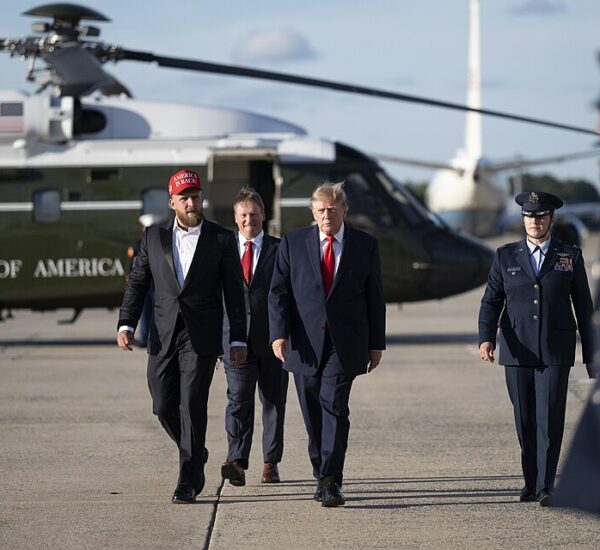
An older presidential aircraft was also present at Joint Base Andrews before Trump’s departure.
The use of the newer aircraft adds another element of public interest to an international trip already attracting widespread attention.
However, there has been no confirmed evidence connecting the Alaska diversion to any problem with the aircraft itself.
The White House specifically attributed the refueling change to weather.
Trump’s Asia Trip Includes Major Meetings With World Leaders
Although the unexpected diversion briefly changed the president’s travel plans, the broader purpose of his overseas visit remains significant.
Trump is traveling to Asia for diplomatic engagements involving international trade, economic cooperation, and national security.
His first major destination is Manila, where he is scheduled to participate in meetings with regional leaders.
The president is expected to attend discussions involving the Association of Southeast Asian Nations, commonly known as ASEAN.
These meetings bring together officials from countries that play important roles in international commerce, manufacturing, and regional security.
Following his visit to the Philippines, Trump is scheduled to travel to China for additional high-level meetings.
His agenda includes discussions with Chinese President Xi Jinping and Russian President Vladimir Putin.
The meetings could address economic disputes, ongoing international conflicts, and diplomatic relations between some of the world’s most influential nations.
Economic Issues Could Affect American Families
One of the biggest areas of interest surrounding Trump’s trip involves the economic relationship between the United States and China.
Trade policy between the two countries has significant consequences for American manufacturers, farmers, business owners, and consumers.
Decisions involving tariffs, imported goods, technology restrictions, and international supply chains can influence prices and business investment throughout the United States.
The president’s administration has emphasized strengthening American economic interests while negotiating with foreign governments.
China remains one of America’s most consequential trading partners, making discussions between Trump and Xi particularly important.
Any new agreements or changes in trade policy could have implications for American businesses and the broader economy.
However, the outcome of those negotiations remains uncertain.
International Security Also Expected To Take Center Stage
Beyond economic matters, Trump’s overseas meetings are expected to involve several major international security challenges.
The continuing war between Russia and Ukraine remains a central issue in global diplomacy.
Trump has indicated that the conflict will be among the topics discussed during his meetings with foreign leaders.
The president has also expressed interest in potentially meeting North Korean leader Kim Jong Un.
Such a meeting would represent another significant diplomatic development, although no finalized arrangement has been publicly announced.
Relations between Washington, Beijing, Moscow, and Pyongyang continue to influence American foreign policy.
For the administration, the upcoming meetings provide opportunities to pursue diplomatic agreements while addressing economic and security concerns.
Why the Air Force One Diversion Matters
Presidential air travel differs considerably from ordinary commercial aviation.
Air Force One is supported by extensive security arrangements and specialized communication capabilities that allow the president to conduct official business while traveling.
Flight operations require coordination among military personnel, federal security agencies, aviation officials, and presidential staff.
A change to a scheduled landing location can therefore involve more planning than a typical commercial flight diversion.
Nevertheless, weather-related adjustments are a normal part of aviation safety.
The decision to redirect Air Force One to Fairbanks demonstrates how flight crews can modify travel plans when conditions at the original destination become less favorable.
Importantly, the available reporting does not indicate that the president faced an immediate emergency.
What Happens Next for President Trump?
Following the refueling stop in Alaska, Air Force One resumed its journey toward the Philippines.
Trump was scheduled to arrive in Manila on Tuesday, November 17, before participating in diplomatic engagements with regional leaders.
His itinerary then calls for a visit to China, where major discussions involving trade and international security are expected.
Those meetings could have broader implications for American foreign policy and the global economy.
For now, the unexpected diversion appears to have been a weather-related adjustment rather than a serious aviation incident.
The president’s aircraft landed safely in Fairbanks, completed its refueling stop, and continued overseas.
While the sudden change to Air Force One’s flight plan generated attention, the larger story now centers on Trump’s upcoming diplomatic meetings and what they could mean for the United States.