Here’s what she said.
Former Republican Rep. Marjorie Taylor Greene is stirring up another controversy involving President Donald Trump’s administration, publicly attacking two Cabinet officials over their handling of a nationwide aviation shutdown and a proposed $50 billion taxpayer-funded overhaul.
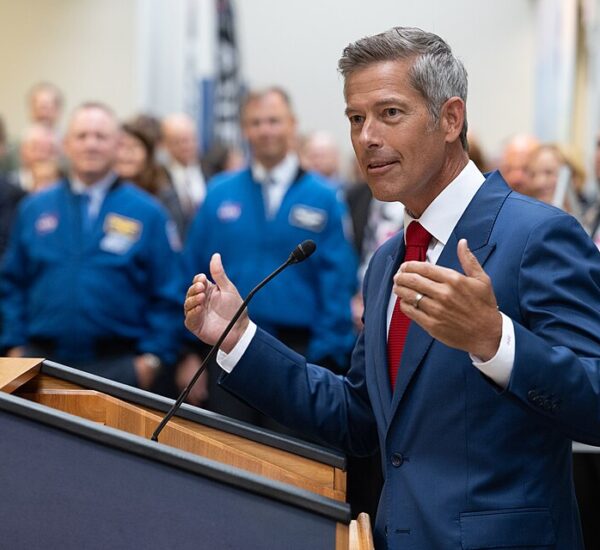
Greene, once one of Trump’s most loyal political allies, criticized Transportation Secretary Sean Duffy and Homeland Security Secretary Markwayne Mullin following a joint White House briefing about the Federal Aviation Administration’s unprecedented disruption.
Her accusations have brought renewed attention to divisions among prominent conservatives, particularly over government spending, accountability and the administration’s priorities.
At the center of the disagreement is a major question: Should American taxpayers be asked to provide another $50 billion to fix infrastructure that federal officials have known was aging for years?
Greene Goes After Trump’s Cabinet Officials
The dispute erupted after the FAA temporarily halted departing flights nationwide on Friday, November 13, following a serious telecommunications malfunction affecting air traffic control operations.
The emergency caused extensive travel disruptions, leaving passengers stranded and forcing airlines to cancel or delay thousands of flights.
During a White House briefing, Duffy and Mullin attempted to explain what happened and why the nation’s air traffic control system needs substantial upgrades.
However, Greene responded with sharp criticism.
In a social media post, the former Georgia congresswoman characterized the briefing as a “shakedown for more money.”
She argued that Washington has spent enormous sums on overseas conflicts while allowing essential American infrastructure to deteriorate.
Greene specifically pointed to what she estimated was roughly $15 trillion spent on foreign wars over the past 25 years, questioning why taxpayers were now being asked to finance another expensive federal initiative.
That figure was Greene’s own claim, rather than an independently established accounting of federal war expenditures.
Her criticism represents another public challenge to officials serving under Trump and reinforces her growing willingness to confront Republican leaders over fiscal issues.
Trump Administration Demands $50 Billion For Aviation Upgrades
Duffy used the emergency briefing to urge Congress to approve $50 billion for a comprehensive modernization of the nation’s air traffic control system.
The transportation secretary argued that America’s aviation infrastructure has become dangerously outdated, with critical components relying on technology developed decades ago.
According to Duffy, the November 13 shutdown followed communications and radar instability associated with older equipment becoming overloaded.
The administration wants to replace aging telecommunications infrastructure, install modern technology and improve the reliability of the system that manages American airspace.
Duffy warned that additional problems could occur without major improvements.
The transportation secretary also emphasized that the administration considers modernization a national priority.
Mullin supported the call for a comprehensive overhaul, arguing that years of piecemeal repairs have failed to address underlying weaknesses.
The administration maintains that major investments are necessary to prevent another nationwide disruption.
However, Greene’s criticism raises a politically sensitive issue for Republicans who have repeatedly promised to reduce wasteful federal spending.
Greene Questions Whether Officials Are Telling The Truth
Greene went beyond criticizing the administration’s spending proposal.
She also disputed the explanation offered by federal officials for the aviation breakdown.
The former congresswoman suggested that the nationwide disruption was caused by a cyberattack and accused administration officials of misleading the public.
However, she did not provide evidence supporting that allegation.
During the briefing, Mullin said investigators had not identified evidence indicating that a cyberattack caused the outage.
He acknowledged that authorities were continuing to investigate and were not completely ruling out potential security concerns.
Federal officials instead pointed toward problems involving aging telecommunications equipment.
The distinction is important because an equipment failure and a deliberate cyberattack would raise different questions about the government’s responsibilities and potential security vulnerabilities.
As of the November 14 reporting, officials had not publicly established that malicious activity caused the shutdown.
Greene’s accusations nevertheless intensified the political dispute, placing additional scrutiny on the administration’s explanation.
Nationwide FAA Shutdown Raises Serious Concerns
The controversy follows one of the most disruptive aviation incidents in recent American history.
On Friday afternoon, problems involving communications and radar systems prompted the FAA to order a nationwide ground stop.
The decision prevented aircraft from departing while federal officials worked to determine whether the system could safely support normal operations.
The ground stop was lifted Friday evening, allowing flights to begin resuming.
However, reopening the airspace did not immediately eliminate the problems for airlines and passengers.
Aircraft were displaced, flight crews faced scheduling complications, and airports struggled to accommodate travelers affected by the emergency.
The disruption continued into Saturday, creating additional challenges for travelers already dealing with cancellations and delays.
For many Americans, particularly those traveling to visit family or attend important events, the shutdown served as a reminder of how heavily the country depends on reliable transportation infrastructure.
It also raised concerns about the condition of federal systems that are expected to function safely every day.
Taxpayer Spending Becomes A Major Republican Disagreement
Greene’s objections highlight a familiar debate within Republican politics: how to balance spending restraint with the government’s responsibility to maintain essential national infrastructure.
Trump has repeatedly promoted rebuilding American infrastructure and strengthening domestic capabilities.
His administration argues that modernizing air traffic control is necessary to protect travelers, support commerce and maintain the country’s aviation system.
Greene, meanwhile, is questioning why previous administrations allowed the system to deteriorate while directing enormous amounts of federal money toward other priorities.
Her criticism reflects concerns about government accountability and whether Washington is making responsible use of existing taxpayer resources.
The disagreement is not necessarily about whether aviation safety matters.
Instead, it concerns how much additional funding is required, where that money should come from and whether Congress can ensure that it is spent effectively.
A $50 billion investment would represent a significant federal commitment.
Lawmakers will have to determine whether the administration’s proposal includes sufficient oversight, clear modernization goals and realistic expectations for completing the work.
For taxpayers, those questions matter regardless of which political party controls Washington.
Trump’s Former Ally Continues Challenging Republicans
Greene’s latest confrontation comes after a significant deterioration in her relationship with Trump.
For years, she was one of the president’s most recognizable political defenders, frequently supporting his America First agenda and confronting Democrats over major national issues.
But their political alliance weakened as Greene became increasingly critical of Republican leadership and certain administration decisions.
Her latest accusations demonstrate that those disagreements have not disappeared.
Rather than limiting her criticism to Trump’s Democratic opponents, Greene has turned her attention toward Republican officials occupying some of the administration’s most important positions.
That creates a complicated situation for the White House.
Public criticism from a former ally can draw attention to disagreements that Republican leaders would otherwise prefer to resolve privately.
It can also complicate efforts to persuade lawmakers that the administration’s priorities deserve immediate congressional support.
Still, Greene’s statements do not necessarily represent the views of the broader Republican Party.
The aviation funding proposal will ultimately be judged through congressional negotiations, budget considerations and the administration’s ability to explain why the investment is necessary.
Congress Faces Pressure To Address Aging Infrastructure
The shutdown has brought renewed attention to the condition of America’s air traffic control system.
Federal aviation operations depend on an extensive network of radar equipment, communications technology and coordination among air traffic controllers.
When important parts of that system fail, disruptions can spread rapidly across the country.
The November 13 emergency illustrated the consequences of relying on aging equipment while attempting to operate one of the world’s busiest aviation networks.
The administration believes a comprehensive overhaul is the most effective solution.
However, Congress must also consider the financial implications and whether the proposed spending will address the specific weaknesses exposed by the shutdown.
Lawmakers could face questions about previous modernization efforts, contractor oversight and the long-term reliability of replacement systems.
Those concerns are particularly relevant as Washington continues debating federal spending priorities.
For many Americans, the goal is straightforward: maintain safe air travel without allowing unnecessary costs or ineffective government programs to burden taxpayers.
Another Political Headache For Trump
Greene’s latest accusations present another challenge for Trump as his administration attempts to secure congressional support for a major infrastructure investment.
The president’s transportation officials argue that urgent action is necessary to prevent future aviation emergencies.
Greene is demanding greater accountability and questioning why taxpayers should pay another enormous bill for problems that developed over many years.
Both arguments are likely to influence the broader debate over federal spending.
The controversy also demonstrates that disagreements within conservative political circles can become public disputes, even when the participants previously supported the same president.
For Trump, the immediate priority is restoring confidence in the nation’s aviation infrastructure while building support for his administration’s modernization plans.
For Greene, the confrontation provides another opportunity to question Washington’s spending priorities and challenge officials she believes are failing American taxpayers.
And for travelers, the central concern remains whether the government can prevent another emergency that disrupts flights across the entire country.
Congress has not yet resolved the administration’s $50 billion funding request.
As the debate continues, Greene’s willingness to challenge Trump’s Cabinet officials shows that the former Republican lawmaker remains a vocal critic of decisions she considers inconsistent with fiscal responsibility.
The larger question is whether Washington can find a solution that protects airline passengers, strengthens national infrastructure and ensures taxpayers receive meaningful results for their money.