Here’s what voters need to know.
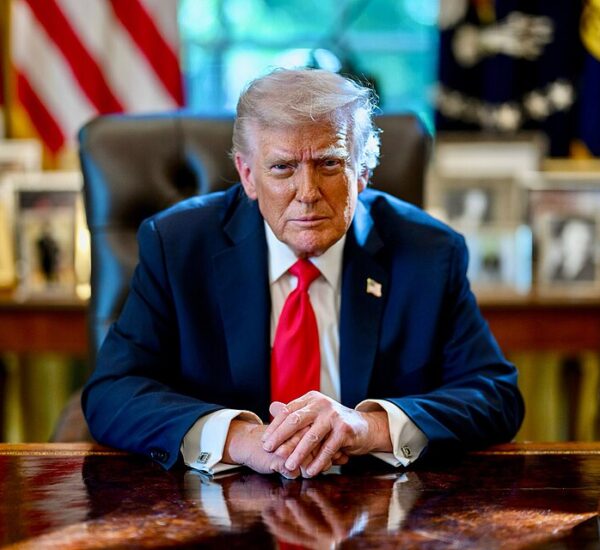
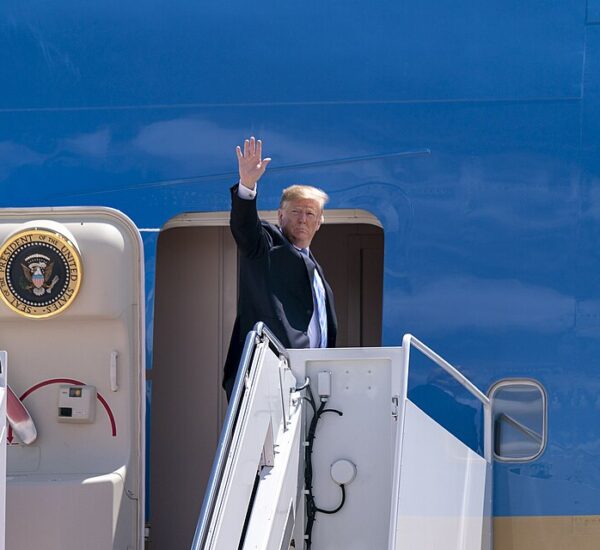
President Donald Trump and Vice President JD Vance are facing a major political challenge in Ohio as Republicans fight to protect a governor’s office their party has controlled for nearly two decades.
With the November midterm elections approaching, Republican gubernatorial candidate Vivek Ramaswamy is locked in a competitive contest against Democrat Amy Acton, raising concerns about whether the GOP can maintain its longtime hold on one of America’s most politically important states.
The developments have put additional pressure on Trump and Vance, whose support could prove critical as Republicans work to energize voters and prevent Democrats from capturing the governor’s mansion.
Ohio has become increasingly Republican in recent presidential elections, but recent polling suggests the race for governor could produce a very different outcome.
Republicans Face Unexpected Trouble in Ohio
Republicans have controlled Ohio’s governor’s office since January 2011, when former Gov. John Kasich began his first term.
Gov. Mike DeWine continued that Republican winning streak after taking office in 2019, helping cement the party’s control of statewide leadership.
Now, that political dominance faces a significant test.
Ramaswamy, a businessman and former Republican presidential candidate, entered the 2026 governor’s race with substantial name recognition, financial resources, and the backing of President Trump.
His campaign has focused on economic growth, government efficiency, education reform, and strengthening Ohio’s business environment.
However, Democratic candidate Amy Acton has emerged as a formidable opponent.
Acton, who previously served as Ohio’s health director during the COVID-19 pandemic, has emphasized healthcare, affordability, and economic issues in an effort to attract independents and moderate Republicans.
Her campaign has also targeted rural communities, where Democrats have struggled in recent elections.
The result is a closely watched political battle that could determine whether Republicans retain control of Ohio’s executive branch.
New Polling Raises Concerns for Trump-Backed Candidate
Recent polling has provided additional reasons for Republicans to pay attention to the contest.
A New York Times/Siena survey conducted between September 22 and October 1 found Acton leading Ramaswamy by four percentage points, 49% to 45%.
Another survey from CNN, conducted between September 29 and October 5, showed Acton holding a larger advantage of eight percentage points.
Not every poll has favored the Democrat.
A Republican-affiliated co/efficient survey conducted October 5–6 showed Ramaswamy ahead by two points.
Nevertheless, the RealClearPolling average through October 6 placed Acton approximately four points ahead.
While polling results can change before Election Day, the numbers suggest Republicans face a more competitive contest than they might have expected in a state that has repeatedly supported Trump.
For Ramaswamy, the challenge is turning support from Republican voters into a broad enough coalition to win statewide.
JD Vance Steps In as Republicans Fight Back
Vice President JD Vance has become an important figure in the effort to help Republicans retain the governorship.
Before joining the Trump administration, Vance represented Ohio in the U.S. Senate and built his political reputation around issues affecting working families and communities impacted by manufacturing declines.
His connection to the state makes him a valuable campaign ally for Ramaswamy.
During an October 9 appearance, Vance praised the Republican candidate and encouraged Ohio voters to support him.
The vice president also criticized Acton’s leadership during the COVID-19 pandemic, highlighting concerns about government restrictions and their effects on schools and families.
Those decisions remain a politically sensitive subject for some Ohio residents.
Republicans have argued that pandemic-era restrictions created hardships for families and businesses, while Acton has defended her public health record and emphasized her experience managing emergencies.
The disagreement gives voters another issue to consider when deciding who should lead Ohio.
Trump’s Endorsement Faces a Major Political Test
President Trump’s endorsement has helped Ramaswamy establish himself as a prominent Republican candidate.
Trump has repeatedly demonstrated substantial political influence among Ohio Republicans, particularly voters concerned about immigration, economic security, energy development, and the direction of the federal government.
However, the governor’s race presents a different challenge from a presidential election.
Voters may support Trump nationally while evaluating state candidates based on local concerns and their individual records.
That distinction could become important if Acton continues attracting voters who previously supported Republican candidates.
For the Trump administration, a Ramaswamy victory would represent another successful effort to support Republican leadership in a key Midwestern state.
A Democratic victory, on the other hand, would end the GOP’s nearly 16-year control of Ohio’s governor’s office.
Economic Issues Could Determine the Winner
Although the race has attracted national political attention, everyday financial concerns remain important to Ohio voters.
Households throughout the state continue weighing issues involving living expenses, employment opportunities, healthcare costs, and the future of local industries.
Ramaswamy has promoted policies aimed at attracting investment, encouraging job creation, and reducing government bureaucracy.
Acton has emphasized healthcare access, affordability, and concerns about how state policies affect ordinary families.
Energy policy has also emerged as a significant issue.
Ohio’s manufacturing economy depends heavily on affordable and reliable energy, making questions about energy production and environmental protections relevant to many communities.
Acton has proposed additional scrutiny of certain oil and gas wastewater disposal practices, while Ramaswamy has emphasized expanded energy development.
The competing approaches illustrate the broader policy differences between the candidates.
For undecided voters, these practical concerns may ultimately carry more weight than endorsements from national political figures.
Why the Ohio Governor’s Race Matters Nationwide
The outcome of Ohio’s governor’s election could send an important political message ahead of the 2028 presidential race.
Republicans hope to demonstrate that their electoral strength in Ohio remains intact despite a challenging national political environment.
Democrats believe a victory could show that they can rebuild support among rural voters, independents, and moderate Republicans.
The winner will also have considerable influence over state policies affecting schools, transportation, healthcare programs, economic development, and public safety.
Ohio’s governor is responsible for managing major state government functions and helping establish policy priorities that affect millions of residents.
That makes the election important beyond its implications for either political party.
Can Trump and Vance Help Republicans Keep Ohio Red?
With Election Day scheduled for November 3, both parties have limited time to strengthen their positions.
Republicans are counting on their established political organization, Trump-backed enthusiasm, and Vance’s Ohio connections to help Ramaswamy overcome his polling deficit.
Democrats are hoping Acton’s campaign can maintain its momentum and attract enough independent and crossover voters to produce an upset.
Recent surveys indicate that Acton has an advantage, but the final outcome remains uncertain.
For Trump and Vance, the stakes extend beyond one governor’s race.
A Republican victory would preserve a nearly two-decade winning streak in Ohio, while a Democratic breakthrough would mark a major change in the state’s political leadership.
As November approaches, Ohio voters will have the final say on whether Republicans maintain control of the governor’s mansion or Democrats reclaim it for the first time since 2011.