Here’s what Trump wants now.
President Donald Trump has raised the possibility of a major political shakeup in Washington after publicly expressing his willingness to welcome a prominent Democratic senator into the Republican Party.
The president’s comments involve Pennsylvania Sen. John Fetterman, a Democrat who has attracted increasing attention for breaking with his party on several important national issues.
With the November midterm elections approaching and control of Congress at stake, Trump’s remarks have added fresh interest to speculation about Fetterman’s political future.
Although the Pennsylvania senator has repeatedly insisted that he does not intend to change parties, Trump’s invitation makes clear that the Republican president would welcome such a move.
Trump Makes Surprise Offer To Democratic Senator
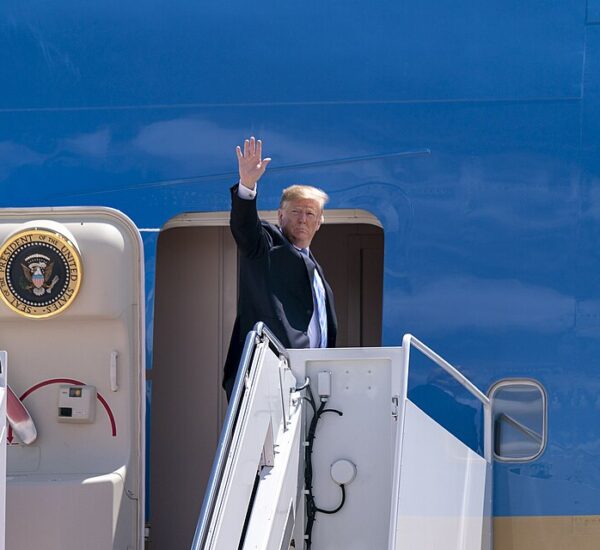
Speaking with reporters at Joint Base Andrews in Maryland on Saturday, October 10, Trump praised Fetterman and openly discussed the possibility of the senator becoming a Republican.
“I’d love to see him as a Republican,” Trump said.
The president also described Fetterman as a person with strong judgment and common sense, offering praise rarely directed toward a prominent member of the opposing party.
Trump suggested that Fetterman could face political difficulties within the Democratic Party because of his willingness to disagree with its leadership.
According to the president, the senator might have a stronger political future if he joined the Republican Party instead.
The comments represent one of Trump’s clearest public invitations for Fetterman to consider switching his political affiliation.
While the president did not announce any formal agreement or upcoming party change, his remarks quickly brought renewed attention to the senator’s growing differences with fellow Democrats.
Why Republicans Are Paying Attention To Fetterman
Fetterman entered the Senate in January 2023 after winning Pennsylvania’s closely watched 2022 election.
He originally gained national recognition for his unconventional political style and his ability to connect with working-class voters.
However, his time in Washington has been marked by several disagreements with the Democratic Party on issues involving immigration, national security, Israel, and foreign policy.
Fetterman’s positions have sometimes aligned more closely with Republicans than with members of his own party.
His support for Israel has been particularly notable, especially when other Democrats have taken sharply different positions regarding conflicts in the Middle East.
The Pennsylvania senator has also rejected political extremism and criticized socialism, arguing that public officials should focus on the country’s interests rather than rigid partisan loyalty.
These positions have complicated his relationship with some Democrats while drawing favorable attention from Republican lawmakers.
Recent voting patterns have also highlighted this political divide.
According to reporting from Fox News, Fetterman historically voted with Democrats approximately 90% of the time after entering the Senate. During the current congressional session, however, that figure has fallen below 81%.
Although he still votes with Democrats on most issues, the decline illustrates his increasing willingness to depart from the party’s position.
Fetterman’s Republican Connections Raise Questions
Questions about Fetterman’s political future intensified after he participated in a video connected to a Republican midterm convention in September.
In that appearance, he praised fellow Pennsylvania Sen. Dave McCormick, a Republican, while emphasizing the importance of rejecting political extremes.
His remarks drew attention because they were delivered in a political setting associated with the opposing party.
Fetterman has also developed working relationships with Republican lawmakers, demonstrating a willingness to cooperate across party lines.
For some political observers, these developments have raised questions about whether the senator could eventually reconsider his Democratic affiliation.
However, Fetterman has repeatedly dismissed that possibility.
In September, he publicly stated that he had no intention of becoming a Republican, rejecting the continued speculation surrounding his political identity.
He has also emphasized that disagreements with fellow Democrats do not necessarily mean he is abandoning the party.
That distinction is important because Trump’s latest comments reflect the president’s wishes rather than any confirmed decision by Fetterman.
Could A Party Switch Change Control Of Congress?
The possibility of a Democratic senator joining the Republican Party carries added importance as Americans prepare for the November 2026 midterm elections.
Republicans currently hold the Senate majority, but Democrats are seeking to regain control of the chamber.
Every Senate seat could become important in determining which party controls congressional committees, advances legislation, and influences the president’s agenda.
A party switch by Fetterman could potentially affect that balance, particularly if the Senate majority becomes narrowly divided after the election.
Republicans are seeking to preserve their ability to advance the administration’s legislative priorities and confirm presidential nominees.
Democrats, meanwhile, are working to gain enough seats to exert greater influence over the direction of federal policy.
A change in Fetterman’s party affiliation would not automatically determine control of the Senate, but it could become significant depending on the election results.
There is also historical precedent for sitting senators changing political parties.
In 2001, Vermont Sen. Jim Jeffords left the Republican Party and became an independent, a decision that helped shift control of the Senate to Democrats.
Pennsylvania experienced a similar political development in 2009 when longtime Republican Sen. Arlen Specter switched to the Democratic Party.
Those examples demonstrate why even speculation about a party switch can generate considerable interest in Washington.
Trump’s Comments Highlight Growing Political Divisions
Beyond the possible consequences for Congress, Trump’s praise for Fetterman highlights an ongoing debate over political independence and party loyalty.
Members of Congress are often expected to support their party’s priorities, particularly during closely contested elections.
But lawmakers representing politically competitive states such as Pennsylvania sometimes face additional pressure to balance national party positions with the views of their constituents.
Fetterman’s willingness to disagree with Democratic leaders has made him an unusual figure in today’s political environment.
For Republicans, his positions on several national issues have created opportunities for cooperation.
For Democrats, his departures from party positions have occasionally created disagreements over political strategy and policy.
Trump appears to believe those differences could eventually encourage Fetterman to reconsider where he belongs politically.
Whether that assessment proves accurate remains uncertain.
What Happens Next For Fetterman?
For now, Fetterman remains a Democrat, and there has been no confirmed announcement that he intends to join the Republican Party.
His current Senate term runs through January 2029, meaning he is not personally seeking reelection in the November 2026 midterms.
Nevertheless, his political decisions could attract considerable attention as Republicans and Democrats compete for control of Washington.
Trump’s public invitation has placed the issue back in the national spotlight, potentially increasing questions about Fetterman’s relationship with Democratic leadership.
The president has made clear that he believes the Pennsylvania senator could find a place within the Republican Party.
Fetterman, however, continues to maintain his Democratic affiliation despite their occasional areas of agreement.
For now, the party switch remains a possibility raised by Trump, not a decision made by Fetterman.
With the midterm elections approaching, the exchange offers another example of how shifting political alliances could influence the future of Congress and the direction of American politics.