Here’s what was learned.
President Donald Trump is taking an unusual approach to the final stretch before the 2026 midterm elections, and a veteran campaign strategist says there is more behind the president’s travel schedule than many political observers realize.
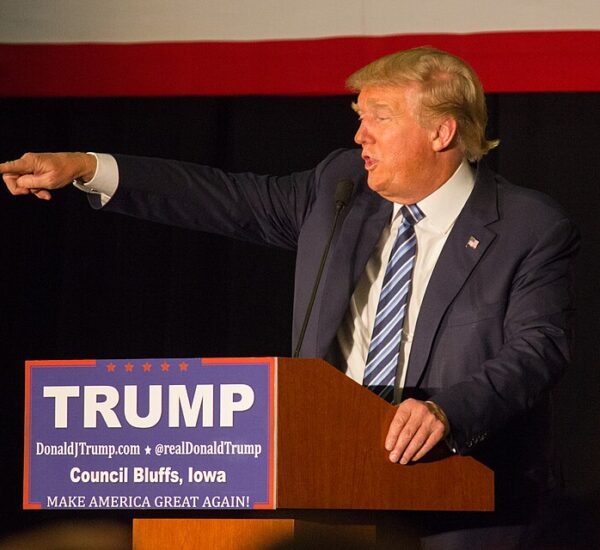
Trump has begun an aggressive campaign tour aimed at helping Republican candidates before voters head to the polls in November.
But instead of focusing exclusively on traditional battleground states, Trump is also making appearances in heavily Republican areas such as Texas, Oklahoma and Alabama.
At first glance, those stops may seem surprising.
Why spend valuable presidential campaign time in states where Republican voters already make up a substantial part of the electorate?
According to former Trump campaign strategist Luke Ball, the answer involves voter turnout, television markets, local industries and a political base that Republicans hope will return to the polls even though Trump himself is not running this year.
Trump’s Midterm Strategy Comes Into Focus
Trump kicked off his latest campaign push with appearances in Texas and Oklahoma as Republicans work to protect their congressional majorities.
His schedule comes during an increasingly competitive midterm environment, with both parties fighting over control of Congress.
Trump’s political operation appears to be betting that the president can motivate Republican voters in a way many individual congressional candidates cannot.
Ball, who worked on Trump’s successful 2024 presidential campaign, told Fox News Digital that analysts may be looking at Trump’s visits to Republican states too narrowly.
Some political observers have interpreted those appearances as evidence that Republicans are being forced to defend territory that should ordinarily be safe.
Ball offered a different explanation.
He argued that the destinations can help Republicans increase turnout not only in the cities Trump visits, but also in nearby congressional districts and overlapping media markets.
That distinction could become increasingly important as Election Day approaches.
Republicans Need Trump Voters To Return
One of the Republican Party’s biggest challenges in 2026 is relatively simple: Trump is not personally on the ballot.
Presidential elections generally attract significantly more attention than midterm contests, and some Americans who voted enthusiastically for Trump in 2024 may be less motivated to participate two years later.
Republican strategists want to change that.
Trump has publicly encouraged supporters to approach the midterms as though he were personally running, underscoring how important turnout has become to the GOP’s strategy.
If Trump’s rallies motivate even a portion of voters who might otherwise stay home, the impact could extend to congressional and statewide races.
Ball said organizations involved in Republican politics have extensive voter data that can help identify where Trump’s presence could make a difference.
Among the organizations involved is MAGA Inc., the political action committee that spent heavily supporting Trump during the 2024 presidential election and has since turned its attention toward Republican candidates.
James Blair, who served as Trump’s political director during the 2024 campaign and later joined the White House as deputy chief of staff, has also remained a central figure in Trump’s political operation.
According to Ball, those organizations and political advisers have data showing which voters are particularly motivated by Trump.
That information may help explain why his campaign schedule does not always resemble a conventional midterm tour.
Why Trump Is Visiting Deep-Red States
Trump’s appearances in strongly Republican areas serve several potential purposes at once.
A rally can increase enthusiasm among loyal Republican voters, provide national television coverage and reach neighboring communities that may contain more competitive races.
That is especially important because political boundaries and television markets do not always match.
A presidential rally held in one state can generate news coverage reaching voters across state lines.
Ball pointed to Mobile, Alabama, as an example.
Mobile sits within a media market that can also reach portions of the Florida Panhandle.
Florida has shifted considerably toward Republicans in recent election cycles, but the Panhandle remains especially important to GOP turnout.
A large Trump event in Mobile can therefore generate political attention in both Alabama and neighboring Florida.
For Republican strategists, that means one event can potentially serve several different campaign objectives.
Trump Is Looking Beyond State Lines
The same strategy may apply in Texas.
Texas has supported Republican presidential candidates for decades, but that does not mean every race within the state is automatically decided.
Congressional districts, suburban communities and statewide contests can produce very different political dynamics.
Strong turnout in heavily Republican parts of Texas can help offset Democratic strength elsewhere.
Trump’s appearance in Denton therefore may have been about much more than simply campaigning in a Republican-friendly community.
It was also an opportunity to energize voters, generate regional media attention and emphasize economic issues that Republicans want at the center of the midterm campaign.
Trump visited a Peterbilt truck manufacturing facility while in Denton, meeting workers and highlighting American manufacturing.
Those appearances resemble a tactic Trump’s campaign repeatedly used during the 2024 presidential election.
Factory Tours Are Part Of The Bigger Strategy
Trump’s visit to the truck plant was not simply an addition to the campaign schedule.
According to Ball, it reflects a strategy used by Trump’s political team for years.
During previous campaigns, Trump’s advisers frequently tried to add stops at local businesses, restaurants, factories and other locations whenever the candidate traveled to a state.
The goal was to give voters something beyond a traditional political speech.
Those appearances provided images of Trump speaking directly with workers and business owners while allowing his campaign to emphasize issues such as jobs, manufacturing and the economy.
That approach appears to be continuing in 2026.
The difference is that some stops now involve larger industries and manufacturing facilities rather than only restaurants or small businesses.
For Trump’s team, the formula can accomplish several objectives during a single trip.
The president can visit workers, discuss an economic issue, participate in a rally, support Republican candidates and generate both local and national coverage.
National Media Coverage Gives Trump Another Advantage
Trump rallies frequently attract national attention regardless of where they are held.
That makes geography less limiting than it might be for another politician.
A speech delivered in Oklahoma can quickly become national news.
A rally in Alabama can produce television clips seen by voters in Pennsylvania, Michigan, Georgia or Arizona.
Ball said that media exposure is another important part of the strategy.
Traditional campaigns often concentrate nearly all of a candidate’s time in highly competitive states.
Trump’s political operation has more flexibility because his appearances routinely receive significant national coverage.
That allows his team to organize events in Republican areas while still communicating with voters nationwide.
The result is a campaign strategy that operates on two levels.
Locally, Trump can motivate Republican voters and highlight candidates or industries.
Nationally, the same event can reinforce the broader Republican message.
The Stakes Are High For Both Parties
The November 3 midterm elections will determine control of Congress for the final two years of Trump’s current presidential term.
Republicans are defending their congressional majorities while Democrats are seeking to gain seats in both chambers.
That makes turnout especially important.
Midterm elections have historically presented challenges for the party controlling the White House, although the political environment varies considerably from election to election.
Republicans are also confronting competitive races in areas that previously appeared safer, while Democrats have sought to expand the number of states where they can seriously compete.
Trump’s campaign tour appears designed to address that challenge by putting the president directly in front of Republican voters.
His team is betting that many Americans who supported him in 2024 can be persuaded to return to the polls in 2026.
Whether that strategy succeeds will ultimately depend on voter turnout.
Trump’s Political Base Remains Central To GOP Plans
Trump has transformed Republican politics over the past decade, building a large group of voters who are personally enthusiastic about his political message.
The challenge for Republican candidates is determining whether that enthusiasm can transfer to them.
That is why Trump’s campaign appearances could matter even in states where Republicans already hold an advantage.
The president’s presence can remind supporters that congressional races will affect what the administration can accomplish during the remainder of his term.
A Republican-controlled Congress could help Trump pursue his legislative priorities.
A Congress controlled partially or entirely by Democrats could create a very different political environment.
Those stakes provide Republican strategists with a straightforward message: even though Trump is not running for another term this November, the outcome will still have major consequences for his presidency.
One Trump Visit Can Serve Multiple Purposes
Trump’s current strategy appears to combine several campaign tactics into each trip.
A visit can:
- Motivate voters who supported Trump in 2024.
- Generate local and national media coverage.
- Highlight American manufacturing and jobs.
- Assist Republican congressional candidates.
- Reach voters across multiple television markets.
- Strengthen turnout in heavily Republican areas.
- Reinforce the argument that control of Congress matters to Trump’s agenda.
That helps explain why the president is spending time in states that might otherwise appear safely Republican.
The calculation is not simply about whether Trump can win a particular state.
He already won many of these states comfortably in previous presidential elections.
Instead, Republicans are focused on whether Trump’s popularity with his political base can increase turnout for other GOP candidates.
Critics See A Different Explanation
Not everyone agrees with Ball’s interpretation.
Some political analysts argue that Trump’s presence in traditionally Republican territory illustrates how competitive the 2026 environment has become.
Republicans have faced unexpectedly close races in several states, and Democrats have attempted to expand the electoral map beyond traditional battlegrounds.
Those developments give Trump’s schedule more than one possible interpretation.
The White House and Republican campaign organizations may see opportunities to mobilize Trump’s base, while Democrats view some of the same appearances as evidence that Republicans are having to devote attention to territory they once considered secure.
Both parties have strong incentives to frame Trump’s travels differently.
The actual test will come when votes are counted.
The Bigger Question Facing Republicans
The most important question may not be whether Trump can attract large crowds.
He has demonstrated that ability repeatedly.
The real question is whether those crowds translate into votes for Republican candidates when Trump’s own name is absent from the ballot.
That is the problem Republican strategists are trying to solve.
Trump’s monthlong campaign push represents an effort to connect his political base directly to the GOP’s congressional candidates.
The factory visits, major rallies, local television coverage and appearances in conservative strongholds all appear to fit within that broader objective.
Trump’s supporters may see the midterms as an opportunity to protect the president’s agenda.
Democrats see the same election as an opportunity to put greater limits on the administration through congressional control.
That makes the final weeks before Election Day crucial for both parties.
And according to one veteran of Trump’s political operation, those seemingly unusual stops in deep-red America may be far more deliberate than they initially appear.