Blue Wave Not Coming This Midterms?
Former Republican Sen. Rick Santorum says the political environment surrounding the 2026 midterm elections may be shifting, with Republicans showing signs of renewed energy after weeks of concern about a possible Democratic wave.
Speaking Thursday on Newsmax’s “The Record With Greta Van Susteren,” Santorum said he believed Democratic momentum had been considerably stronger only days earlier.
According to Santorum, however, that trend now appears to have leveled off.
“The wave has receded a little bit,” Santorum said, adding that Republicans appear to be “beginning to edge back.”
His assessment comes as both parties enter the final stretch before the November 3 midterm elections, when control of Congress and numerous state offices will be decided.
Republicans See Financial Advantage Heading Into Final Weeks
One major factor Santorum highlighted was campaign money.
Republicans entered September with a substantial cash advantage across their three major national committees. Recent Federal Election Commission filings showed those committees holding approximately $233 million in available cash, compared with roughly $130 million for their Democratic counterparts.
That financial edge could allow Republican organizations to increase television, radio and digital advertising during the final weeks of the campaign.
Santorum argued that Democratic fundraising could also face pressure because of growing tension between some progressive activists and the technology industry.
He specifically pointed to disputes involving artificial intelligence and the massive data centers required to support the rapidly expanding technology.
“They’re opposing AI, which is the future of big tech,” Santorum said. “I think a lot of that money is drying up for them.”
The relationship between technology companies, political donors and voters has become increasingly complicated as artificial intelligence expands across the economy.
Local resistance to large data center developments has also intensified. According to research cited by the Brookings Institution, community opposition blocked or delayed 75 data center projects representing about $130 billion in planned construction during the first three months of 2026.
The disputes have involved concerns ranging from electricity demand and water consumption to land use, utility bills and the long-term effect of artificial intelligence on American jobs.
GOP Focuses on Voters Who Often Skip Midterms
Santorum said Republican organizers are increasingly focused on another important group: voters who participate in presidential elections but frequently stay home during midterm contests.
These so-called low-propensity voters could become especially important in close House, Senate and gubernatorial races.
Republicans are using television, radio, digital advertising and other forms of voter outreach in an effort to reach those Americans, Santorum said.
The challenge is familiar to both political parties.
Presidential elections typically attract substantially higher turnout than midterm elections, meaning millions of Americans who vote for president do not necessarily participate two years later.
For Republicans, the goal is to convince voters who backed President Donald Trump in 2024 that the 2026 congressional elections deserve the same level of attention.
“If you can get folks who would otherwise be for you to come out,” Santorum said, Republicans would improve their position in competitive races.
He added that he believes those voters are now becoming more likely to participate.
Trump Makes Midterm Turnout a Major Priority
President Trump has personally made Republican turnout one of the central themes of his midterm campaign strategy.
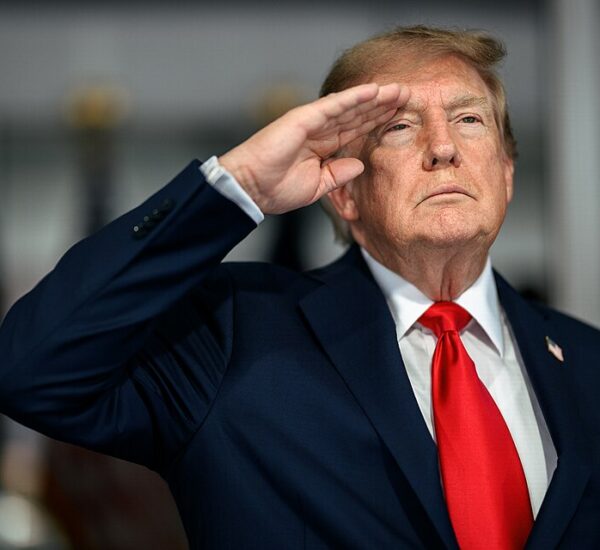
During the Republican National Midterm Convention in Dallas in September, Trump urged his supporters to approach the election as though his own name appeared on the ballot.
“I’m asking you to pretend that I’m on the ballot,” Trump told supporters.
The unusual Republican gathering, held September 9 and 10, placed Trump at the center of the party’s effort to increase enthusiasm among voters who might otherwise skip a nonpresidential election.
Republican leaders hope Trump’s continued involvement can motivate his large political base in key congressional and statewide contests.
Polling Still Shows a Competitive Environment
Despite Santorum’s assessment of improving Republican enthusiasm, national polling continues to show significant challenges for the GOP.
An Emerson College survey released September 24 found Democrats leading Republicans 53% to 42% among likely voters on the generic congressional ballot.
Generic ballot surveys measure which political party voters prefer for Congress rather than asking about specific candidates in individual districts. They can provide a broad snapshot of national sentiment, but they do not determine what will happen in hundreds of separate House and Senate races.
That distinction is particularly important because congressional elections are decided district by district and state by state.
Turnout, candidate quality, campaign spending and local political conditions can therefore produce results that differ substantially from national polling averages.
Money and Motivation Could Shape the Final Stretch
Santorum also pointed to political analysts Harry Enten and Frank Luntz while arguing that Republican enthusiasm has been improving.
For the GOP, increased enthusiasm could be especially valuable among Americans who strongly support Trump but have historically been less consistent about voting in midterm elections.
Democrats, meanwhile, continue to hold an advantage in some national polling and are attempting to turn dissatisfaction with the administration into higher turnout among their own supporters.
That creates two competing forces heading into November: Democratic strength in national voter-preference polling and a Republican effort to use money, advertising and Trump’s personal involvement to bring occasional voters to the polls.
With November 3 approaching, neither national polling nor campaign fundraising alone can determine the outcome.
But the battle over voter turnout is becoming increasingly important.
For Republicans, the question is whether Trump supporters who turned out in large numbers during the 2024 presidential election will return to the polls when the president himself is not a candidate.
For Democrats, the challenge is converting their current polling advantages into actual votes in the congressional districts and states that will determine control of Washington.
The answer will become clear when voters cast their ballots in the 2026 midterm elections.