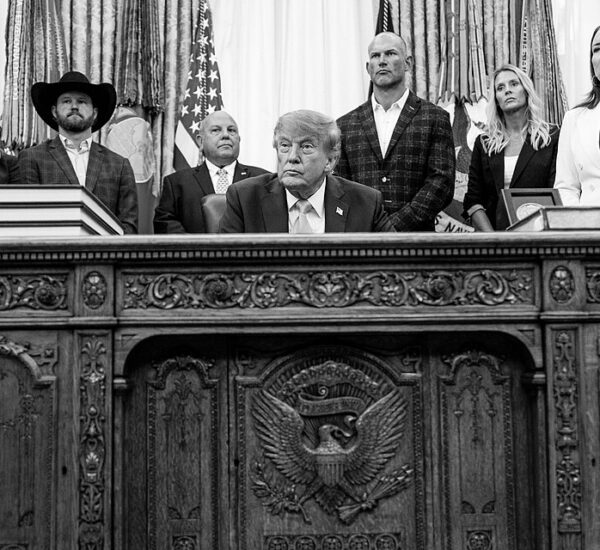
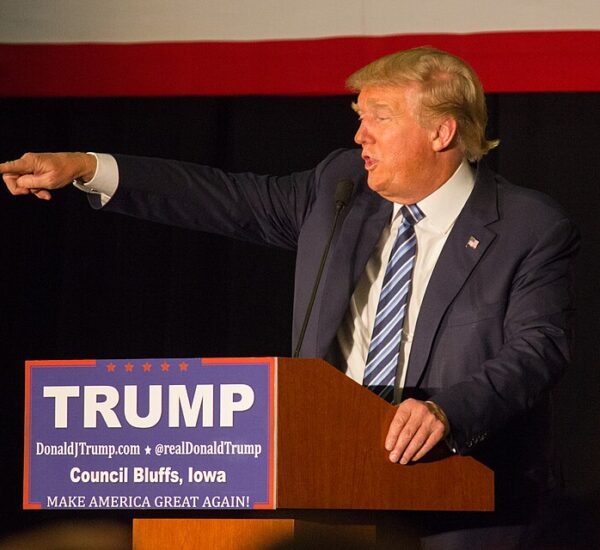
Donald Trump marked Father’s Day on Sunday with a social media message praising the state of the country and highlighting what he described as strong economic and national performance. Posting on Truth Social, Trump said the United States has the “BEST ECONOMY EVER,” pointing to what he called record job numbers, a strong stock market, and broad national success.
BACKGROUND:
Trump, who returned to office in 2025 after campaigning on a promise to bring down inflation, has repeatedly emphasized economic performance in public messaging since taking office. In his Father’s Day post, he also praised the military and said the country was “WINNING on all fronts.” At the same time, public sentiment on the economy has been more mixed, with Americans largely disapproving of his handling of economic issues and inflation, according to the provided facts.
Democratic Socialists Back In The Game
A new wave of socialist-backed Democrats is gaining attention after scoring major victories in several big-city mayoral races, sparking debate about where the Democratic Party is headed ahead of the 2026 midterm elections and the 2028 presidential race.
Recent elections in Washington, D.C., Los Angeles, and New York City have elevated candidates associated with the Democratic Socialists of America (DSA), one of the nation’s largest left-wing political organizations. Their success has fueled discussions about whether progressive activism is becoming more influential within Democratic politics or whether voters are simply demanding change after years of frustration with the political establishment.
Socialist Candidates Score Key Wins
In Washington, D.C., progressive Democrat Janeese Lewis George delivered a strong primary victory over more moderate rival Kenyan McDuffie, putting her in a commanding position to become the city’s next mayor and succeed longtime Mayor Muriel Bowser.
Just days earlier, Los Angeles voters propelled DSA-backed City Council member Nithya Raman into a November runoff against incumbent Mayor Karen Bass. Raman’s campaign focused heavily on housing affordability and homelessness, issues that continue to dominate local politics.
Their victories follow last year’s surprise political breakthrough in New York City, where Mayor Zohran Mamdani defeated former Governor Andrew Cuomo despite facing skepticism from many establishment Democrats. Mamdani’s campaign centered on ambitious proposals aimed at reducing living costs and expanding government services.
Voters Looking for Change
Political observers say the common thread connecting these races may not be socialism itself, but widespread voter dissatisfaction with the status quo.
Veteran Democratic strategist Doug Sosnik argued that many Americans are increasingly frustrated with traditional politicians and are searching for candidates who promise major reforms rather than incremental change.
According to Sosnik, voters across the political spectrum appear eager for leaders who will challenge entrenched institutions and focus more aggressively on middle-class concerns. He noted that this sentiment has benefited both progressive Democrats and populist Republicans in recent election cycles.
The desire for economic change has become a powerful force in American politics, particularly as families continue to struggle with inflation, housing costs, and economic uncertainty.
Big Promises Drive Progressive Momentum
Many of the recent progressive victories have been fueled by ambitious policy proposals aimed at addressing affordability concerns.
In New York City, Mamdani campaigned on plans that included rent freezes, government-operated grocery stores, free public transportation, and expanded childcare programs. Supporters viewed these proposals as bold solutions to rising costs, while critics questioned their practicality and long-term financial impact.
Similarly, Raman’s Los Angeles campaign has emphasized aggressive action on housing shortages and homelessness, positioning herself as an alternative to traditional city leadership.
Meanwhile, Lewis George has promoted a progressive platform in Washington while pledging resistance to federal policies she opposes. Her rise has attracted national attention, particularly after President Donald Trump warned that electing what he described as a “socialist” leadership team could have consequences for the nation’s capital.
Moderates Push Back on Socialist Narrative
Not everyone believes these local victories signal a broader ideological shift among Democratic voters.
Some Democratic strategists argue that these races are highly localized and should not be viewed as evidence that the national electorate is embracing socialism.
Jim Kessler of the center-left think tank Third Way said voters in cities often respond differently than voters in statewide or national elections. He pointed to several recent victories by more moderate Democrats across the country as evidence that the party remains ideologically diverse.
Kessler also noted that some major cities have recently moved in the opposite direction, electing moderate candidates after growing concerns about crime, public safety, homelessness, and economic management.
Other Democratic consultants argue that younger voters are playing a larger role in these elections, making the trend more generational than ideological.
Democratic Socialists Continue Expanding
The Democratic Socialists of America has grown significantly over the past decade, expanding its membership to more than 100,000 nationwide.
The organization gained national visibility during Senator Bernie Sanders’ 2016 presidential campaign, even though Sanders himself was not formally a member of the group. Since then, socialist-aligned candidates have steadily increased their influence in local and state politics.
The movement received another major boost when Representative Alexandria Ocasio-Cortez shocked the political establishment with her 2018 congressional victory. Since then, DSA-backed candidates have continued building grassroots networks and volunteer operations across the country.
Organization leaders argue that their recent victories reflect growing public frustration with rising costs, stagnant wages, and political gridlock.
Warning Signs for Democrats?
Despite the recent momentum, some analysts caution that Democratic leaders could misread the results.
Polling continues to show significant dissatisfaction with both major political parties. While voters clearly want change, strategists warn that positions popular in heavily Democratic urban centers may not resonate with suburban and swing voters who often decide presidential elections.
Kessler argued that Democrats risk political trouble if they assume victories in large cities automatically translate into national success. He noted that winning the White House typically requires broad appeal among moderates and independent voters, particularly in suburban communities.
As the Democratic Party prepares for future elections, leaders face a difficult question: Should they move further left to energize progressive activists, or focus on attracting moderate voters who often determine general election outcomes?
The answer could shape not only the party’s future but also the political landscape heading into 2028.
Bottom Line
The recent success of socialist-backed mayoral candidates has intensified an ongoing debate inside the Democratic Party. While supporters see the victories as proof that progressive ideas are gaining momentum, critics argue the results reflect voter frustration with established politicians rather than a nationwide embrace of socialism.
With inflation, affordability, housing costs, and economic concerns remaining top issues for many Americans, both parties will be closely watching whether these local victories represent the beginning of a larger trend—or simply isolated political moments in a handful of major cities.