Here’s what President Trump said.
President Donald Trump made a notable admission Thursday when he acknowledged that the ongoing conflict with Iran could hurt Republicans in the November midterm elections.
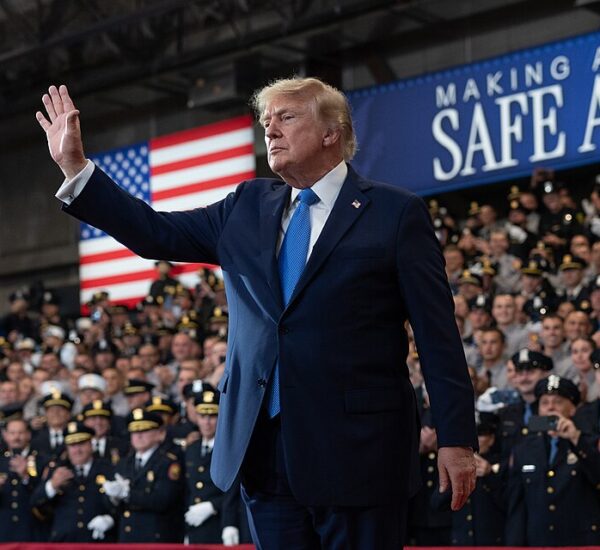
Speaking with reporters outside the White House before heading to a campaign event in Oklahoma, Trump was asked whether the war could cost Republicans control of the House, Senate or both.
“It’s possible,” Trump replied.
But the president immediately argued that the issue could also work in Republicans’ favor if voters focus on his administration’s goal of preventing Iran from obtaining a nuclear weapon.
“It should help,” Trump said, arguing that opposition to a nuclear-armed Iran is widespread.
His remarks offered a rare acknowledgment of the political risks surrounding the conflict as Republicans fight to maintain their congressional majorities in the November 3 elections.
Trump Responds To Warning From Lara Trump
The question came after Lara Trump, the president’s daughter-in-law and a former Republican National Committee co-chair, warned that the Iran conflict could have serious consequences for Republicans at the ballot box.
Appearing on the YouTube program “Harry Cole Saves the West,” Lara Trump said the war “could cost him these midterms.”
She nevertheless defended the president’s broader record and said she believes his ultimate legacy remains unwritten.
Lara Trump also argued that Iranian leaders may be attempting to delay an agreement until after the U.S. elections because they believe Republican losses in Congress could improve Tehran’s negotiating position.
Trump’s own response Thursday was more optimistic.
He said voters may ultimately support his approach if they believe the conflict prevents Iran from developing nuclear weapons.
Iran War Becomes A Major Midterm Issue
The political consequences of the Iran conflict have become increasingly difficult to separate from the broader midterm campaign.
Republicans are attempting to retain narrow congressional majorities while voters remain focused on the economy, household expenses and the prolonged overseas conflict.
Trump has recently begun an intensive campaign push on behalf of Republican candidates, with appearances scheduled in several states during the final weeks before Election Day. Reuters reported Thursday that his campaign swing includes Republican strongholds as well as more competitive states.
At the same time, diplomatic efforts have continued.
U.S. and Iranian representatives have discussed possible steps toward ending hostilities, including negotiations involving the Strait of Hormuz and U.S. economic restrictions, although significant disagreements remain between the two governments.
For American voters, however, the debate extends well beyond foreign policy.
Higher Gas And Diesel Prices Put Pressure On Families
One of the biggest domestic consequences of the Iran conflict has been pressure on energy markets.
Disruptions involving the Middle East have contributed to sharply higher fuel costs, particularly diesel.
That matters because diesel prices affect far more than truck drivers.
Higher transportation costs can eventually appear in the prices consumers pay for groceries, manufactured goods and other products shipped across the country.
Associated Press reporting in September found diesel prices had risen dramatically since the Iran conflict began, creating additional political pressure ahead of the midterms.
For households already watching their budgets closely, higher fuel and everyday living expenses remain a major concern.
New Poll Shows Deep Economic Frustration
A new AP-NORC Center for Public Affairs Research survey released Thursday shows just how significant the cost-of-living issue has become.
The poll found that 65% of American adults believe higher-than-usual prices are primarily the result of Trump’s policies, while 67% of Republicans surveyed said outside factors were mainly responsible.
The survey also found that 69% of Americans believe Trump’s handling of the cost of living has been worse than they expected.
On Iran, 71% disapproved of the president’s handling of the issue, while 69% said the war had not been worth fighting.
The poll was conducted September 24 through September 28 among 2,140 U.S. adults and had an overall sampling margin of error of plus or minus 2.9 percentage points.
Those numbers highlight one of the central challenges facing Republicans as Election Day approaches.
Trump wants voters to evaluate the Iran conflict primarily as a national security issue.
Many voters, however, are also evaluating it through their household budgets.
Trump Says Preventing A Nuclear Iran Comes First
Trump has repeatedly argued that Iran cannot be allowed to obtain a nuclear weapon.
His administration has maintained that preventing Tehran from reaching that goal is worth pursuing even when the strategy carries economic and political consequences.
That message appears to be central to Trump’s defense of the conflict heading into November.
When asked Thursday whether the war could damage Republicans politically, Trump essentially presented voters with two ways of viewing the issue.
If voters concentrate on the economic consequences and length of the conflict, he acknowledged it could hurt.
If they instead view the campaign as necessary to prevent Iran from acquiring nuclear weapons, Trump argued it could help Republicans.
That distinction could become increasingly important during the final weeks of the midterm campaign.
Midterms Could Shape Trump’s Final Two Years
Control of Congress will determine far more than which party holds committee chairmanships.
The results could affect Trump’s ability to advance legislation, pass spending measures, confirm nominees and pursue his domestic agenda during the final two years of his term.
A change in congressional control could also dramatically alter the political environment in Washington.
That makes Trump’s acknowledgment particularly noteworthy.
Presidents generally prefer to emphasize the political benefits of their policies while minimizing potential liabilities.
Trump openly conceded that Iran could become one.
But he also made clear that he believes voters could reach the opposite conclusion if they view preventing a nuclear Iran as the overriding issue.
The Bottom Line
Trump’s Thursday comments underscore how closely foreign policy, energy prices and the November midterms have become connected.
Republicans want voters to focus on national security and the argument that Iran must never obtain nuclear weapons.
At the same time, many Americans remain concerned about fuel prices and the broader cost of living.
With Election Day approaching, those competing concerns are likely to remain at the center of the political debate.
Trump himself has now acknowledged the stakes.
The Iran conflict could hurt Republicans in November.
Or, as the president argues, voters could ultimately decide that preventing Iran from obtaining nuclear weapons matters more.
The answer will come when Americans head to the polls.