Trump Silent On Key Decision
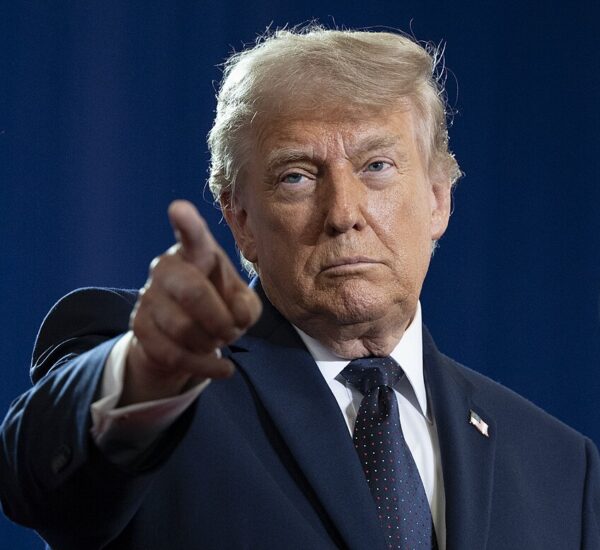
President Donald Trump is keeping Washington guessing about the future of the John F. Kennedy Center for the Performing Arts after declining Friday to rule out the possibility of tearing down the famous building.
The president’s comments add another chapter to an increasingly complicated dispute involving hundreds of millions of dollars in renovation funding, federal court orders, the Kennedy Center’s leadership and an ongoing disagreement over whether Trump’s name can be added to the historic institution.
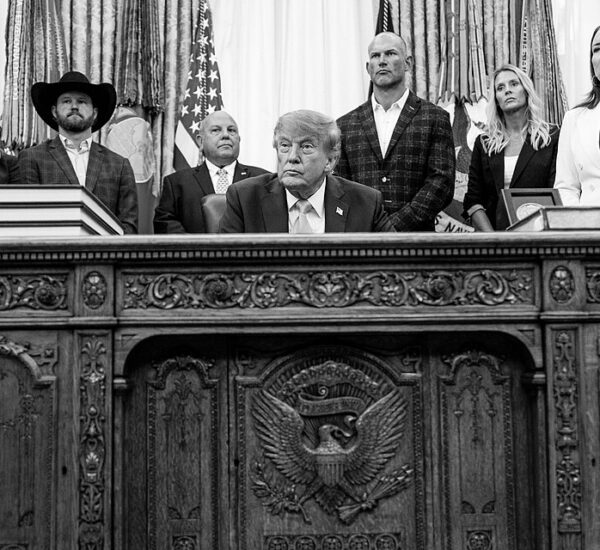
Speaking from the Oval Office, Trump argued that his administration deserves recognition for its efforts to address the center’s condition and financial needs.
“I think the Trump administration should be recognized as having saved the Kennedy Center because nobody else remembers,” Trump said.
The Kennedy Center sits along the Potomac River in Washington, D.C., and has served for decades as one of the nation’s most prominent performing arts institutions.
Major Kennedy Center Renovation Planned
The Kennedy Center’s board has approved plans to close most of the facility for a major renovation project.
The work is tied to approximately $257 million designated for repairs and improvements at the complex.
The Kennedy Center includes a major concert hall, opera house, theater and numerous additional spaces used for performances, meetings and public events.
Supporters of the renovation effort argue that extensive repairs are necessary to address aging infrastructure and ensure that the building can continue operating for future generations.
Trump has repeatedly criticized the condition of the facility and has used unusually strong language when discussing the building.
On Friday, he referred to the Kennedy Center as a “dump” while defending the need for significant improvements.
The president has also argued that the institution faced serious long-term financial challenges.
However, Reuters reported that tax records show the Kennedy Center recorded profits in seven of the previous nine years, adding another point of disagreement to the debate over the facility’s financial health.
Federal Judge Places Limits on Kennedy Center Changes
The dispute has now moved well beyond questions about construction and maintenance.
A federal judge has placed restrictions on how quickly the administration can make major physical changes to the building.
U.S. District Judge Christopher Cooper ordered the administration to provide 30 days’ notice before taking steps that could lead to demolition or other significant alterations at the Kennedy Center.
The court is also examining whether plans involving the facility conflict with previous judicial orders.
The ruling creates an additional layer of oversight as the administration and Kennedy Center board consider what comes next for the property.
Lawsuit Challenges Administration’s Plans
Rep. Joyce Beatty, an Ohio Democrat who serves as an ex officio member of the Kennedy Center board, is involved in litigation challenging the administration’s handling of the institution.
Attorneys representing Beatty have accused Trump of holding the Kennedy Center “hostage” during the dispute.
That description represents the position of Beatty’s legal team rather than an established court finding.
The administration and Kennedy Center leadership have defended their actions as part of an effort to repair and improve the aging facility.
The continuing lawsuit could determine how much authority the board and administration have to alter the Kennedy Center without additional congressional approval.
Fight Over Kennedy Center Name Continues
Another major controversy centers on the institution’s name.
The Kennedy Center board, which is chaired by Trump and includes presidential appointees, previously moved to add Trump’s name to the facility.
The proposed name became the “Trump-Kennedy Center.”
But Judge Cooper ruled that the board did not have authority on its own to rename the congressionally established memorial.
The ruling concluded that such a change would require action by Congress.
The dispute did not end there.
After the decision, a covering was placed over part of the building’s front facade as the legal fight continued.
Trump said Friday that placing his name alongside Kennedy’s could represent “bipartisanship.”
Trump is a Republican, while President John F. Kennedy was a Democrat.
Kennedy was assassinated in 1963, and Congress later designated the performing arts center as a memorial to the 35th president.
Questions Remain Over Building’s Future
Trump did not provide a definitive answer when reporters asked whether demolition remains an option.
That uncertainty is likely to keep attention focused on the Kennedy Center as renovation plans, court proceedings and congressional authority continue to intersect.
The dispute raises several significant questions for taxpayers and lawmakers.
How much work does the Kennedy Center actually require? How should the $257 million renovation funding be spent? How much authority does the president-appointed board have over the institution? And should Congress have the final word on major changes to a nationally recognized memorial?
Those questions could become increasingly important as the renovation process moves forward.
For Americans concerned about federal spending, historic preservation and government accountability, the Kennedy Center controversy involves considerably more than the future of a performing arts venue.
It has become a broader debate over taxpayer money, presidential authority, congressional power and the preservation of a Washington landmark.
For now, the federal court’s notice requirement means that any effort to dramatically alter or demolish the Kennedy Center would face additional scrutiny before moving forward.
With a major renovation planned and litigation continuing, the future of the Kennedy Center remains unsettled.