Trump Secures Major Greenland Deal
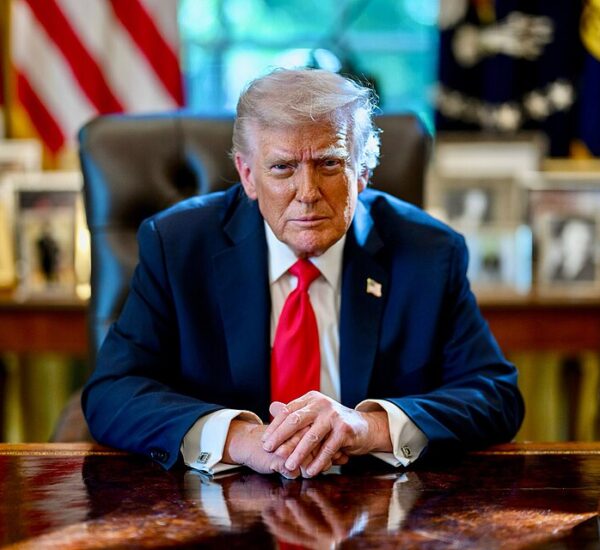
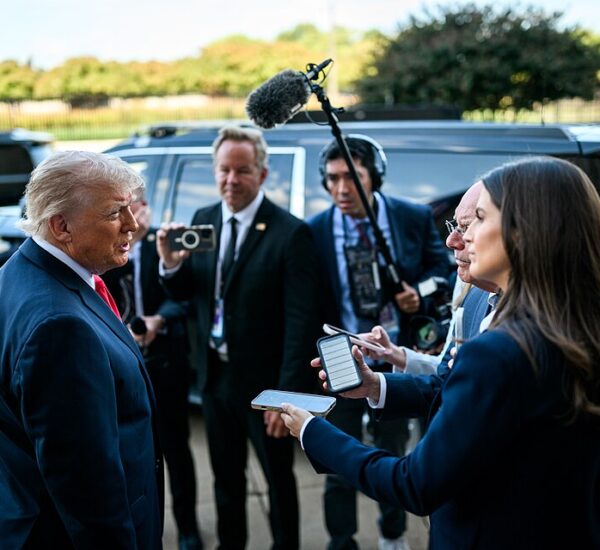
President Donald Trump announced Friday that the United States, Denmark and Greenland have reached a new agreement designed to strengthen American security operations in the Arctic and expand cooperation around Greenland.
The agreement could significantly increase the U.S. military role on the strategically important island while leaving Greenland’s sovereignty within the Kingdom of Denmark unchanged, according to statements from Danish and Greenlandic officials.
The three governments are expected to formally sign the agreement during the United Nations General Assembly next week. After that, the arrangement will still need to proceed through the appropriate national parliamentary approval processes.
Trump Says Deal Expands U.S. Security Authority
Trump described the agreement as providing the United States with broad authority to take steps considered necessary for security in Greenland.
He also said the arrangement would prevent countries viewed as U.S. adversaries from establishing military bases or pursuing certain sensitive investments on the island without American approval.
Trump further indicated that his administration intends to begin expanding the American military presence in Greenland.
The president characterized the arrangement as a long-term agreement that would strengthen the United States’ ability to protect its interests in the Arctic.
The exact size and scope of any future military expansion, however, have not yet been publicly detailed.
Denmark Emphasizes Sovereignty
Danish officials placed particular emphasis on the fact that the agreement does not transfer ownership or sovereignty over Greenland to the United States.
Prime Minister Mette Frederiksen said the arrangement strengthens security in the Arctic and North Atlantic while respecting the sovereignty and territorial integrity of the Kingdom of Denmark.
She also stressed the Greenlandic people’s right to determine their own political future.
Greenland is a self-governing territory within the Kingdom of Denmark, with responsibility for many of its domestic affairs while Denmark retains authority in several areas, including parts of foreign and defense policy.
Greenland’s head of government, Jens-Frederik Nielsen, said the agreement recognizes Greenland’s interests and its role in international cooperation.
Why Greenland Is Important to U.S. National Security
Greenland has attracted growing attention from Washington because of its location between North America and Europe.
The island sits along important Arctic and North Atlantic defense routes, making it strategically valuable for missile warning, surveillance, military communications and space operations.
The United States already maintains a permanent military presence at Pituffik Space Base in northwestern Greenland.
The installation supports missile warning and space surveillance missions and is the northernmost U.S. Defense Department installation.
Greenland’s location could become even more important as competition increases in the Arctic.
Melting sea ice has gradually opened new possibilities for shipping, military operations and access to natural resources, increasing interest in the region from the United States, Russia, China and European nations.
Missile Defense Reportedly Part of Discussions
Reuters reported that negotiations included discussions involving America’s planned Golden Dome missile-defense system.
The talks also reportedly covered measures intended to limit Chinese influence and sensitive investments in Greenland.
Those issues reflect Washington’s broader concern that rival powers could gain access to strategically important infrastructure, minerals or territory in the Arctic.
Greenland possesses substantial mineral resources, including deposits that could become increasingly important to advanced manufacturing and national security supply chains.
The island’s economic importance therefore extends beyond its military value.
Agreement Follows Months of Tension
The announcement comes after months of public disagreement involving Trump, Denmark and Greenland.
Earlier in 2026, Trump repeatedly argued that greater American control or access in Greenland was important for U.S. national security.
Officials in Denmark and Greenland responded by insisting that Greenland’s political future could only be determined by its people and the Kingdom of Denmark.
European governments also publicly supported Denmark and Greenland’s position on sovereignty while acknowledging the need for stronger Western security cooperation in the Arctic.
Trump had previously declined to rule out the use of force when discussing American control of Greenland, statements that drew considerable attention from NATO allies.
The newly announced arrangement instead centers on expanded security cooperation without formally changing Greenland’s political status.
U.S. Military Ties to Greenland Go Back Decades
American military involvement in Greenland is not new.
The United States and Denmark signed a defense agreement in 1951 that provided the legal foundation for a long-term American military presence on the island.
During the Cold War, Greenland became an important component of North American defense because its northern location provided an early-warning position between the Soviet Union and the United States.
That geographic advantage remains important today.
Modern missile technology, space surveillance and growing military competition in the Arctic have renewed Washington’s interest in the region.
China and Russia Add to Arctic Security Concerns
Russia maintains an extensive military footprint across its Arctic territory and has invested heavily in bases, ports and other infrastructure throughout the region.
China has also increased its diplomatic and economic interest in Arctic affairs despite not possessing Arctic territory of its own.
Those developments have encouraged the United States and its NATO allies to place greater attention on northern defense.
Preventing strategic competitors from obtaining sensitive infrastructure or military access in Greenland appears to be one of the central purposes of the new agreement.
For Washington, Greenland provides a geographic position that would be extremely difficult to replace elsewhere.
What Happens Next
The agreement is expected to be signed by representatives of the United States, Denmark and Greenland during the upcoming United Nations General Assembly.
It will then have to move through the required political and parliamentary procedures before all provisions can be implemented.
Several important details are likely to receive additional scrutiny as those proceedings unfold.
Among them are the scale of future American military construction, the extent of U.S. authority over foreign investments, the possible role of missile-defense systems and the financial responsibilities of each government.
What appears clear from the public statements so far is that Washington could receive substantially greater freedom to strengthen its Arctic defenses while Denmark and Greenland retain sovereignty over the territory.
For the United States, the agreement could become one of the most consequential expansions of American Arctic security cooperation in decades.
As competition over military access, critical minerals and Arctic shipping routes intensifies, Greenland’s strategic importance is likely to remain at the center of U.S. national security planning.