GOP Senator Addresses National Debt
Sen. Rand Paul is warning that America’s rapidly growing national debt cannot be solved by economic growth alone, putting renewed attention on federal spending as Washington confronts a debt burden that has surpassed $40 trillion.
The Kentucky Republican says the United States needs a combination of stronger economic growth and spending restraint to improve the federal government’s long-term financial outlook.
During an appearance on Newsmax’s “Rob Schmitt Tonight,” Paul challenged Treasury Secretary Scott Bessent’s argument that robust economic growth could help the country manage its enormous debt.
Bessent has argued that sustained GDP growth around 3% could significantly improve America’s debt outlook.
Paul agrees that economic growth is important. However, he says Washington cannot ignore the other side of the federal budget: spending.
“It’s got to be both,” Paul said.
The senator argued that lower taxes and reduced regulation can encourage businesses to invest, hire workers and expand the economy.
But he warned that economic growth alone may not be enough if federal spending continues to substantially exceed government revenue.
“You can’t keep spending like drunken sailors,” Paul said.
America’s National Debt Crosses $40 Trillion
The debate comes as the United States faces an increasingly consequential fiscal challenge.
The national debt recently surpassed $40 trillion, while the federal government continues to operate with large annual budget deficits.
For taxpayers, retirees and families planning for the future, the debate over government borrowing is about more than a number on Washington’s balance sheet.
Federal borrowing can affect government interest expenses and the amount of money available for other national priorities. The broader fiscal outlook can also influence debates over future taxes, government programs and economic policy.
Paul argues that lawmakers need to confront those tradeoffs sooner rather than later.
Paul Points to a Massive Monthly Deficit
During the interview, Paul highlighted the government’s recent spending and revenue figures.
He said Washington spent approximately $500 billion more than it collected during July.
“That used to be a bad year. Now it’s a bad month,” Paul said.
His argument is that even substantial economic growth cannot completely solve the nation’s fiscal problems if federal expenditures continue to exceed revenues by hundreds of billions of dollars over relatively short periods.
Paul also pointed to the major increase in federal borrowing authority approved under the One Big Beautiful Bill Act in 2025.
The legislation increased the federal debt ceiling by $5 trillion.
For Paul, the solution requires addressing both sides of the equation.
“So we have to cut spending and allow economic growth to catch up,” he said.
Rand Paul Pushes His “Six Penny Plan”
Paul has proposed his own approach to reducing federal deficits.
Known as the “Six Penny Plan,” the proposal is designed to bring the federal budget into balance within five years.
The plan does not simply eliminate 6% of every individual federal program.
Instead, it establishes overall spending targets. According to Paul’s Senate office, first-year spending would be limited to 94% of projected levels, with further reductions relative to projected spending until the budget reaches balance.
“It wouldn’t end government. It would make government 6% smaller,” Paul said during the interview.
Paul’s office says the proposal leaves Congress discretion over precisely where the savings would come from.
That distinction is important because balancing the federal budget inevitably raises difficult questions about which programs lawmakers would reduce, restructure or protect.
Paul acknowledged that his proposal has not attracted enough Republican support to guarantee passage.
“I get about 35 out of 53 Republicans on a good day,” he said.
The lack of agreement illustrates one of Washington’s longstanding fiscal problems: lawmakers frequently express concern about deficits while disagreeing over where spending reductions should occur.
Paul Breaks With Trump Over Proposed $5,000 Payment
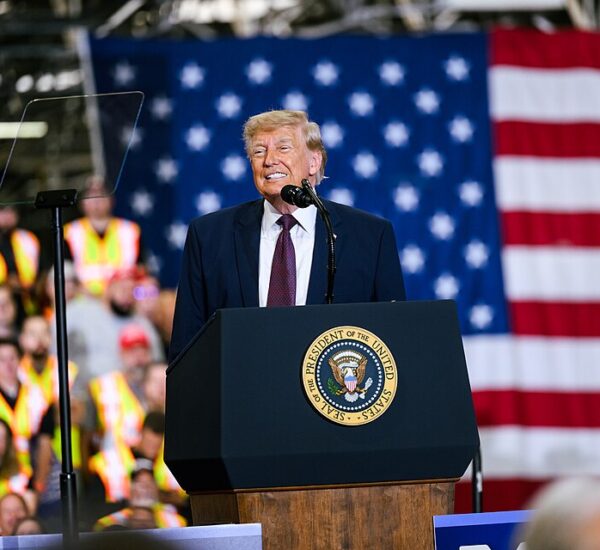
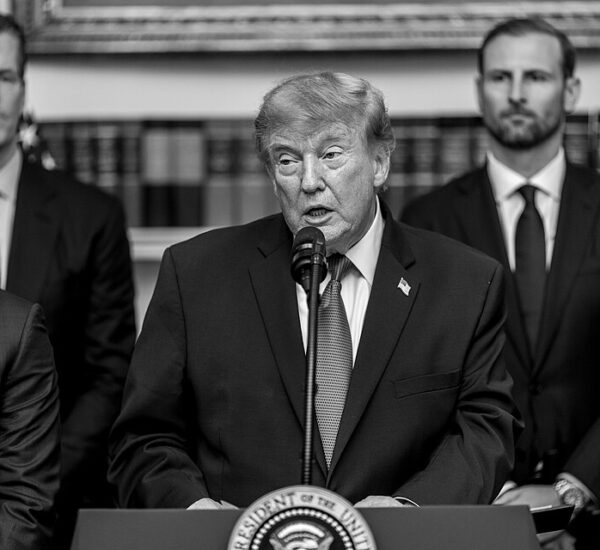
Paul also criticized President Donald Trump’s proposal to send a $5,000 payment to American adults.
Trump announced the proposed “Trump dividend” during the Republican midterm convention, linking the idea to revenue collected from tariffs.
The proposal immediately raised questions about its price tag and how the federal government would finance it.
Paul argued that distributing additional money while Washington is already running a large deficit would be financially difficult to justify.
“How do you give dividends from nothing? How do you give dividends from a deficit?” Paul asked.
He also warned that financing the payments with additional deficit spending or money creation could increase inflationary pressure.
“And if you print up the money, you’re right: You make the inflation worse,” he said.
How Much Would Trump’s $5,000 Dividend Cost?
The potential cost would be enormous.
With approximately 240 million adult U.S. citizens potentially eligible, a $5,000 payment could cost around $1.2 trillion, depending on the final eligibility requirements.
Tariff collections currently fall well short of that amount, raising questions about whether additional borrowing, spending reductions or other revenue would be necessary.
Congress would also have to authorize the expenditure before Americans could receive the proposed payments.
Paul compared the idea to corporate dividends, which businesses typically distribute to shareholders from available earnings.
“If a company is losing money, I think they just forgot the negative sign,” Paul said.
The disagreement puts Paul at odds with Trump on an economic proposal that could have major implications for federal spending.
It also highlights a larger debate over whether tariff revenue should be returned directly to Americans or used for other fiscal priorities.
Could Another $5,000 Payment Affect Inflation?
Inflation is another major consideration surrounding large-scale government payments.
Paul argues that creating or borrowing additional money to finance the proposal could put upward pressure on consumer prices.
The actual economic impact would depend on how a payment program was designed and financed, along with broader conditions in the economy.
Direct government payments can increase household spending, which may support economic activity. But when demand increases faster than the economy’s ability to supply goods and services, additional inflationary pressure can result.
That makes the financing mechanism especially important.
A payment funded entirely through existing revenue could have different economic effects from one financed through additional federal borrowing.
Paul Raises Concerns About Welfare Spending
The Kentucky senator also turned his attention to federal welfare and refugee-assistance programs.
Paul argued that current immigration and refugee policies can create circumstances in which some newly arrived individuals qualify for taxpayer-funded assistance.
Federal law generally prevents many categories of legal immigrants from receiving certain means-tested federal benefits during their first five years in the United States.
However, refugees and certain other humanitarian categories are subject to different rules and exemptions.
Paul argues that those exceptions should receive greater scrutiny.
During the interview, he discussed Minnesota’s Somali community while referring to allegations involving fraudulent daycare and healthcare operations.
Those allegations concern particular individuals and organizations and should not be treated as evidence of wrongdoing by Somali Americans or refugees generally.
Paul previously introduced an amendment that sought to remove refugee-assistance funding from a federal spending package.
The Senate rejected the amendment by a 25-73 vote in April.
Paul: “The American Dream Is About Work”
Paul said he believes private organizations should carry more responsibility for helping newcomers become financially independent.
“The American dream is about work,” Paul said.
He argued that churches, private sponsors and individuals should provide greater support for new arrivals rather than shifting those expenses primarily to taxpayers.
The issue represents another part of the broader debate over federal spending: which responsibilities should be funded by taxpayers and which should be handled by states, private organizations, charities or individuals.
Why America’s $40 Trillion Debt Matters to Taxpayers
The national debt can seem distant from everyday life, but its long-term consequences can reach American households in several ways.
One major concern is interest.
As the government borrows more money, servicing the existing debt consumes federal resources that otherwise could be used for government programs, tax relief, defense or deficit reduction.
Higher government borrowing requirements can also affect financial markets, although interest rates are influenced by many factors beyond federal debt.
For Americans approaching or already in retirement, the fiscal debate is particularly significant because Washington’s long-term budget discussions frequently involve major programs such as Social Security and Medicare.
Paul’s Six Penny Plan does not specify individual program cuts. Instead, it establishes overall spending targets and leaves Congress to determine how those targets would be achieved.
Can Economic Growth Solve America’s Debt Problem?
This question sits at the center of the disagreement between Paul and Bessent.
Faster economic growth can help government finances.
When businesses expand and workers earn more money, federal tax revenue can rise even without increasing tax rates. A larger economy can also make the national debt smaller relative to GDP.
But growth does not automatically produce a balanced budget.
If government spending rises as quickly as — or faster than — revenue, Washington can continue running deficits even during periods of economic expansion.
That is why Paul argues that the country needs both growth and spending restraint.
Bessent has placed greater emphasis on accelerating economic growth as part of the solution.
The disagreement is ultimately about how Washington should manage the relationship between economic growth, federal revenue and government spending.
Washington Faces a $40 Trillion Question
America’s national debt has accumulated under Republican and Democratic administrations and Congresses over many years.
There is broad disagreement over the appropriate solution.
Some policymakers emphasize spending reductions. Others support additional revenue, changes to entitlement programs, stronger economic growth or combinations of those approaches.
Paul has made his position clear: Washington should reduce projected spending while pursuing policies designed to expand the economy.
His opposition to Trump’s proposed $5,000 dividend demonstrates that the fiscal debate does not always fall neatly along party lines.
With the national debt above $40 trillion, large federal deficits continuing and the government facing substantial interest expenses, arguments over spending, taxes, tariffs and borrowing are likely to remain a major part of Washington’s economic debate.
For American taxpayers, the fundamental question is increasingly difficult to ignore: how should the federal government bring its long-term spending and revenue closer to balance without creating unacceptable economic or financial consequences?