Trump’s GOP Refusing To Give Up On Birthright Citizenship
President Donald Trump is renewing his push to reshape birthright citizenship and immigration policy, issuing two executive orders following a Supreme Court decision that blocked his administration’s wider effort to restrict automatic U.S. citizenship at birth.
The new actions focus on specific categories of citizenship claims and on birth tourism, the practice of traveling to the United States primarily to give birth so a child receives U.S. citizenship.
For Trump and his conservative allies, the Supreme Court defeat does not appear to have ended the debate. Instead, it is fueling a longer political and legal campaign over the meaning of the 14th Amendment, U.S. citizenship and immigration law.
Supreme Court Deals Trump A Major Birthright Citizenship Setback
The dispute intensified after the Supreme Court issued its June 30 decision in Trump v. Barbara.
By a 6-3 vote, the Supreme Court concluded that children born on U.S. soil to parents who are either unlawfully in the country or present on a temporary basis receive citizenship at birth under the 14th Amendment’s Citizenship Clause.
Chief Justice John Roberts wrote the majority opinion. Justices Sonia Sotomayor, Elena Kagan, Amy Coney Barrett and Ketanji Brown Jackson joined the majority.
The decision represented a significant defeat for the Trump administration’s effort to impose broader restrictions on automatic citizenship through executive action.
But one separate opinion immediately attracted the attention of conservatives looking for another path forward.
Justice Brett Kavanaugh concluded that the administration’s previous executive order conflicted with federal law. According to Politico, however, Kavanaugh also indicated that Congress could change existing law or establish certain exceptions to birthright citizenship through legislation.
That distinction could become important as Republicans and conservative legal groups consider their next steps.
Trump Responds With Two New Executive Orders
Trump has now responded with a narrower approach.
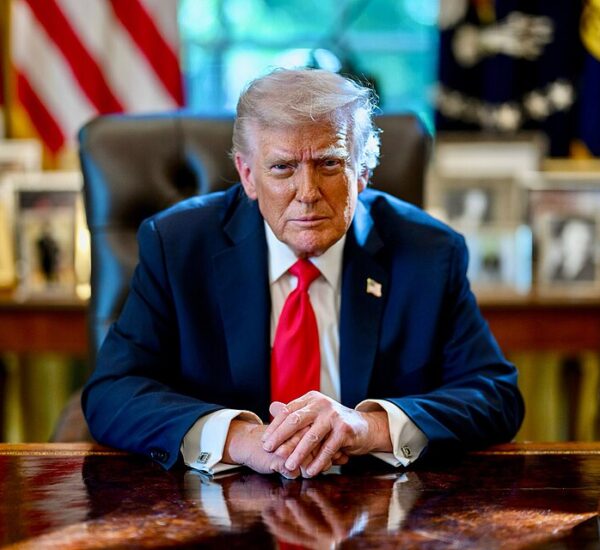
The president signed two executive orders Thursday aimed at addressing circumstances in which his administration believes the existing citizenship system is being abused or improperly applied.
The first order targets several specific categories.
Those include children born to certain foreign diplomatic personnel, individuals classified by the administration as “alien enemies,” including members of designated foreign terrorist organizations, and situations involving alleged fraud intended to secure citizenship-related benefits.
The administration argues that these circumstances raise separate legal questions from the broader birthright citizenship issue considered by the Supreme Court.
Trump Targets Birth Tourism
Trump’s second executive order takes aim at birth tourism in the United States.
The order directs the State Department and Department of Homeland Security to deny visas when officials determine that a foreign national’s primary purpose for entering the country is to give birth.
Birth tourism has been controversial for years.
Critics argue that the practice can allow foreign nationals to take advantage of America’s citizenship laws by arranging for a child to be born on U.S. soil.
Supporters of the existing system emphasize that the Constitution provides broad protections for people born within the United States.
The Trump administration is now attempting to draw a clearer distinction between ordinary travel and cases in which childbirth is believed to be the primary reason for seeking entry.
Stephen Miller Says Policy Could Have A Significant Impact
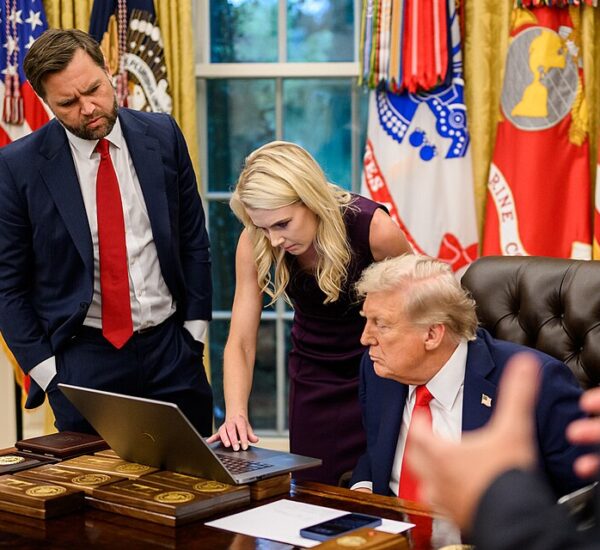
White House deputy chief of staff Stephen Miller appeared with Trump in the Oval Office as the president announced the new measures.
Miller said the administration believes the policies could affect “large numbers of people” whom officials contend should not qualify for certain birthright citizenship benefits.
The White House’s latest actions also come after the administration allowed the deadline to pass for asking the Supreme Court to rehear its previous case.
That leaves Trump and his allies looking toward more targeted executive action, new legislation from Congress, future lawsuits and potentially even a constitutional amendment.
Conservatives Prepare For A Decades-Long Fight
For conservative legal activists, the Supreme Court ruling may have transformed birthright citizenship from an immediate Trump administration policy battle into a much longer constitutional campaign.
Conservative lawyers, former administration officials and activists recently gathered near Capitol Hill to discuss what comes next.
The meeting at Bellator Hall was hosted by the Conservative Partnership Institute and the Immigration Accountability Project.
Participants reportedly discussed ways to keep the issue alive in Congress, federal courts, universities and future Republican administrations.
Mike Davis, who founded the Trump-aligned Article III Project, offered one of the most notable comparisons during the discussion.
Davis reportedly called the birthright citizenship battle “the next Roe v. Wade,” predicting that conservatives could spend decades trying to overturn the current legal interpretation.
Why Conservatives Are Comparing The Fight To Roe v. Wade
The comparison carries considerable political significance.
Roe v. Wade established a federal constitutional right to abortion in 1973 and remained a landmark Supreme Court precedent for nearly five decades.
Conservative legal organizations continued challenging that precedent through elections, judicial appointments, state legislation and litigation.
The Supreme Court ultimately overturned Roe in its 2022 Dobbs v. Jackson Women’s Health Organization decision.
Some conservative activists now envision a similarly long-term campaign over birthright citizenship.
Rather than expecting one president or one Supreme Court case to settle the issue, they are discussing a strategy that could stretch across multiple administrations and generations of judges.
Congress Could Become The Next Battleground
Congress may play an increasingly important role in the dispute.
Iowa Solicitor General Eric Wessan reportedly predicted that growing scholarly interest in birthright citizenship would help keep the constitutional question alive.
Other figures participating in the conservative discussions included Gene Hamilton of America First Legal, Roger Severino of the Heritage Foundation, Florida Chief Deputy Attorney General Ryan Newman and John Eastman of the Claremont Institute’s Center for Constitutional Jurisprudence.
Potential strategies reportedly include legislation specifically targeting birth tourism, broader changes to federal citizenship law and even a constitutional amendment.
A constitutional amendment would face an extraordinarily high political hurdle, requiring approval by two-thirds of both chambers of Congress and ratification by three-fourths of the states.
Still, supporters appear determined to keep multiple options available.
Future Republican Judicial Nominees Could Face A New Test
The battle could also influence future Republican judicial appointments.
Some conservative activists reportedly want opposition to the Supreme Court’s ruling in Trump v. Barbara to become an important consideration when evaluating future nominees to the federal judiciary.
That strategy could have consequences extending well beyond Trump’s presidency.
Federal judges serve lifetime appointments, meaning changes in the judiciary can shape immigration and constitutional law for decades.
The strategy reflects a broader lesson conservatives took from the campaign against Roe: major constitutional precedents can sometimes be changed only after years of elections, legislation, litigation and judicial appointments.
What the 14th Amendment Means for Birthright Citizenship
At the center of the dispute is one of the most consequential sentences in the Constitution.
The 14th Amendment states that people born or naturalized in the United States and subject to its jurisdiction are citizens of the United States and the state where they reside.
The disagreement centers largely on what it means to be “subject to the jurisdiction” of the United States.
Supporters of the longstanding interpretation argue that nearly anyone born on American soil receives citizenship regardless of the immigration status of his or her parents, with limited exceptions.
Conservatives seeking a narrower interpretation contend that the amendment’s language does not necessarily require automatic citizenship in every circumstance involving foreign nationals.
The Supreme Court’s latest ruling favored the broader interpretation, but Trump’s allies are signaling that they do not consider the constitutional debate finished.
Legal Scholars Expect The Fight To Continue
Legal experts on the other side of the debate are also paying attention to the developing conservative strategy.
New York University law professor Melissa Murray told Politico that Trump’s latest actions reflect an incremental Republican effort to change the legal framework surrounding citizenship.
Kate Shaw, a professor at the University of Pennsylvania Carey Law School, suggested that the coming fight could share similarities with the prolonged constitutional battle over abortion rights.
One major question is whether Democrats and progressive organizations will organize around defending the existing interpretation with the same intensity that conservatives are preparing to challenge it.
Birthright Citizenship Could Become A Major Political Issue
The implications extend beyond the courts.
Immigration and border security have remained defining political issues for Trump, and birthright citizenship could become another major dividing line between Republicans and Democrats.
For many conservatives, the underlying question is straightforward: Who should automatically receive American citizenship, and what limits does the Constitution permit the government to impose?
Trump’s initial attempt to dramatically change the system suffered a major defeat at the Supreme Court.
But his latest executive orders show that the White House has no intention of walking away from the issue.
Instead, the administration is pursuing narrower restrictions while conservative legal organizations consider legislation, future court challenges and a potentially decades-long effort to change the prevailing interpretation of the 14th Amendment.
The Supreme Court may have settled the immediate case.
The larger battle over birthright citizenship, immigration and the meaning of American citizenship appears far from over.