Trump Reveals New Details On Beef Deal
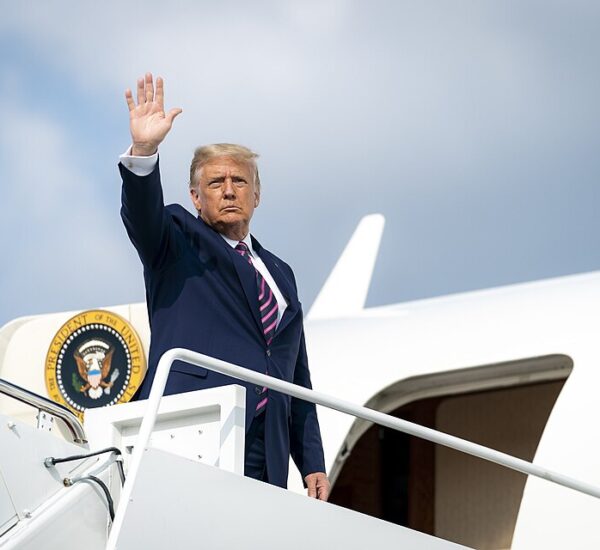
President Donald Trump says more beef from Brazil, Argentina and other foreign suppliers is headed to the United States as his administration takes new steps aimed at lowering stubbornly high beef prices.
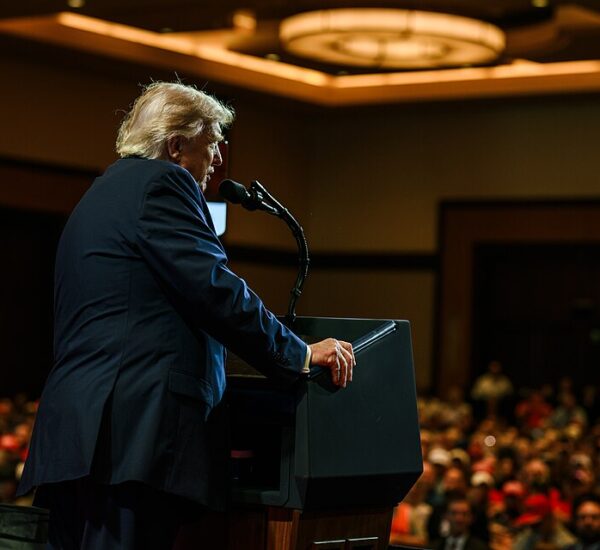
Speaking Friday at the White House alongside American farmers and ranchers, Trump defended the increased imports while emphasizing that foreign beef entering the country will still be subject to U.S. inspection requirements.
“It’s coming from Argentina. It’s coming from Brazil,” Trump said. “It’s coming from a couple of other places. We have our inspectors down. It’s very clean. It’s very good.”
The move is part of a broader White House effort to tackle high grocery costs while simultaneously helping American cattle producers rebuild a domestic herd that has fallen to historically low levels.
But the strategy has created a difficult balancing act.
More imported beef could increase supplies and potentially ease some price pressure for consumers. At the same time, American ranchers have warned that too much foreign competition could hurt cattle prices and make it harder for domestic producers to expand their operations.
Trump Turns to Beef Imports as Prices Remain High
Beef has remained one of the more expensive items in the American grocery cart as the cattle industry struggles with limited supplies.
Drought, wildfires, expensive feed and other pressures have contributed to a sharp reduction in U.S. cattle numbers. The domestic herd has fallen to its lowest level in roughly 75 years.
The shortage has helped push beef prices higher even as consumers continue to show strong demand for hamburgers, steaks and other beef products.
The Trump administration has responded by allowing additional lower-tariff imports of lean beef, much of which can be blended with fattier American beef to produce ground beef.
The administration recently expanded access to as much as 300,000 metric tons of lower-tariff lean beef imports in an attempt to increase available supplies.
Trump has argued that the temporary increase can provide consumers with some relief while American ranchers rebuild their herds.
Brazil and Argentina Could Supply More Beef
Argentina has already played an important role in the administration’s beef strategy.
Earlier in 2026, Trump increased the tariff-rate quota for certain Argentine lean beef trimmings by 80,000 metric tons. The additional supply was intended primarily for products used in ground beef.
Brazil, one of the world’s largest beef exporters, could also play a larger role in supplying the U.S. market.
Trump said Friday that beef would be coming from both countries as well as other foreign suppliers.
The president sought to reassure consumers about the safety of imported products, saying American inspectors are involved in ensuring that beef entering the United States meets required standards.
American Ranchers Have Raised Concerns
Increasing foreign beef imports has not been universally welcomed.
Some cattle producers and lawmakers from major ranching states have warned that bringing additional foreign beef into the country could put pressure on American cattle prices.
Their concern is straightforward: ranchers need strong enough cattle prices to justify keeping cows for breeding rather than selling them for slaughter.
Rebuilding America’s cattle herd takes time. Unlike some agricultural products that can be planted and harvested within a single season, expanding cattle supplies can require years.
Trump acknowledged the industry’s concerns Friday and described the import increase as limited.
“We’re doing it in a very limited fashion because our ranchers can handle it,” Trump said.
He added that ranchers also have an interest in keeping beef affordable for American consumers.
The administration is therefore trying to accomplish two goals at the same time — provide near-term relief at the grocery store while creating conditions that encourage greater American beef production over the longer term.
Meeting With JBS Owner Draws Attention
Questions have also emerged over Trump’s discussions with Brazilian businessman Joesley Batista, whose family controls meatpacking giant JBS.
The Wall Street Journal reported that Batista met with Trump shortly before the administration announced additional tariff relief involving imported beef.
According to Reuters, Batista advocated for reducing the U.S. tariff on Brazilian beef during an Aug. 20 meeting with Trump. Reuters said it had not independently verified all details of the Journal’s account.
JBS is one of the world’s largest meatpacking companies and has extensive operations in the United States.
Batista and his brother Wesley have also faced previous scrutiny from American authorities.
In 2020, the family-controlled holding company J&F Investimentos agreed to pay a criminal penalty in a Foreign Corrupt Practices Act case involving a bribery scheme.
The White House has defended its beef policies as measures designed to increase competition, expand supplies and reduce costs.
Trump Takes Aim at Major Meatpacking Companies
Trump also used Friday’s White House event to criticize the concentration of America’s meatpacking industry.
Four major processors — Tyson Foods, JBS, Cargill and National Beef Packing — account for a substantial share of U.S. beef processing.
Trump accused the industry’s largest companies of exercising too much control over the market.
“I’ve heard all about it. I’ve been listening to it,” Trump said.
He argued that the current system can impose costs on farmers, ranchers and consumers.
The administration has increasingly focused on competition in the meatpacking industry as part of its effort to address food prices.
For independent ranchers, the issue goes beyond what shoppers pay at the supermarket. The amount processors pay cattle producers can determine whether smaller operations remain profitable.
Trump Signs New Orders Aimed at Helping Ranchers
Trump signed a series of executive orders Friday intended to strengthen America’s cattle industry.
One initiative is designed to make it easier for farmers and ranchers to process, package and sell products from their own operations.
The administration argues that expanding smaller and local processing operations could give producers more choices instead of forcing them to rely as heavily on the nation’s largest meatpacking companies.
Another initiative addresses country-of-origin labeling for beef.
Trump wants consumers to have clearer information about whether the beef they purchase comes from cattle raised in the United States or another country.
Restoring broader mandatory country-of-origin labeling requirements, however, would require additional action from Congress.
“We’re putting it in front of Congress right away,” Trump said. “It should be no problem.”
Country-of-Origin Labels Could Become a Bigger Issue
Country-of-origin labeling has been debated in Washington for years.
Supporters argue that Americans should be able to easily determine where their meat comes from, particularly when domestic beef is competing with imported products.
For consumers who deliberately seek American-raised beef, clearer labels could make purchasing decisions easier.
The issue has gained additional attention as the administration simultaneously encourages more imports to address tight supplies.
Trump’s latest action does not by itself restore all mandatory labeling requirements. Congressional approval would still be necessary for broader changes.
Gray Wolf Protections Also Targeted
The president’s actions Friday extend beyond beef imports and meat processing.
The administration is also moving to address ranchers’ complaints about livestock losses caused by gray wolves.
Ranchers in areas with wolf populations have long argued that predators can kill calves and other livestock, increasing costs and requiring additional measures to protect herds.
Trump’s executive action directs federal officials to examine protections affecting gray wolves and potentially give ranchers greater ability to defend livestock.
Environmental organizations have opposed efforts to weaken federal wolf protections, while ranching groups have argued that livestock producers need greater flexibility to protect their animals.
Why Beef Prices Remain So High
The larger problem confronting Washington cannot be solved overnight.
America simply has fewer cattle than it did several years ago.
Persistent drought damaged grazing land and increased feed costs, encouraging many ranchers to reduce their herds. Wildfires and restrictions involving cattle imports from Mexico have added further pressure.
At the same time, Americans continue to buy substantial amounts of beef.
When strong demand meets limited supply, prices tend to rise.
Increasing imports can add supply more quickly than waiting for American ranchers to produce additional cattle, which helps explain why the administration has turned to foreign beef as a short-term measure.
But some agricultural economists have questioned how much additional imports alone can reduce supermarket prices.
Will Americans Actually Pay Less for Beef?
That may be the biggest question for consumers.
Additional imported lean beef could increase the amount of meat available for ground beef and hamburger production, potentially reducing some pressure on wholesale costs.
But that does not guarantee dramatic price cuts at grocery stores.
Retail beef prices are affected by numerous factors, including cattle supplies, processing expenses, transportation, labor, consumer demand and supermarket pricing.
That means shoppers may not immediately see large reductions simply because additional foreign beef enters the country.
The administration is effectively pursuing a two-part strategy.
In the short term, it wants additional imports to increase supplies.
Over the longer term, it wants American ranchers to rebuild their herds while expanding smaller processing operations and increasing competition within the meat industry.
What Happens Next
Consumers should watch several developments in the months ahead.
The first will be whether additional imported beef actually translates into lower ground beef prices at supermarkets and restaurants.
The second will be whether American cattle producers begin expanding their herds.
And the third will be whether Congress moves forward with Trump’s push for stronger country-of-origin labeling.
Those policies could determine whether the current beef shortage proves temporary or remains a long-term challenge for American families.
For now, the White House is betting that carefully increased imports, more domestic processing capacity and stronger support for ranchers can eventually bring the beef market back into balance.
Whether that combination produces noticeable savings at America’s grocery stores will ultimately be the test consumers care about most.